Co-existing with the Trail’s Creatures
Hiking among Vermont’s mountains, streams, and ponds, you are likely to encounter many small animals and may see some larger ones, like moose and black bear. Vermont’s animals are not generally considered dangerous, but there are a few best practices to follow to ensure we limit our impact on these animals’ natural existence, most importantly proper food storage and waste disposal in the backcountry.
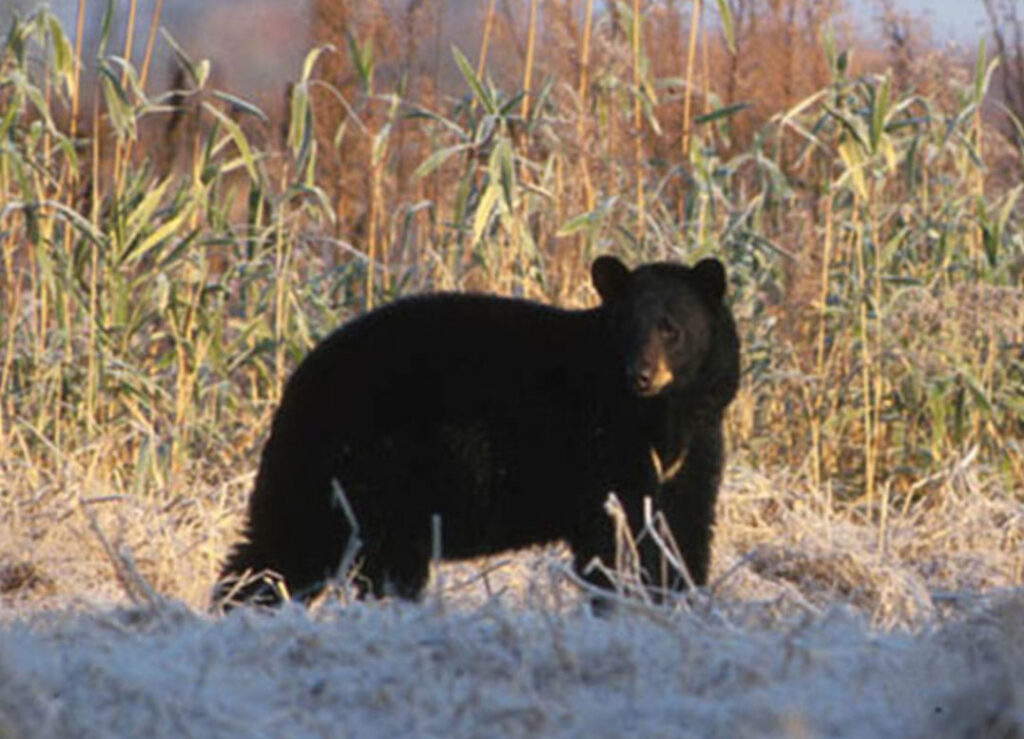
Black Bears in Vermont
Black bears have become more active around the Long Trail System in the last few years. Most bears want to avoid humans, but as humans recreate more in the backcountry, some bears are associating humans with food and will become persistent. To avoid human-bear interactions and ensure the safety of both wildlife and trail users, the Forest Service mandates that hikers must use a bear box, bear canister, or properly hang all smellables and carry out all trash while in the Green Mountain National Forest (GMNF). While this mandate applies to the National Forest, GMC strongly encourages using the same storage methods anywhere in Vermont. The Long Trail and its side trails from Massachusetts to Route 17 (Appalachian Gap) are mostly on GMNF land.
More Bear Safety Information:
- Keep dogs leashed.
- Do not feed or approach bears.
- If you encounter a bear, make noise and back away slowly. Do not run.
- Pack out all garbage and food scraps. Do not leave these items in the privies, shelters, or fire pits.
- If primitive camping, prepare and store food at least 200′ from the campsite. If staying at a designated overnight site, follow these food storage do’s and don’ts. Use the bear box when available.
- Report any bear encounters to GMC and Vermont Fish & Wildlife.
- Learn more about bear safety while hiking and camping.
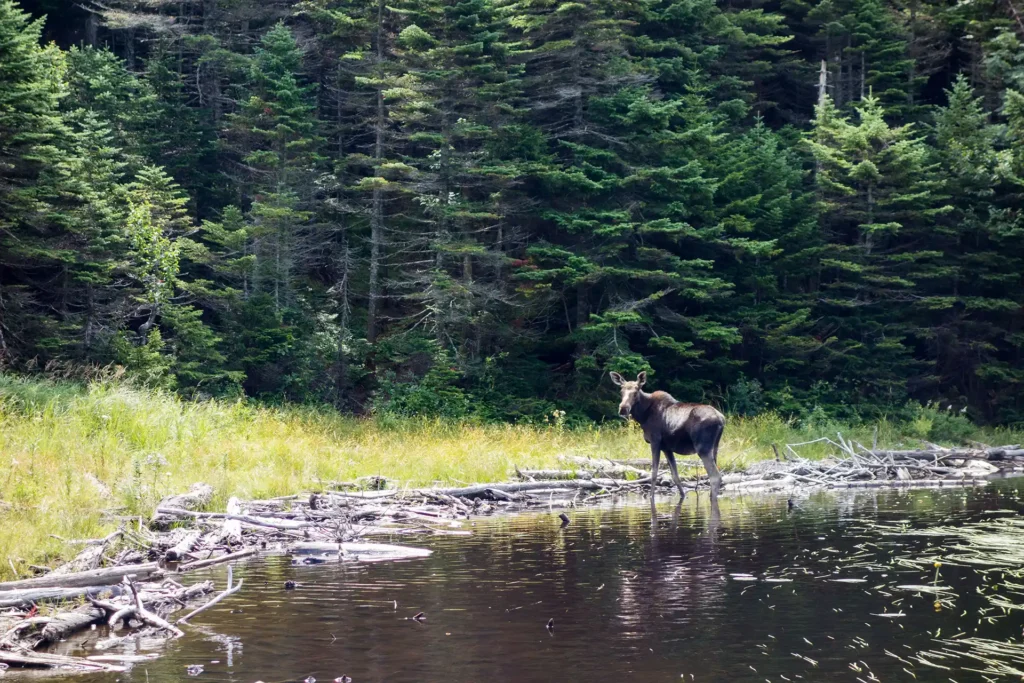
Moose in Vermont
Moose are elusive; hikers rarely see them but they do make their home in the lower elevations (typically) of the Green Mountains. Moose are herbivores, but can be dangerous to humans if irritated or surprised. They are particularly territorial during the fall mating season. If you see a moose on the trail, do not approach. Give it space and back away slowly. If the moose approaches you or charges, put a large tree between yourself and the moose.
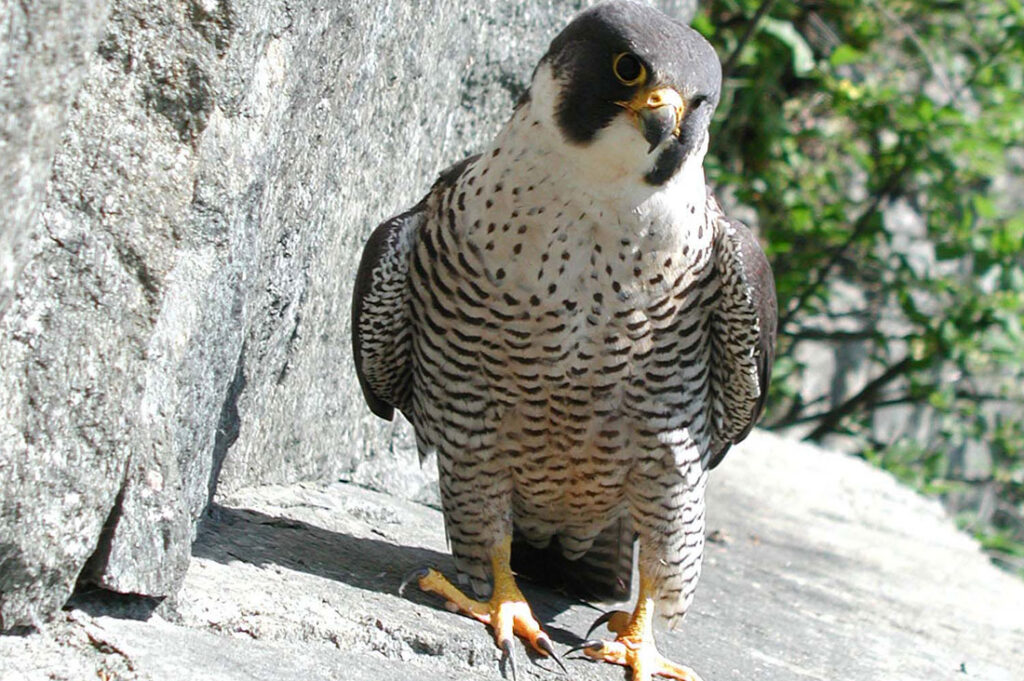
Peregrine Falcons in Vermont
Peregrines, once endangered, have made a strong comeback in Vermont. They nest in cliffside locations on or near the Long Trail, such as Smugglers’ Notch and Mount Horrid. Falcons are easily disturbed by hikers above their cliffside nests, so portions of the Long Trail or its side trails may be closed during the nesting season, which runs from mid-March to mid-August. Please stay away from those areas until the young falcons have fledged. Vermont Fish and Wildlife tracks nesting pairs each year, and issues a list of closures when the birds begin nesting. Follow their website for the latest updates.
Ticks and Tick-Borne Illnesses in Vermont
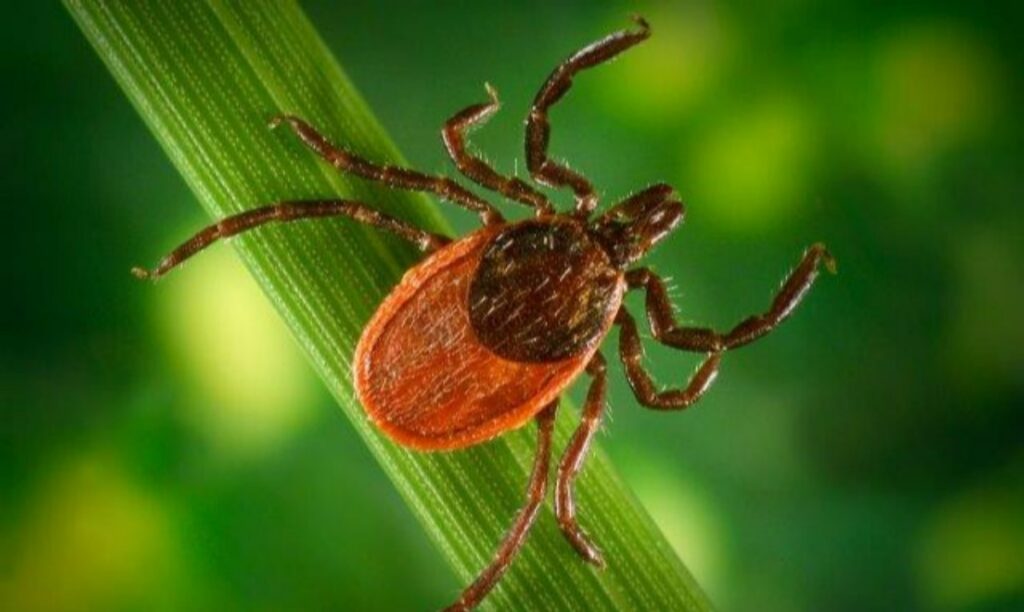
The smallest creatures on the Long Trail are also those that pose the most prevalent threat to hikers. Blacklegged tick populations are surging due to a warming climate. In Vermont, peak activity for blacklegged ticks typically occurs in May and June, but October and November are also hot for tick activity as ticks search for a host before winter. However, you can encounter blacklegged ticks year-round as long as temperatures are above freezing. Follow these safety tips to keep yourself, your loved ones, and your pets safe:
- Walk in the center of the trail to avoid high grass and leaf litter.
- Use insect repellent. Talk to a veterinarian about tick prevention for pets.
- Wear light-colored clothes so you can easily spot a tick on you.
- Wear long pants with your socks over your pants and shirt tucked in to prevent ticks from finding a place to bite.
- Check your body, especially joints, after being outdoors. Remove ticks promptly.
- Watch for symptoms of tickborne illness. Talk to your health provider if you develop symptoms.
- Visit the VT Department of Health page for more safety tips.
Mosquitoes and Mosquito-Borne Illness
While mosquitoes are typically just a nuisance, instances of mosquito-borne illness like West Nile Virus and EEE are increasing in Vermont. Mosquitoes are more common in wet years and near standing water, and are most active at dusk. We recommend wearing insect repellent and treating clothes and gear with permethrin. Follow the Vermont Department of Health for information about disease-carrying mosquitoes each year.
Learn More
Dozens of plant, bird, and mammal species call the Long Trail home. For more, check out the Nature Guide to the Long Trail or visit the Mount Mansfield Visitor Center.