The mission of the Green Mountain Club is to make the Vermont mountains play a larger part in the life of the people by protecting and maintaining the Long Trail System and fostering, through education, the stewardship of Vermont’s hiking trails and mountains.
GMC’s History
The Early Years: 1910 to 1920
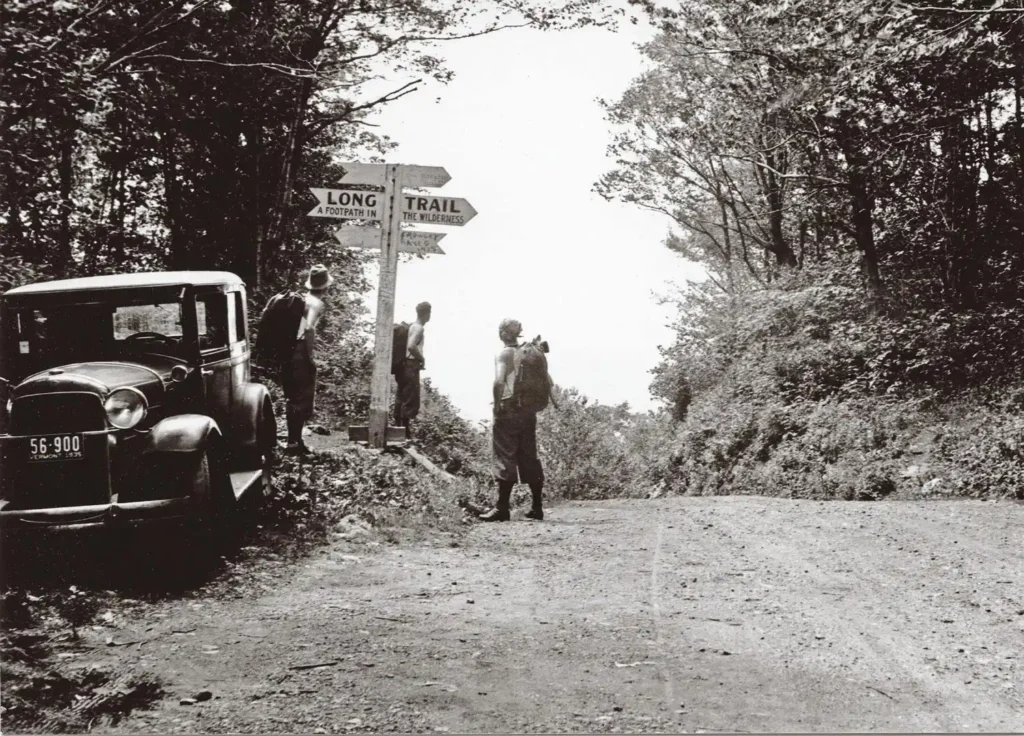
The Long Trail is the oldest long-distance hiking trail in the United States. It was conceived by James P. Taylor in 1909. Taylor, headmaster of Vermont Academy for Boys at Saxtons River, envisioned a footpath linking the state’s highest summits. The trail took its first step toward reality when twenty-three people gathered in Burlington on March 11, 1910, to found the Green Mountain Club. Taylor promised that the new organization would “make the Vermont Mountains play a larger part in the life of the people,” and our mission continues to this day.
Work began to build the continuous trail almost immediately, starting in the Camel’s Hump and Mount Mansfield areas; by 1920 the trail ran from the Massachusetts border to Johnson. Early members used hand tools to cut the path of the trail up and down the steepest peaks in the state. They built rustic shelters and partnered with farms and inns to provide lodging for hikers, often called “trampers” in the early days. In 1930, Charles G. Doll and Phillips D. Carleton cut the final link to Canada.
In 1930, the club formed the Long Trail Patrol (LTP), the professional trail crew that continues to work on the trails and shelters each year.

The Backpacking Boom and Beginning of Environmental Stewardship
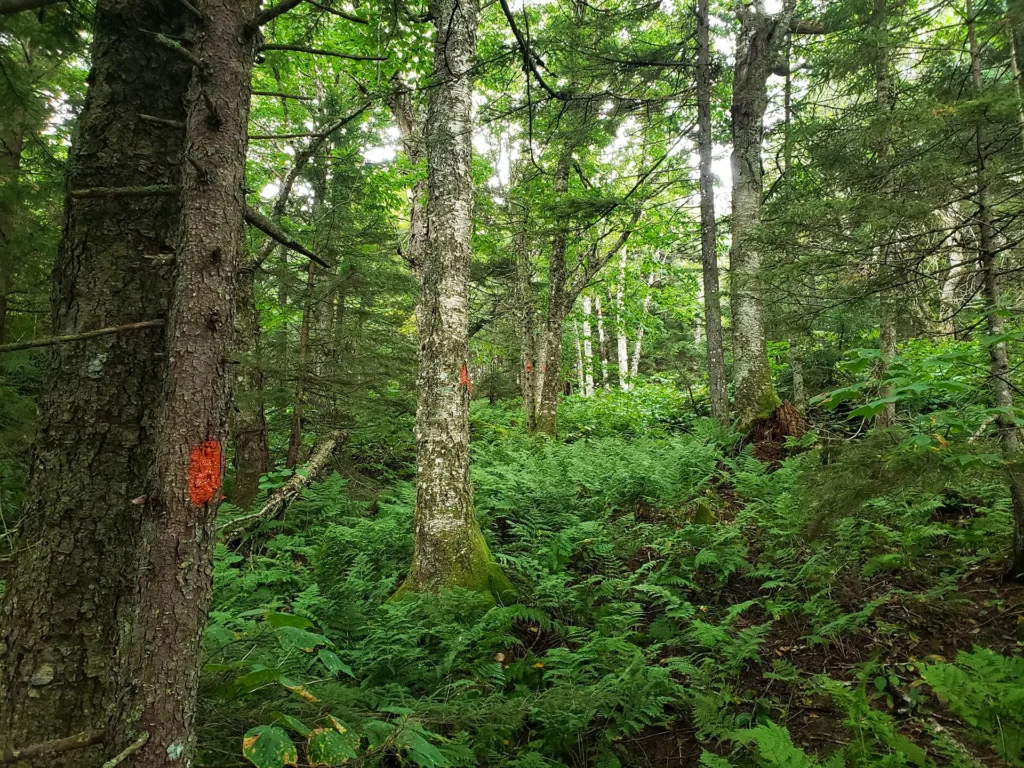
Between 1966 and 1975, there was a significant increase in the number of hikers and backpackers, and the club launched a variety of new initiatives to respond to heavy trail traffic. This included removal of dumps at shelters and promotion of a “carry-in, carry-out” policy; dissemination of information on responsible hiking and camping practices; and stationing caretakers at popular shelters and ranger naturalists (now called summit caretakers) on the fragile alpine summits of Mount Mansfield and Camel’s Hump. The caretaker program continues to this day and has served as a model for other summit stewardship programs in the Adirondacks, White Mountains, and Baxter State Park.
Protecting Vermont’s Mountains and Lands
In 1986, GMC launched the Long Trail Protection Campaign, an ambitious effort to acquire land or easements where the trail crossed private land. While in the early years, the club could rely on simple handshake agreements with landowners, a few threats of trail closure and development near the trail inspired land protection initiative.
The club has since preserved more than 25,000 acres of Vermont forest land through which the Long Trail and its side trails cross, including more than 80 miles of the Long Trail, and continues to strive to conserve the remaining 4.5 miles of the trail, using the recently adopted Strategic Conservation Plan as a framework.
Outdoors for All
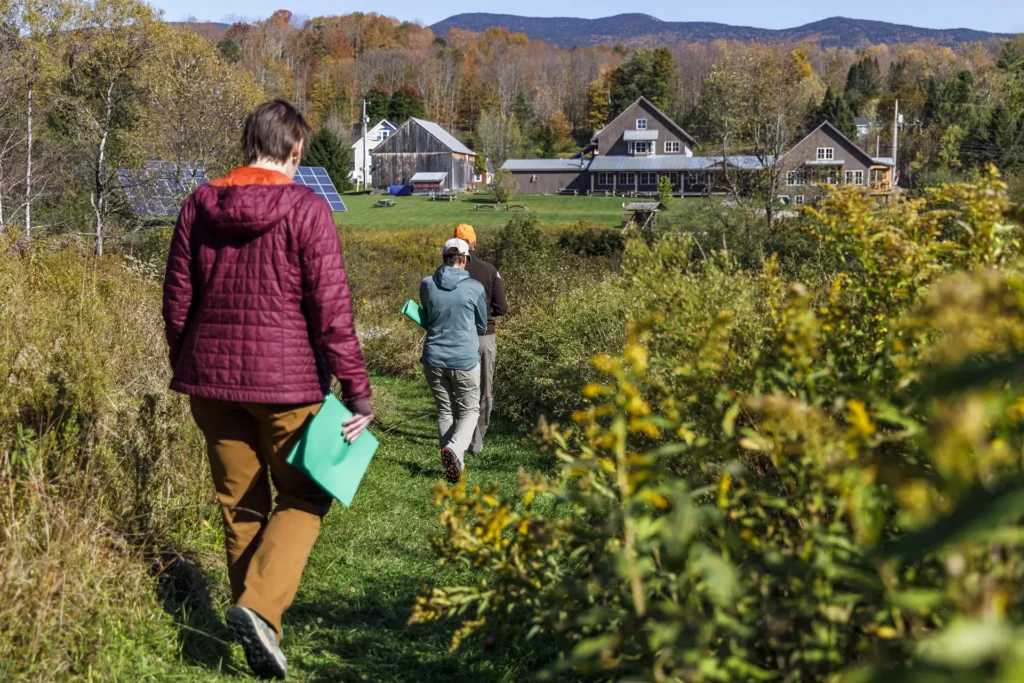
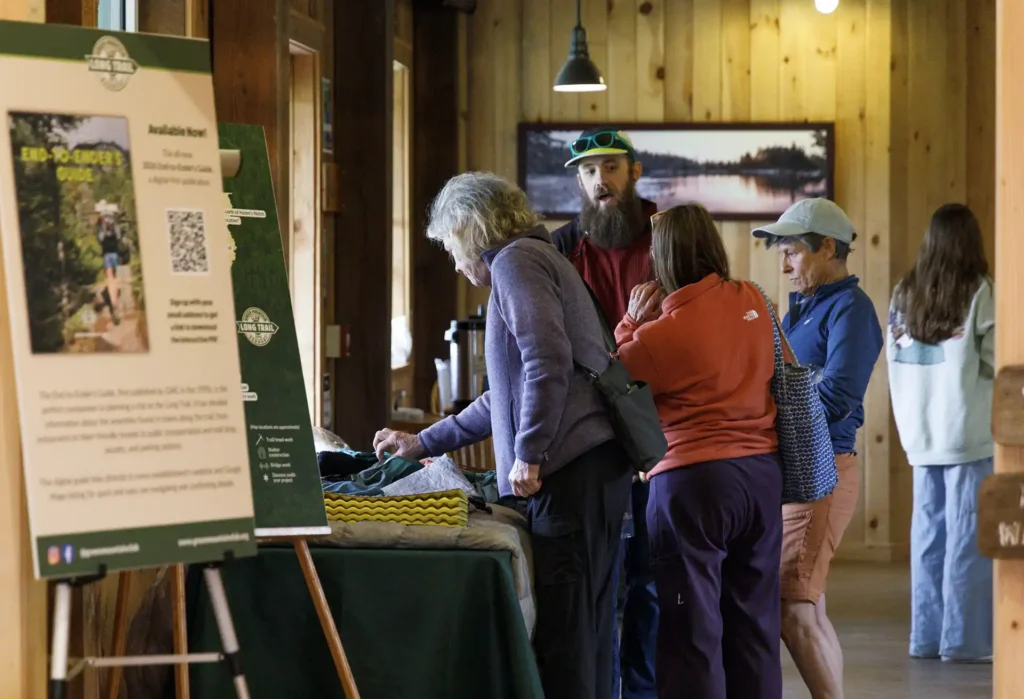
In 1992, GMC purchased the former May Farm on Route 100 in Waterbury Center, which has now been its headquarters for nearly 25 years. The property hosts staff offices, housing for seasonal field staff, a 0.7-mile interpretive trail used for programming, enjoyment, and training, and the Rothberg-Birdwhistell Visitor Center, opened in 2025, which aims to serve the hiking public with free and low-cost educational resources and workshops.
The Long Trail has weathered its share of challenges over the last decade, resulting from the impacts of climate change and severe weather on the trail, and threats to the federal funding that makes trail maintenance and management possible. GMC remains committed to instilling principles of sustainable trails in everything we do, and to foster a safe, informed, and inclusive hiking community that can enjoy Vermont’s mountains and trails for generations to come.

More Resources
Explore the Long Trail System
GMC stewards about 500 miles of hiking trails in Vermont. Explore hiking regions and find your next hike.