
Step Into the Peaceful Winter Woods
Winter hiking is completely magical, from the breathtaking cold air in your lungs to the serene hush of snow-covered pines. But winter conditions can be fickle and challenging, and preparedness is of utmost importance before setting out on any winter hike. Make your trip the best kind of memorable with these planning guidelines.
Trip Planning in Winter
Winter hiking is more challenging for several reasons, from slower paces due to snow and ice; carrying more clothing and gear, using traction footwear, and burning more energy to stay warm. It’s important to pick shorter and easier trails than you’re comfortable with in other seasons. Winter can also be extremely variable, with deeper snow and more extreme temperatures at higher elevations. Daylight is also a concern. And, if you do have an accident or problem and need to call for help, it will take rescuers more time and resources to get to you.
What to Wear
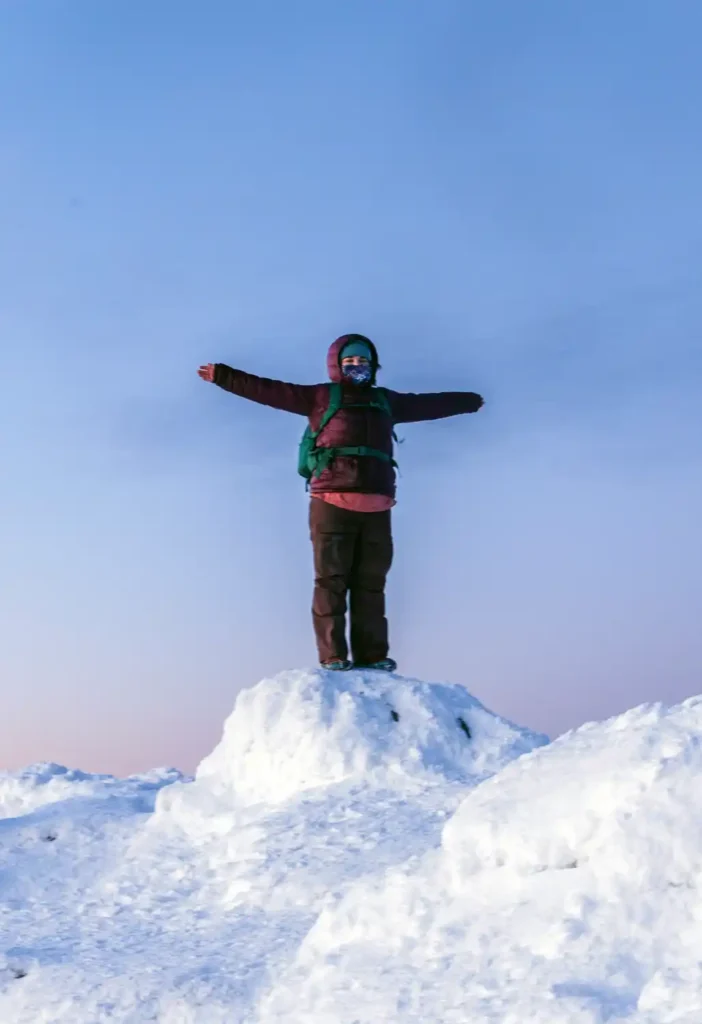
Proper layering can make or break your trip. Start with a synthetic wicking base layer on both top and bottom; add at least two insulating middle layers, and be sure to top it off with a water- and wind-proof outer shell later.
You may want rain or snow pants, and accessorize with wool socks, a winter hat, and lightweight gloves. Heavier options and spare socks in your pack are also critical.
What to Pack
Just like in summer, you’ll need to carry the Ten Essentials, but they require some different details in the winter.
Nutrition: Bring plenty of food! Winter hiking burns a lot of calories. Pack extra bars or trail mix in case you’re out longer than expected. Pro tip: Some energy bars may be prone to freezing, so think about bite-size snacks like trail mix. Carrying bars close to your body will help, too.
Hydration: Two liters of water is probably adequate for most day hikes. Pro tip: Insulate with an old sock, and carry the bottle upside down to keep the cap from freezing (the highest water freezes first).
Insulation: In addition to synthetic base layers, warm middle layers, and a waterproof outer layer, be sure to pack spare clothing layers. Pro tip: You haven’t packed enough unless there’s a layer left that you never needed to use!
Illumination: Bring a head lamp (to keep your hands free) with spare batteries, even if you’re only planning a day hike. If you can’t easily change batteries in the dark with cold fingers (try it at home), an extra light will be better than spare batteries. Pro tip: Lithium batteries last much longer than alkaline batteries in the cold.
Navigation aids: Cell phone batteries can die quickly in the cold, so a paper map, compass, and GPS are far more reliable. Pro tip: Practice using them until it’s easy! You can find videos online or participate in a workshop.
First Aid Supplies: Everyone in your group should carry a complete first aid kit in case you get separated. Pro tip: Sign up for a Wilderness First Aid class to gain confidence in backcountry emergencies!
Fire: Waterproof matches, lighter or flint. Don’t assume you can start a fire with ice-coated and snowy wood until you’ve done it a few times. Pro tip: Pack some Vaseline-covered cotton in a prescription bottle for a fire starter.
Repair kit: Multi-tool, or knife and duct tape. Pro tip: Use your hiking pole as the core to make a small roll of duct tape so it’s always handy.
Emergency Shelter: Pack a tarp, tent, or bivy sack, even for day hikes. A sleeping bag or ground pad will also go al ong way in keeping you or others warm if you are unexpectedly detained or injured.
Sun Protection: Sunglasses and sunscreen are all the more important in cold temps. Winter sun reflecting from snow can cause sunburn and snow blindness, and you’re unlikely to notice an incoming sunburn.
Traction and Footwear
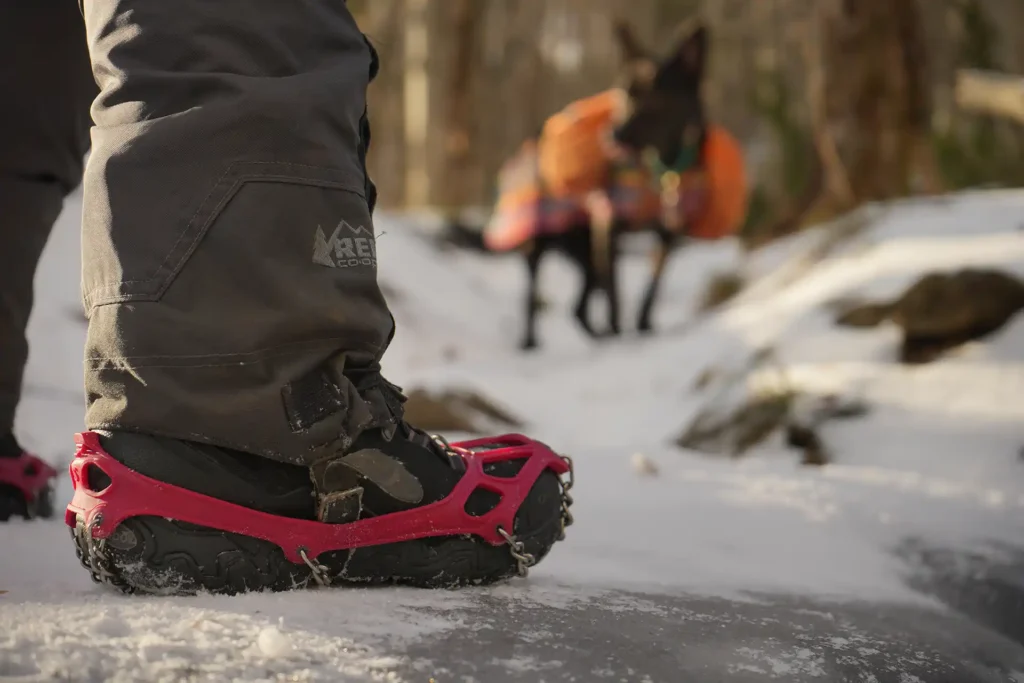
Having the right footwear with proper traction is critical to tackle deep snow and ice. We recommend wool socks (and extras) and insulated, waterproof winter hiking boots. Cold or wet feet are a recipe for a miserable or dangerous hike.
Microspikes and crampons are common boot attachments to help give you grip. For deeper snow, snowshoes are essential. Not only is hiking through deep snow exhausting and near impossible, it also ruins the trail for others as you leave behind deep postholes.
On many winter hikes, you will use both Microspikes and snowshoes as the trail conditions change. It’s always a good idea to pack both, or you can follow recent trail reports and weather forecasts to determine what you’ll use.