
This article appears in the 2024 Fall Long Trail News under the title, “Building Bridges: New Forest City Trail Bridge Open to Hikers.” Introduction written by Communications Manager Chloe Miller with photos and captions by Communications Coordinator Lily LaRegina.
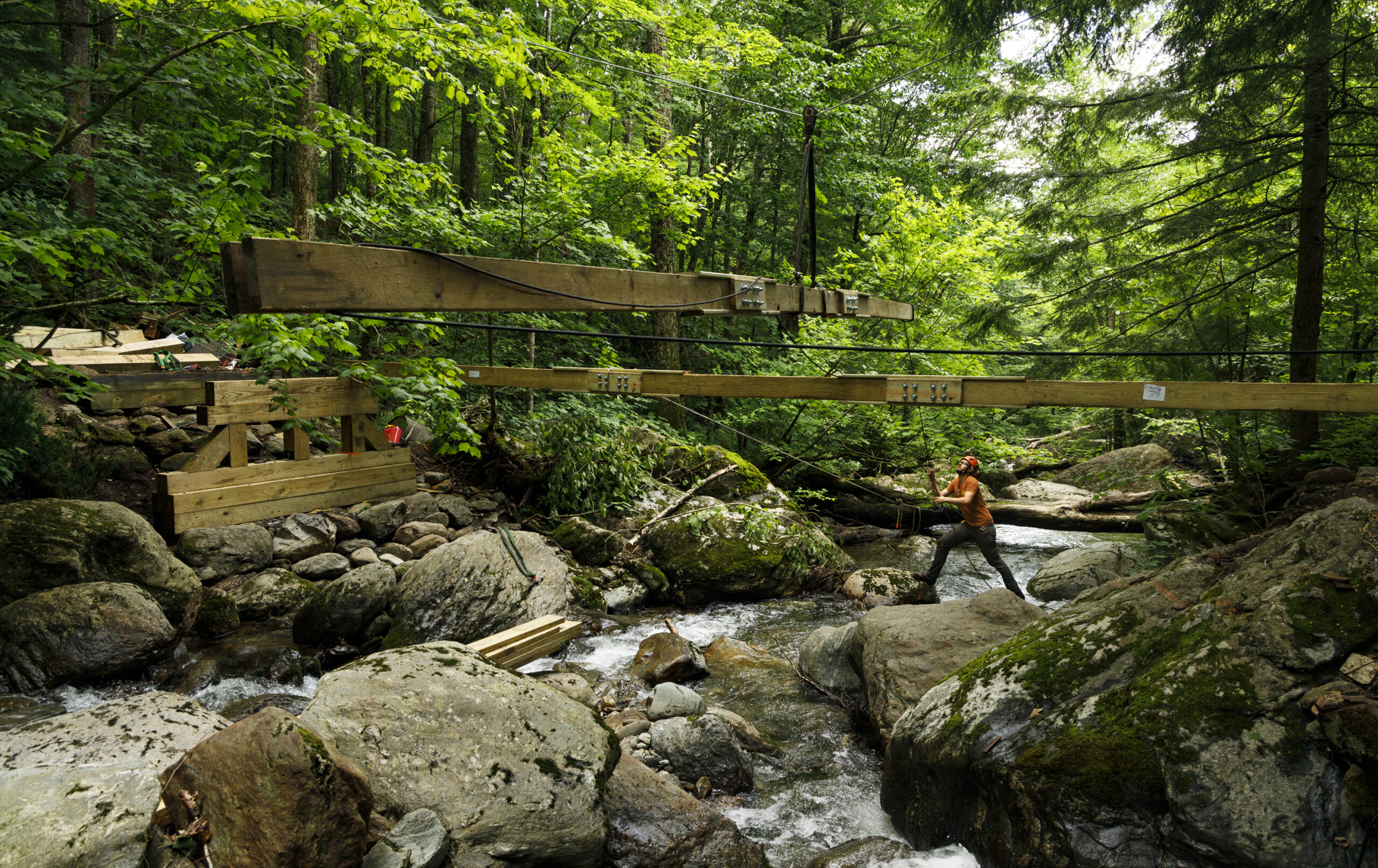
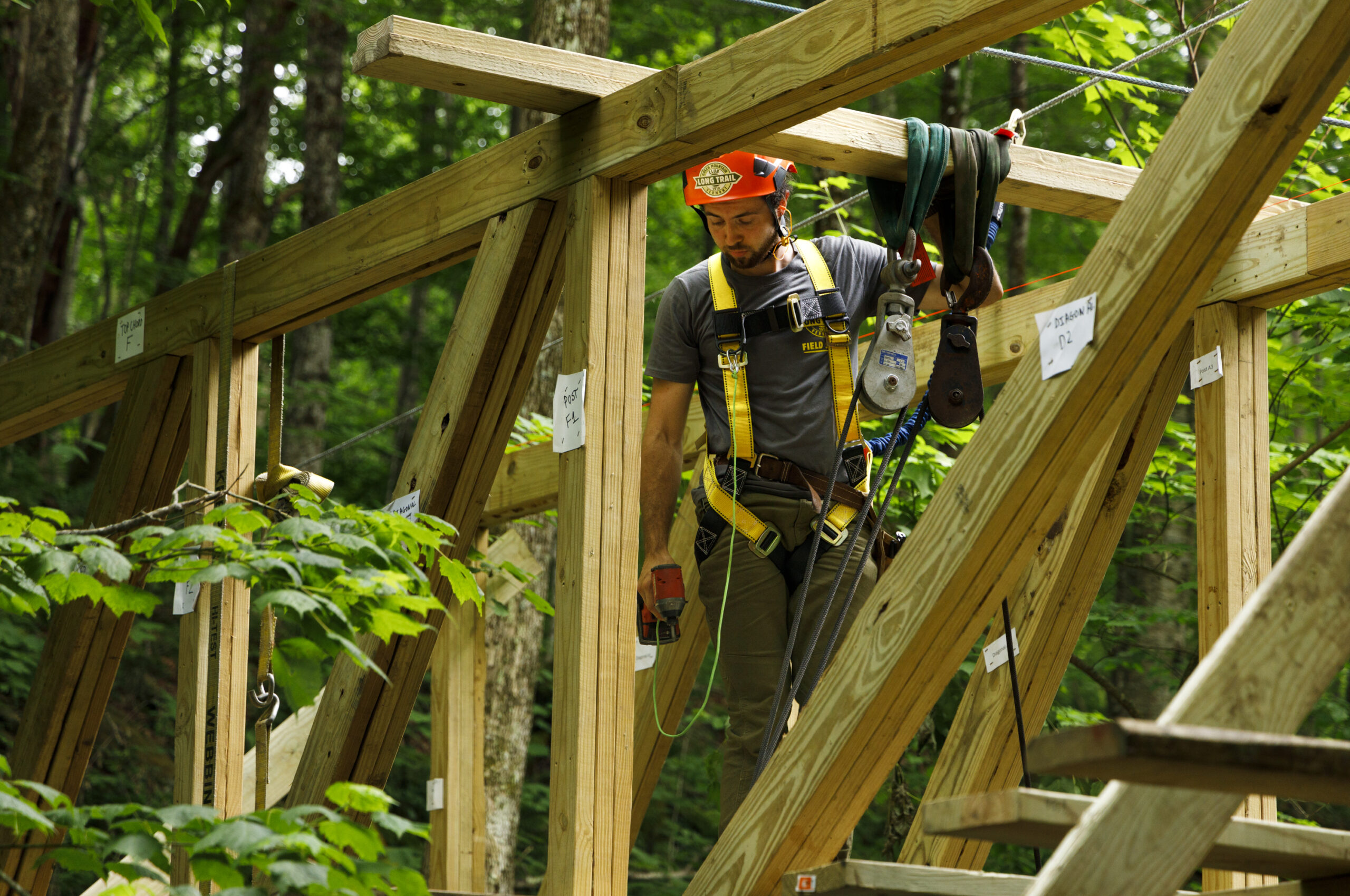
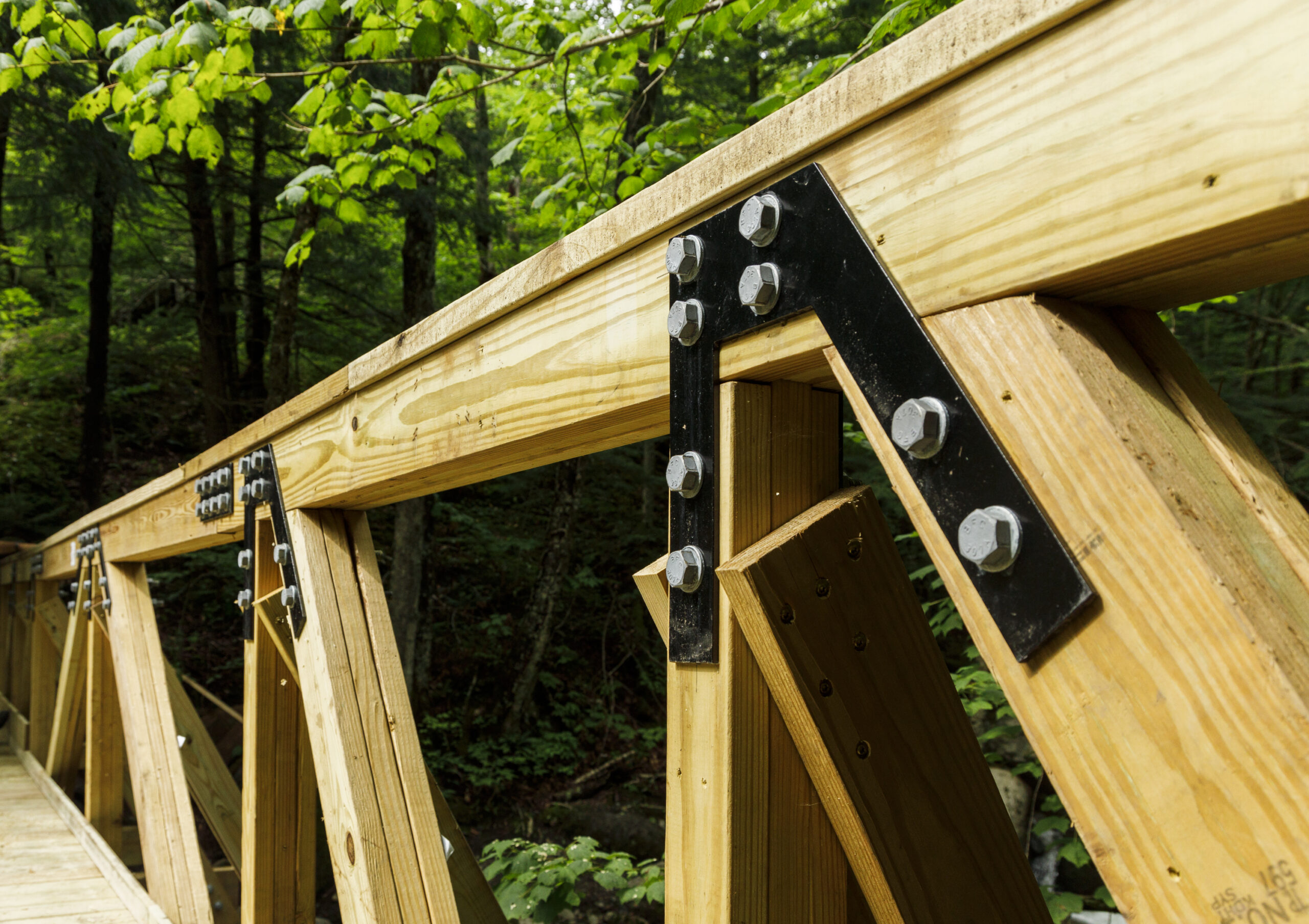
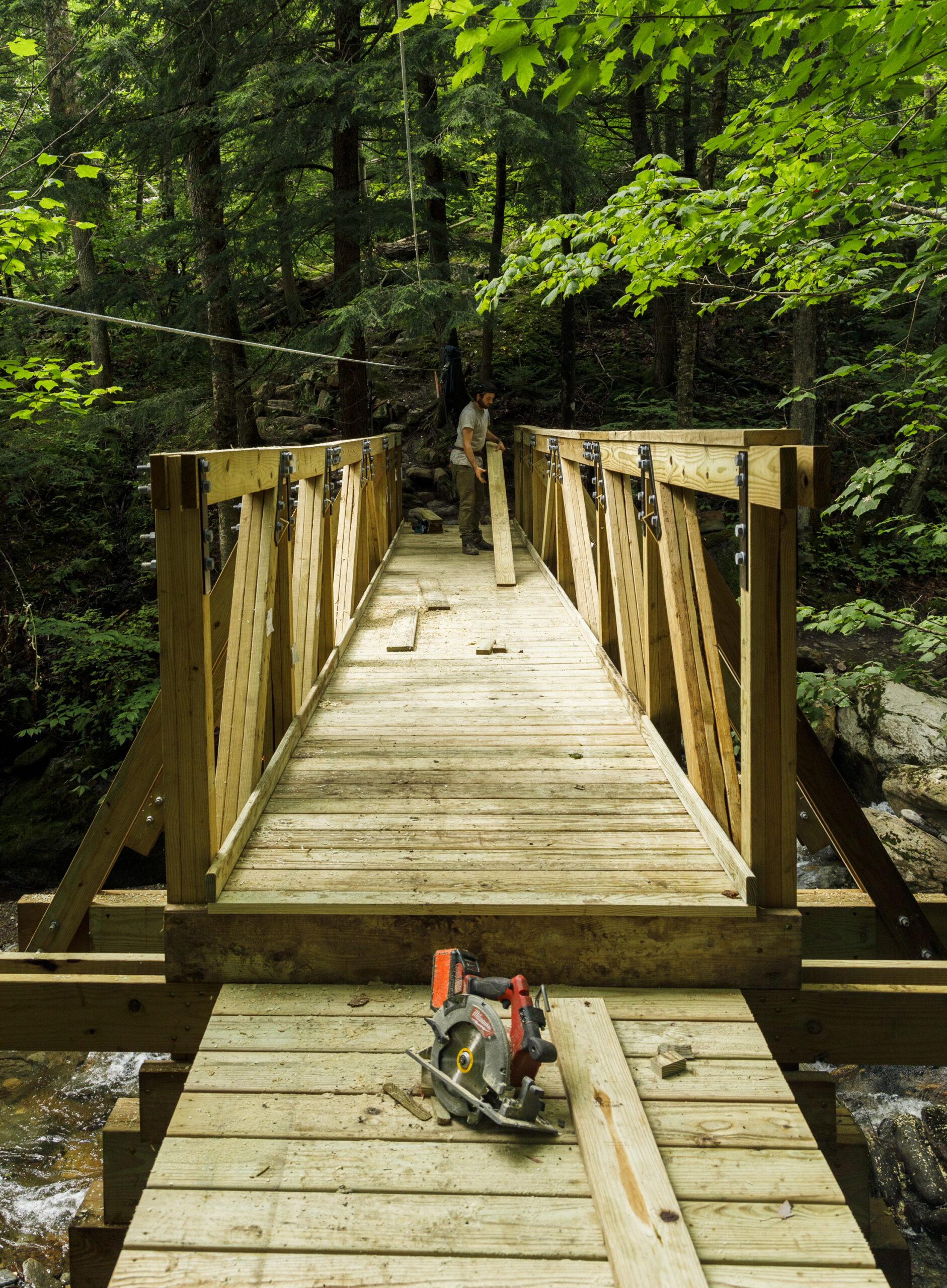
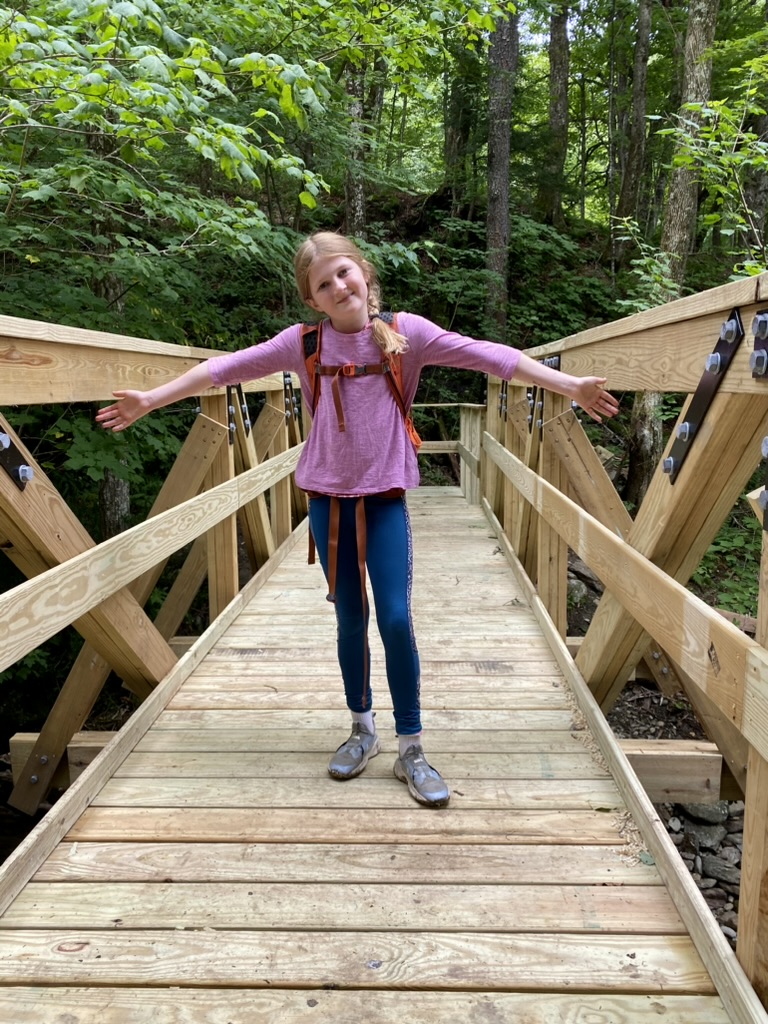
This season, GMC’s backcountry carpenters, Andrew Muller and Dylan Norris, led by Justin Towers, built a 48-foot Howe Truss bridge made with pressure-treated lumber pre-cut at GMC headquarters over the winter. This replaced the old bridge, closed in 2019 and removed in 2023 after suffering further damage in the summer 2023 floods. Vermont Department of Forests, Parks, and Recreation secured funding for the project.
The replacement bridge is about six feet longer than the old one, a stringer superstructure bridge made with untreated lumber. The larger size, more durable materials and design were chosen to make the bridge more suited to modern trail conditions.
In today’s era of climate change bringing more severe weather and high volumes of rain, trail bridges need to be more substantial than you’d think. They need to be high enough above the water that flash flooding levels won’t overtake the bridge, and strong enough to withstand impacts from trees and other debris. In the July 10 storm, where Huntington, Vermont saw more than six inches of rain, the water level in Brush Brook stayed below the height of the bridge deck.
In photos, here’s how a talented team of three backcountry carpenters built a bridge designed to withstand extreme weather and serve hikers for decades to come.