Building and Maintaining Trails that Last
GMC is committed to instilling sustainable trail design standards across every mile in our trail systems, but what does that mean? How can trails, many of which were built over 100 years ago, are hiked by thousands each year, and follow the steepest path up and down a mountain, withstand the impacts of climate change and increased use?
The concepts behind sustainable trail design and management employ design principles that inform grades, slopes, materials, widths, and structural build-out of the trail. We use these principles to inform the management and maintenance necessary to ensure the trail remains viable for generations to come with minimal ecological impact.
Good trail design, maintenance, and construction can be summed up with two main principles: keep water off the trail and keep hikers on it.
New England’s Trails: Legacy and Challenge
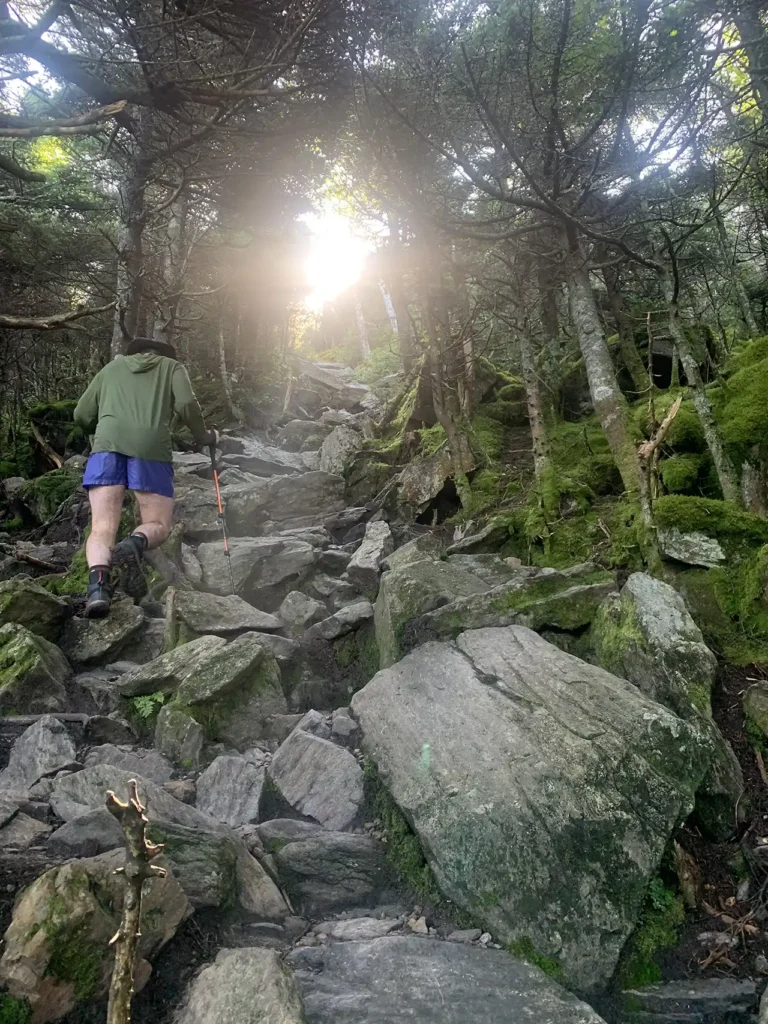
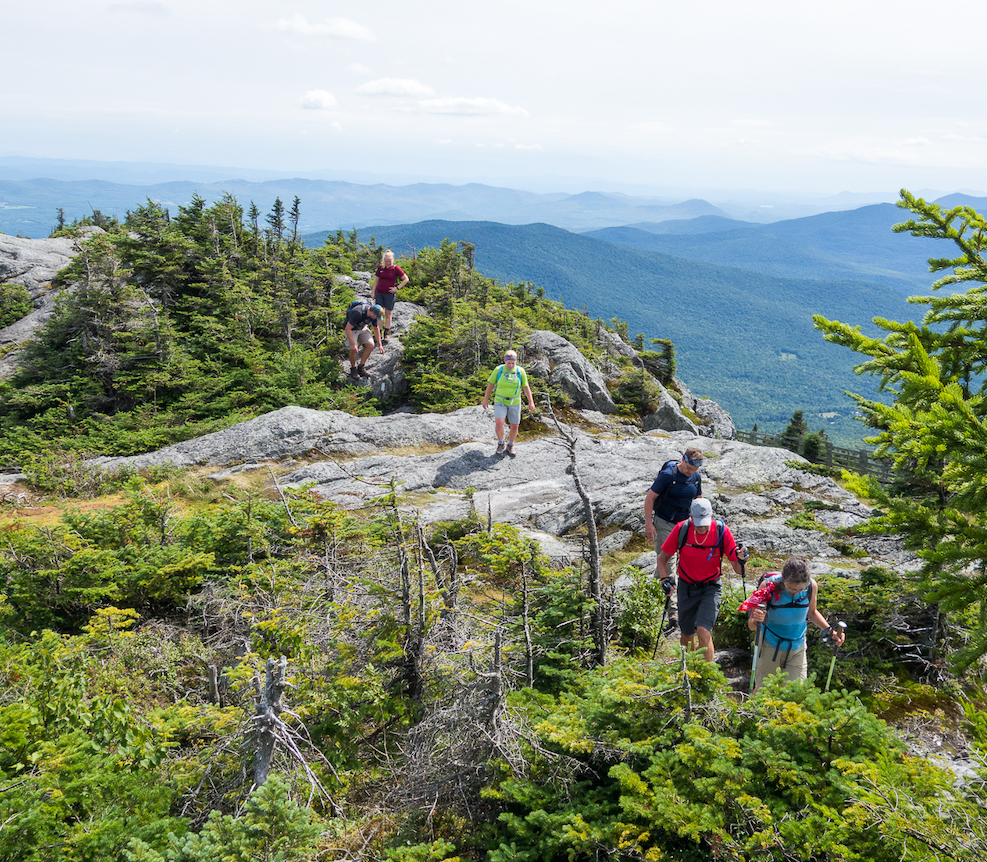
Hikers often joke that switchbacks don’t exist in New England, and it’s kind of true! Many trails in Vermont, and New England as a whole, were built more than 100 years ago before sustainable design standards or other environmental impacts of human recreation were even considered. They tend to follow the “fall-line” of a hill, or in other words, the steepest, straightest route from point A (the trailhead) to point B (a summit).
Fall-line trails pose challenges for two reasons. One, water also likes to take the fall-line path down a hill. When the trail is the same path as the route of least resistance for water, the water accumulates and accelerates, exacerbating erosion as it goes.
Second, fall-line trails are often very steep, with grades exceeding 15 to 20 percent, and pose challenges for many hikers, with big necessary steps and tiring climbs. Hikers are naturally prone to seek out the path of least resistance, so they might tend to go around difficult sections, widening and braiding the trail and causing additional erosion issues.
Sustainable Trails Assessment
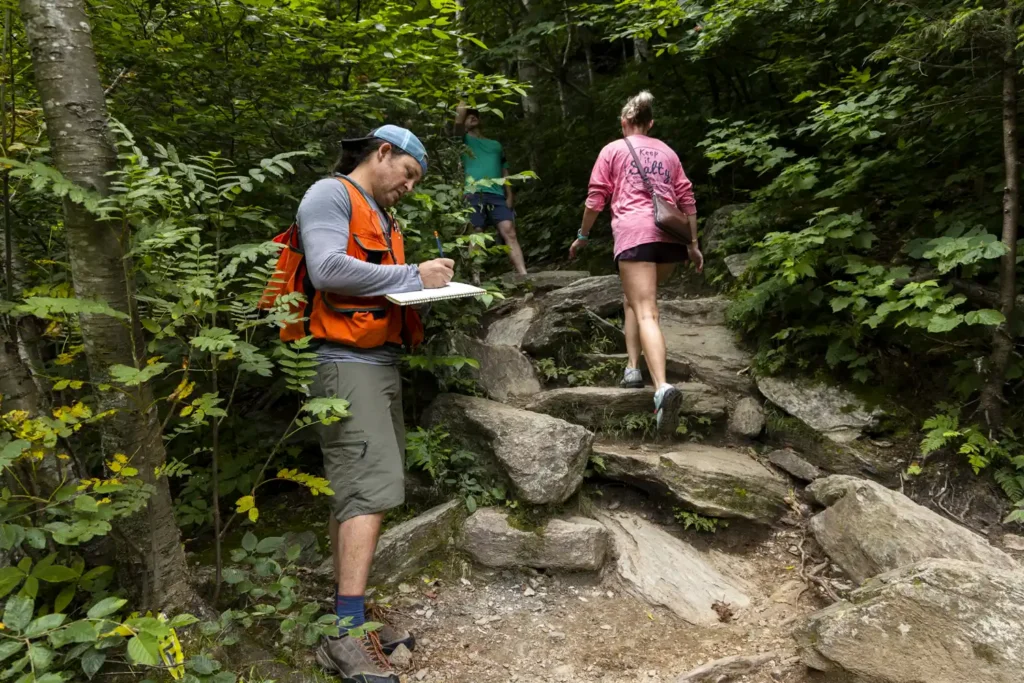
In 2025, thanks to a generous grant from the Waterwheel Foundation, we undertook a trail assessment effort for the entire 272 miles of the Long Trail examining it through a sustainable trail design lens. We took a two-pronged approach of creating a desk assessment tool utilizing Geographic Information System (GIS) tools and analysis and field data collection of trail deficiencies.
The GIS assessment provided approaches to data analysis that allowed us to assign sustainability values to the trail while our field data collection was contrasted with the GIS model predictions. The initial version of the model had a 80-85% accuracy rate for predicting trail deficiencies. As we refine the data analysis we will expand the assessment to the entire Long Trail System.
This will give us a georeferenced database for planning, reporting, and communication. It will guide prioritization of investments in the trail to help remedy those areas that are most at risk of failure from future intense weather events. It will improve our ability to respond rapidly and manage information after an event. And it will inform our work plan for the next 25 years as it is adopted by staff, volunteers and partners.
Rehabilitate or Relocate
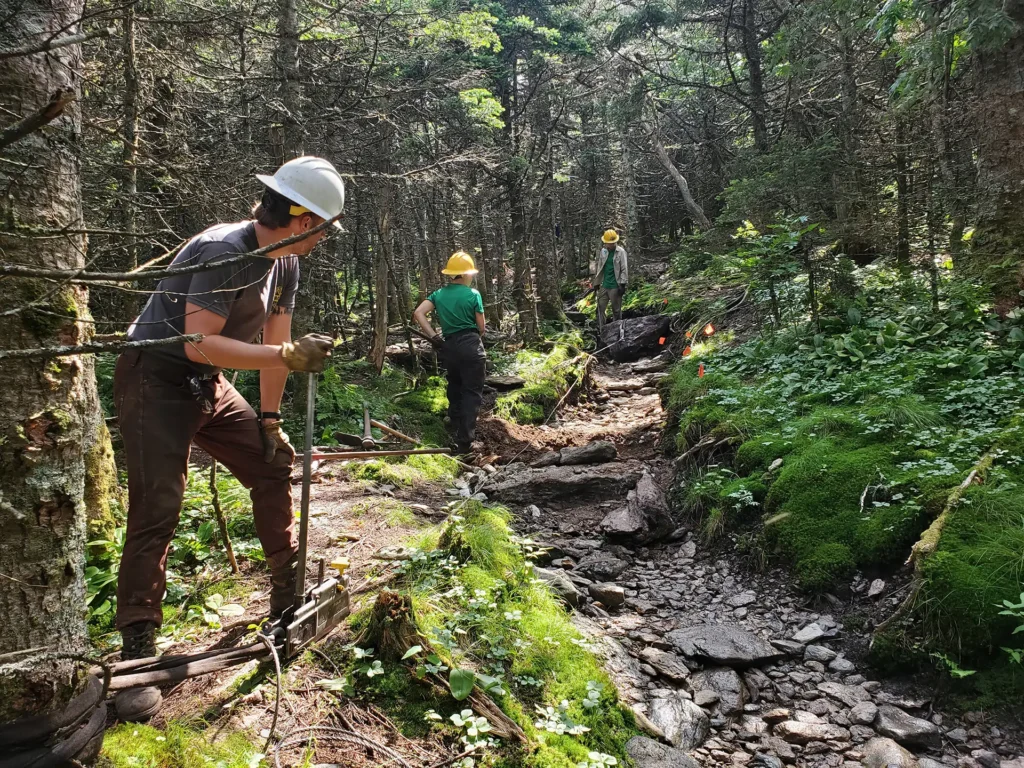
There are two major approaches to upgrading the sustainability of degraded, historic trails often found on the Long Trail System. We can do full-segment rehabilitation following the existing route of the trail, employing crews to install hundreds of stone trail structures like checksteps, staircases, and waterbars. Working on an entire segment of trail at once, like the 2.1-mile Burrows Trail restoration, ensures that severe weather or trail failures above a work zone do not negatively impact or negate new work.
Full-scale rehab is effective, though costly and time-consuming. It makes the most sense in cases where relocation is not an option. Often, relocating a portion of trail and re-routing it to include sustainable grades, cross-slopes, and other sustainable trail design elements may have a similar cost and crew time associated with in-tread rehabilitation. That is another avenue we are exploring for major sustainable trails upgrade projects and the future of the Long Trail System.
By employing both of these techniques for major overhauls, we can learn about the most practical sustainable trails solutions for the nuanced needs of the legacy Long Trail System, and put them into practice statewide.
Sustainable Trail Construction Techniques
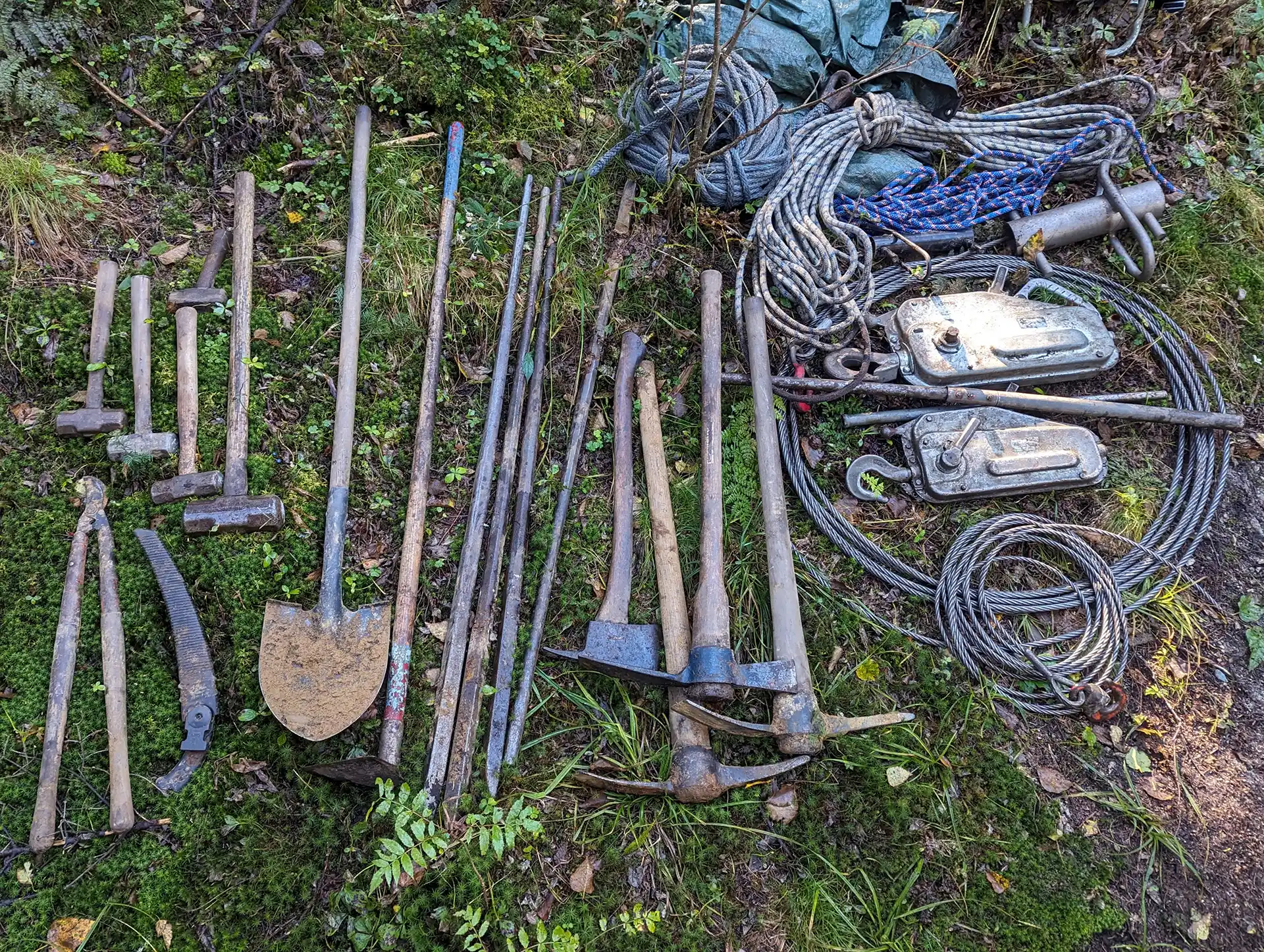
When permitting, land use regulations, or landscape realities dictate rehabilitation over relocation, our crews employ a variety of techniques to improve the durability and sustainability of existing trail corridors.
Erosion Control
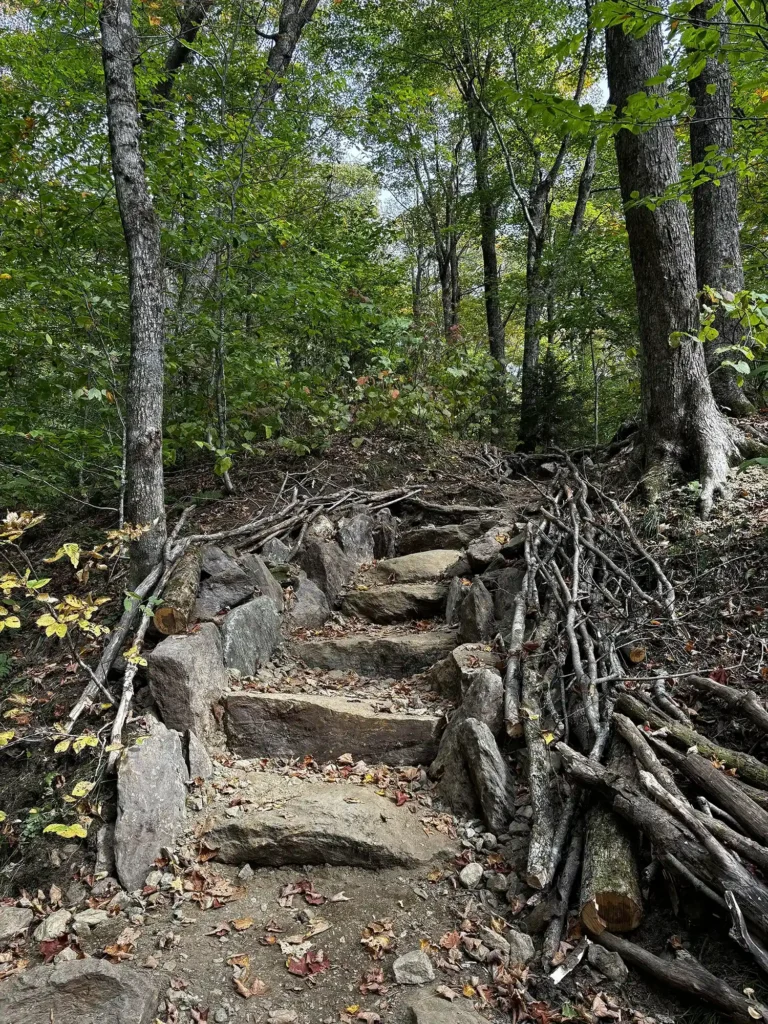
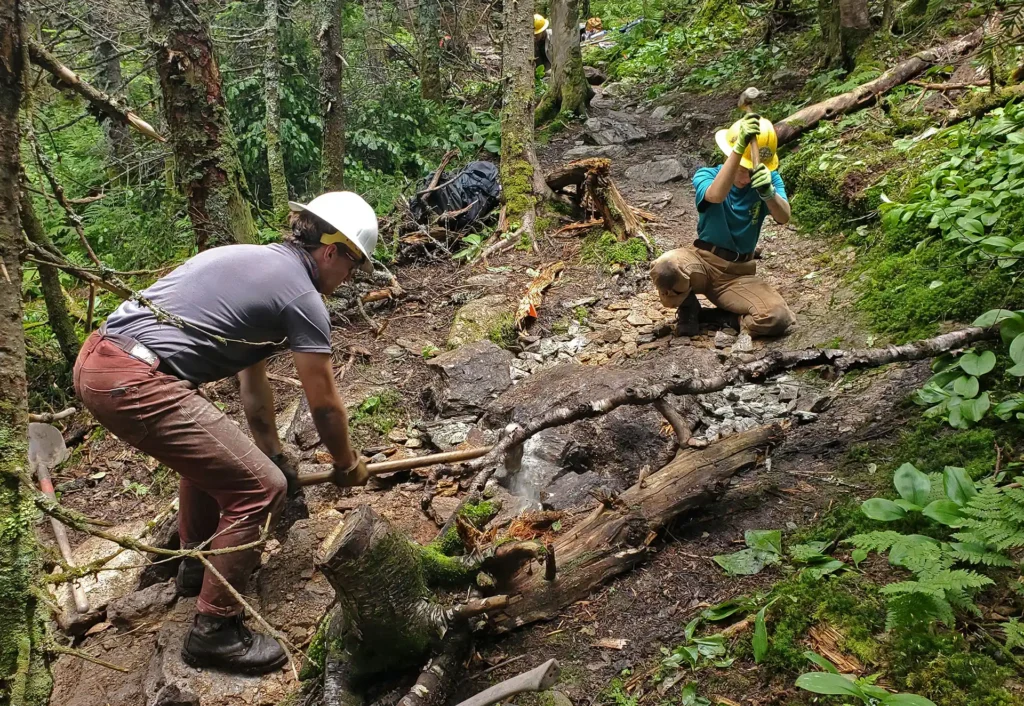
Durable, high-quality rock structures like staircases and checksteps help mitigate erosion on steep and heavily used trails. They guide the hiker to stay on the designated path, provide a more durable trail surface, and help slow the flow of water down a trail.
Rock retaining walls also help prevent on-trail erosion.
Tread Raising
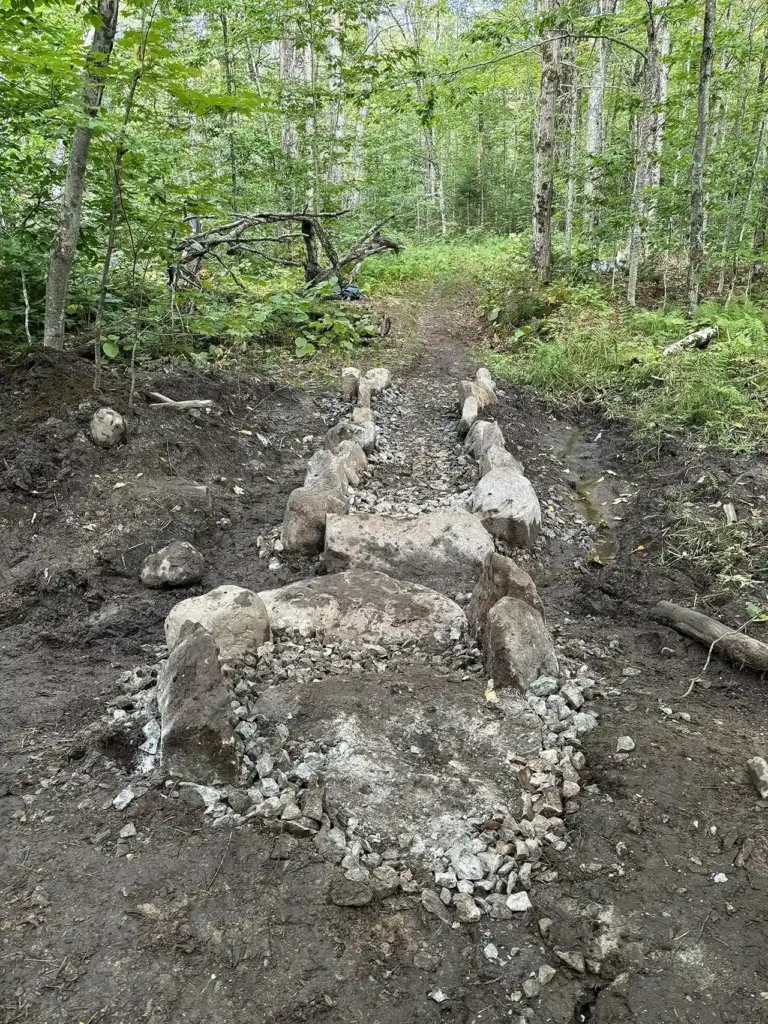
When the trail is too flat or low-lying, it is prone to major mud pits. These exacerbate over time, as hikers seek to walk around them, widening the trail. Crews build turnpikes, turnpikes, which are sections of trail bordered by rocks and filled with “crush” — crushed up stones – and topped with mineral soil to raise and dry the trail and create natural filter for water, instead of becoming a mud pit.
Well-placed large, flat stepping stones also alleviate areas of trail prone to muddiness.
Drainage
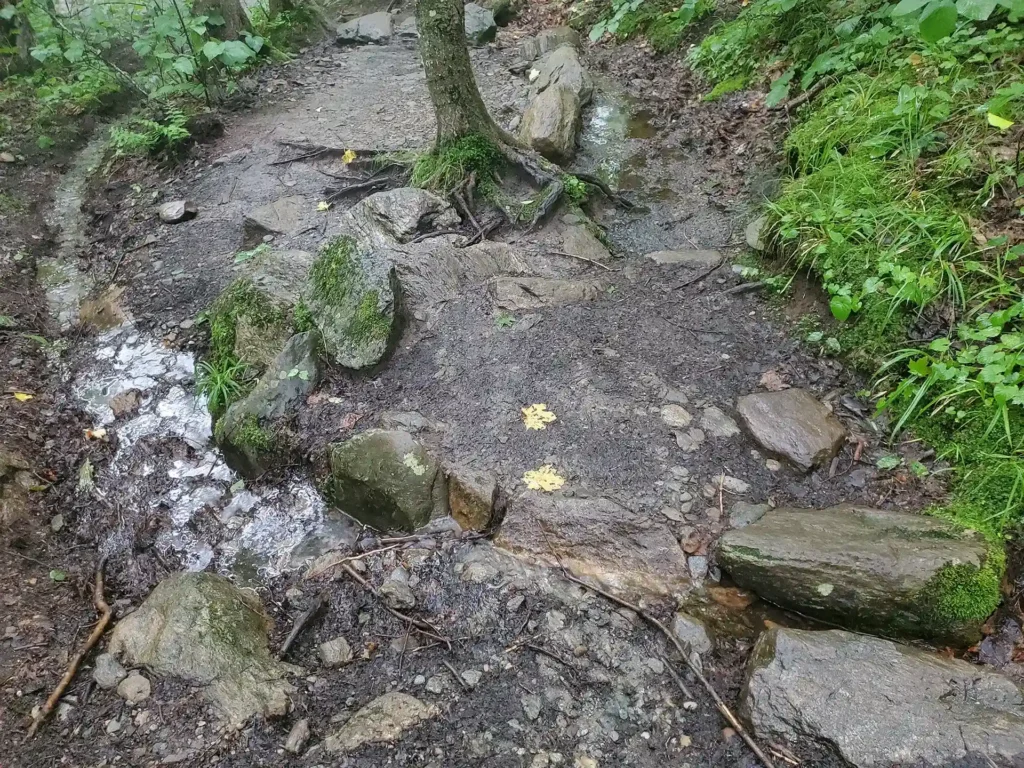
Waterbars (drains) are strategically placed on steep trail sections, to give water plenty of opportunities to drain off the trail and into the surrounding landscape. Waterbars must be large enough, frequent enough, and well-maintained to ensure they don’t get overwhelmed during the big, intense rain storms we see more frequently now.
Backcountry Infrastructure and Construction
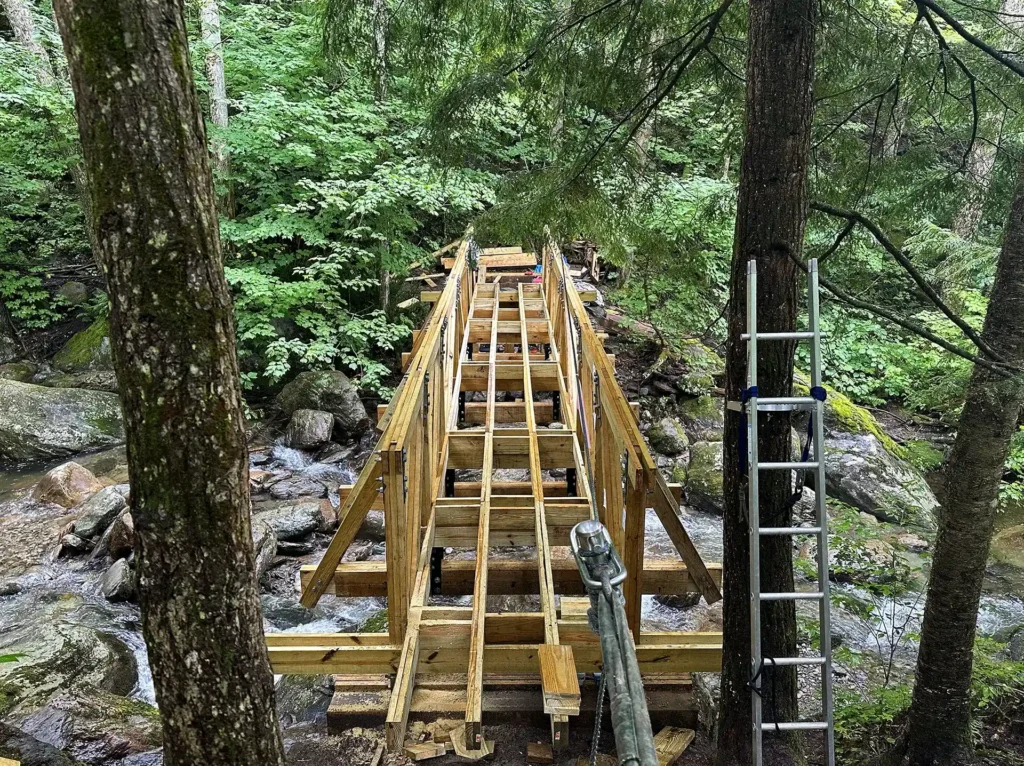
With climate change, Vermont is seeing more intense rain events with higher rainfall and water levels. Many backcountry bridges are no longer big enough to survive during flash flood conditions. GMC, along with its partners at state and federal land management agencies, are making informed decisions about where to replace damaged bridges and where to return to a natural crossing.
Hikers should be aware that not all water crossings have bridges, and in times of high water an alternate route may need to be secured. Where funding is available for bridge replacement, GMC is committed to installing bigger, more durable styles that will stay above high water lines expected in the future.
As the world of trail construction and management continues to grow and professionalize, GMC is also exploring more efficient forms of trail construction, including the use of mechanized equipment to build trail in some locations along the Long Trail System. Mechanized trail construction, followed by crews using hand tools and techniques, can make crews more efficient and reduce repetitive-use injury and burnout.

Learn More About GMC’s Work on the Trails
Want to Support Sustainable Trail Work?
Help ensure the trails are there for the next generation — and the next. Support GMC’s sustainable trails initiatives with a membership gift or donation today.