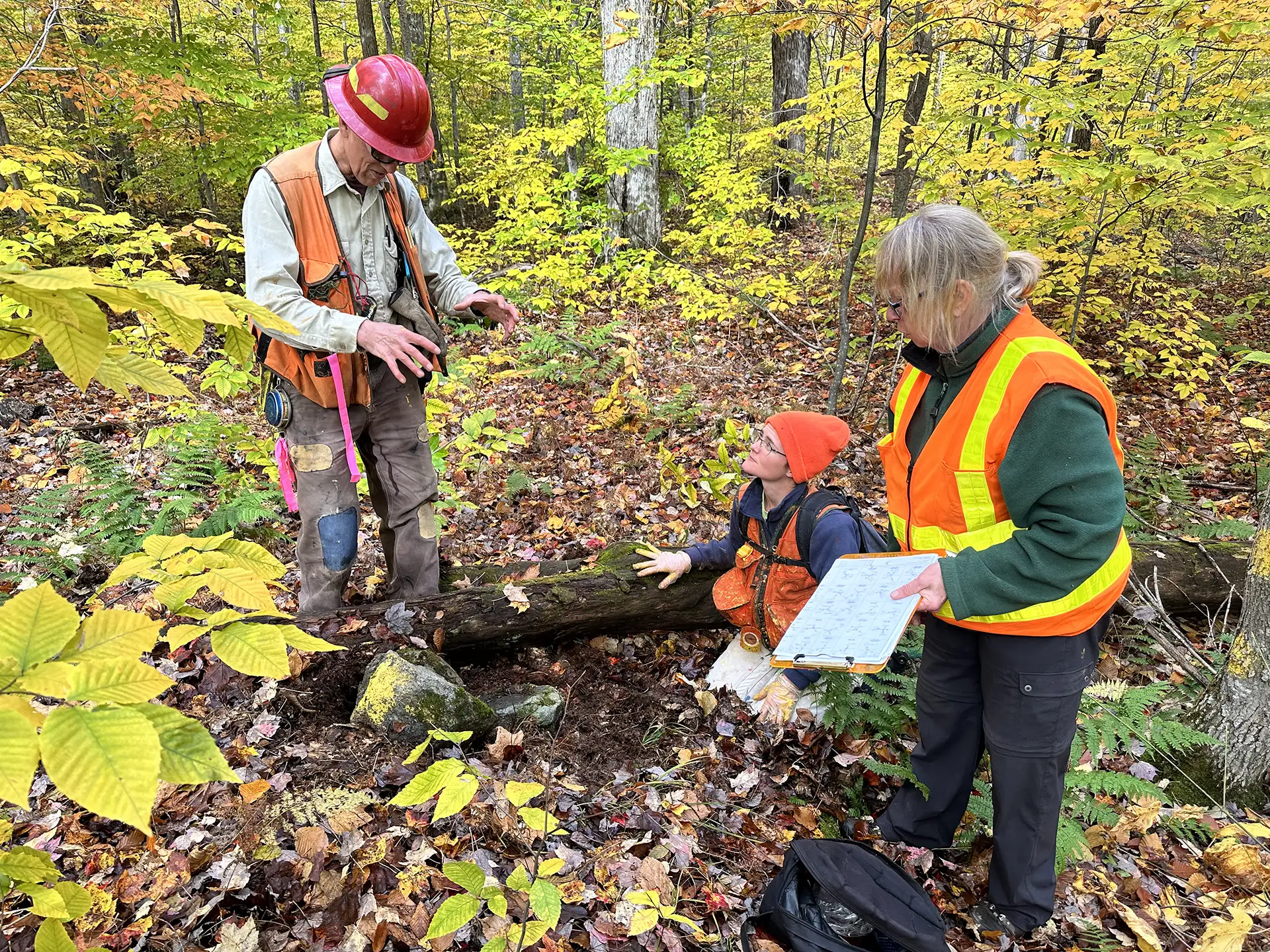

Monitor Boundary Lines and Land Use While Exploring the Backcountry
Help protect the Green Mountains and the “footpath in the wilderness” by becoming a volunteer Corridor Monitor. Corridor monitors are assigned a parcel of land and are asked to walk its boundaries at least once a year. You will use a map and compass to navigate the boundary lines of GMC-owned land, ensuring that all land use agreements are being upheld and reporting any encroachments.
Maintaining the Boundary
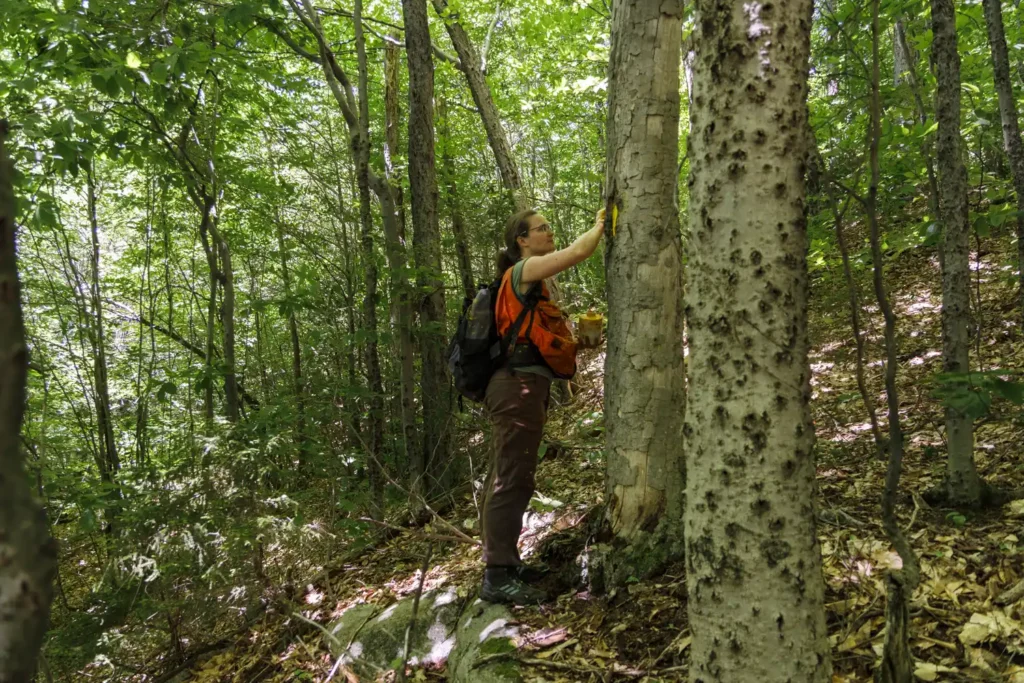
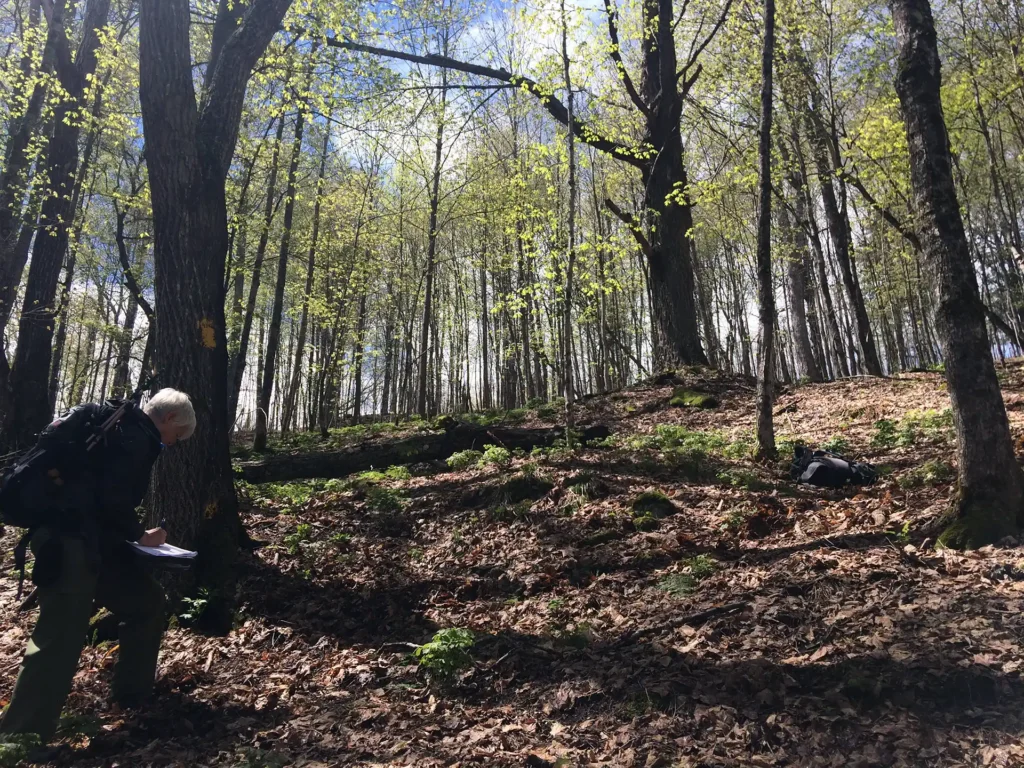
You will first visit your parcel with Land Stewardship Coordinator Rowan Kamman, who will provide training. Then, independently and on a flexible schedule, you will visit your parcel once or twice per year to monitor the boundary lines and keep it clear by painting boundary blazes, hanging signs, and clearing brush. You are asked to submit a report after every visit. Your work and presence along these remote boundaries help to preserve the remote character of the trail.
Volunteer Qualifications
- Basic backcountry and hiking experience
- Capable of hiking over rough terrain and navigating without the benefit of a trail (map and compass skills required)
- Ability to carry necessary equipment and work in varied weather conditions
- Good communication skills, friendly, and self-motivated
- Expectation of volunteering in the role for multiple years
Other Preferred Qualifications:
- Knowledge of Leave No Trace principles
- Wilderness first-aid skills and/or current first aid certification
Current Available Parcels
Check back later for open parcels to monitor as a volunteer!
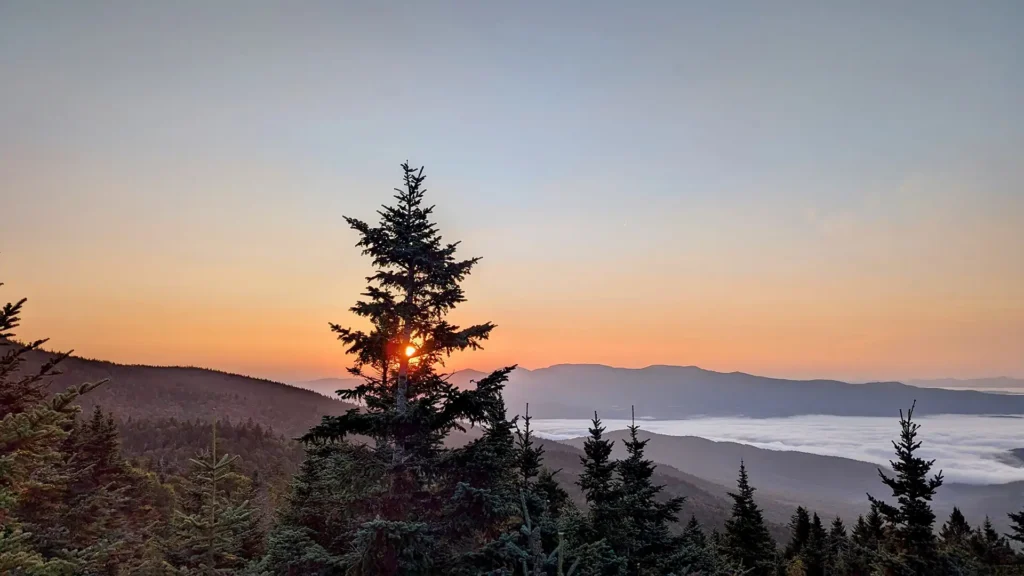
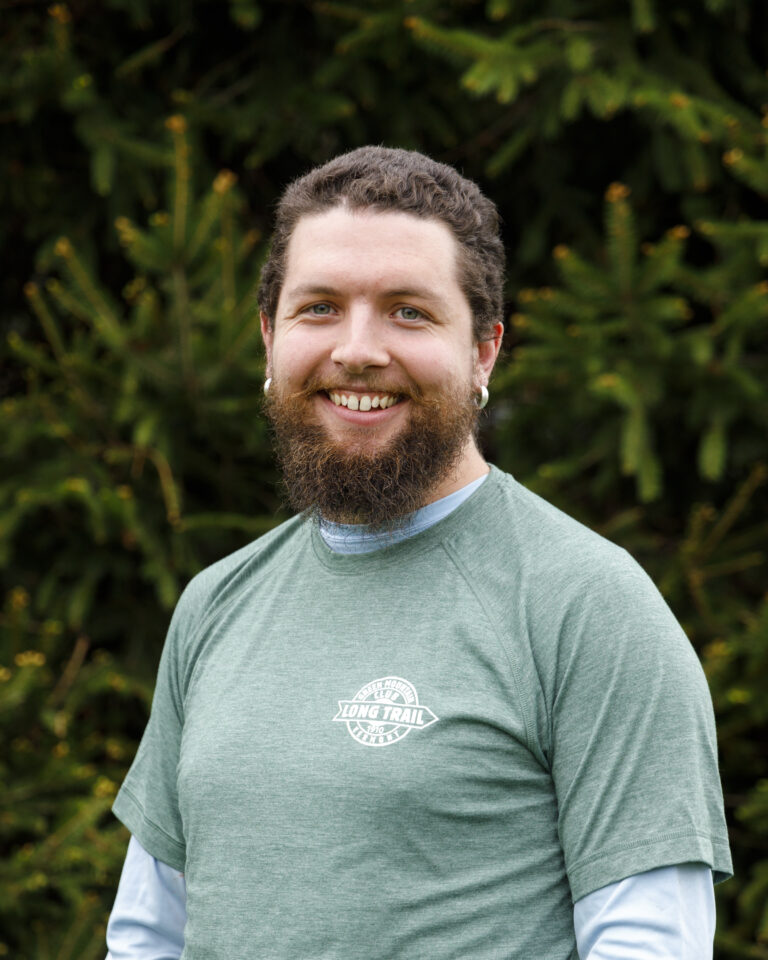
Meet Rowan: Land Stewardship Coordinator
Rowan’s work at GMC centers on the stewardship of conserved lands on both the Long Trail and Appalachian Trail in Vermont. Rowan coordinates the corridor monitor program, training and supporting volunteers in this crucial work across the state. He also supports efforts to manage invasive plant species on conserved lands. He gets to traverse far-flung hills and dales for work (often in rather straight lines), and he thinks that’s a pretty good deal.