Category: Education

  • What a Day Looks Like for GMC Caretakers

    Caretakers live onsite during their work weeks.
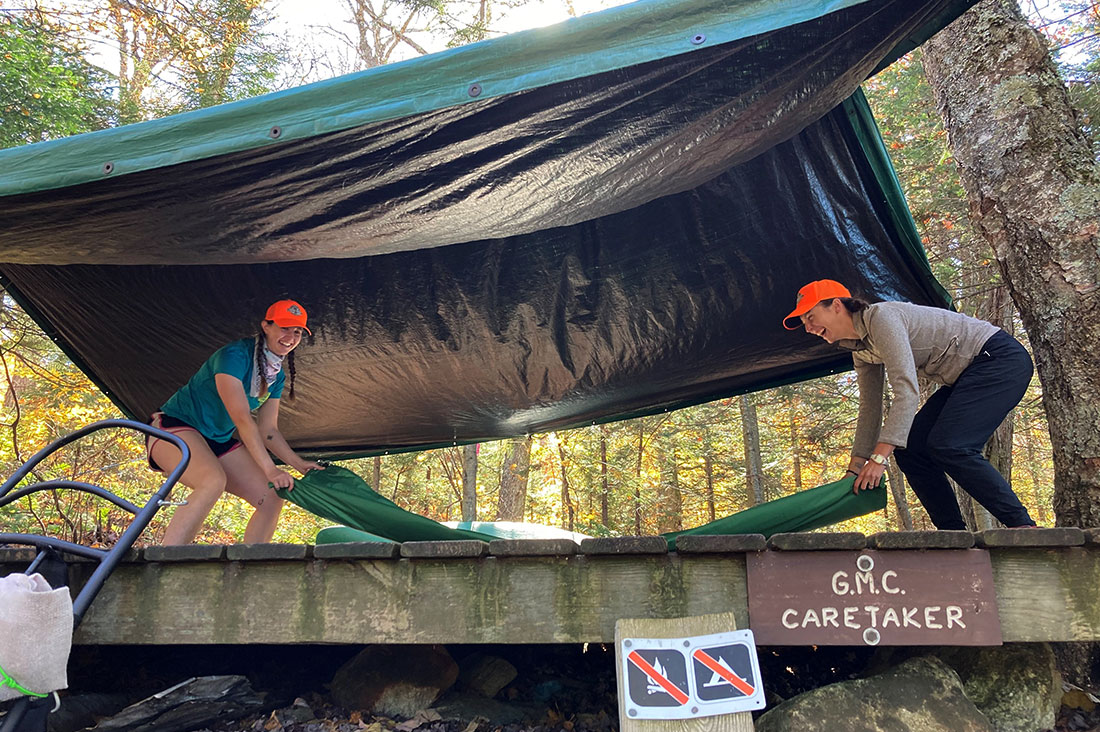
    Caretakers fold up a tent at Stratton Mt.

    This article previously appeared in the Spring 2021 Long Trail News under the title “Day in the Life of a GMC Caretaker.”

    As many more people than usual took up hiking last summer, the Green Mountain Club had to manage their impacts while making them feel welcome. Fortunately our caretakers can tap more than 50 years of experience educating and connecting with hikers while maintaining trails and overnight sites. Dozens of paid GMC caretakers live in the backcountry each season, helping hikers learn how to care for the special places they enjoy. This work, supported by your donations, keeps the Long Trail a world class hiking experience.

    Below, Nigel Bates takes us through a typical day in the life of a caretaker.

    A Caretaker’s Morning

    7:15 a.m.: I wake up on the caretaker bunk in Taft Lodge[1]. Most caretakers tent outside their shelters, but tenting is prohibited at Taft to protect the fragile subalpine ecosystem there. I sleep at Taft during my workweek, Thursday through Monday. On days off I leave the mountain and recharge at GMC headquarters in Waterbury Center.

    [1]In 2020 GMC did not station caretakers at Taft and Butler Lodges, to avoid the risk of COVID-19. We plan to resume staffing them this year, with appropriate precautions.

    7:30: After a few minutes to gather myself for the day, I climb down and make breakfast. I have to backpack my food to the lodge, so when I shop I choose lightweight but calorie- and nutrient-dense items. Today I opt for a big bowl of oatmeal with dried bananas, and plenty of maple syrup.

    As I dig in, I chat with a few thru-hikers about their plans. They’re headed south over Mount Mansfield to Puffer Shelter. I tell them about water availability, stress the ruggedness of the trail, and suggest Taylor Lodge as a fallback if they find themselves behind schedule.

    I learned the basics of trail maintenance, privy management and informal hiker education in a two-week preseason training, but like other caretakers, I learned the details of my range on my own.
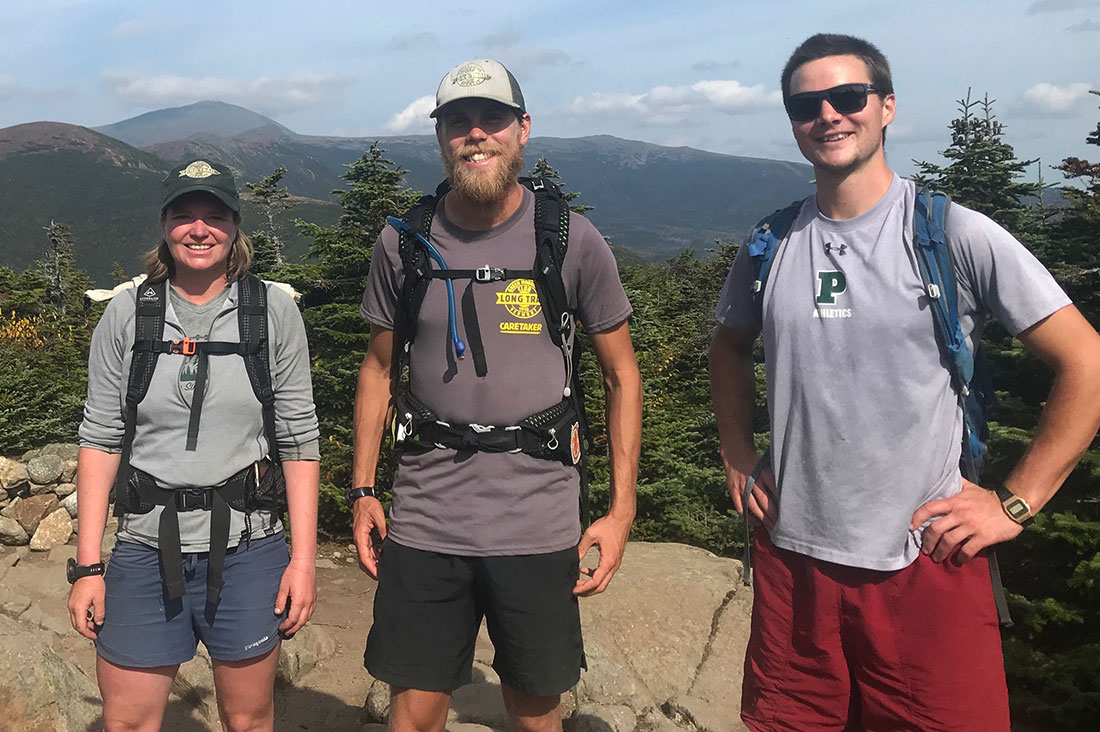
    Lead caretakers pose for a photo.
    2019 Lead Caretakers: Taylor Radigan, Nigel Bates, McV LaPointe

    8:15: Once the hikers are off, I gather what I need for a morning on Mansfield’s summit. Some of the supplies are obvious: food, water, a Long Trail map, a first aid kit, and lots of extra layers. Others might surprise you! I never expected to carry a ball of cotton twine (to delineate the trail above treeline), a tally counter (to record the number of visitors to the summit), or an extra dog leash (in case someone arrives at the summit without one), yet all of these are essential components of my summit pack.

    8:30: I start up the Long Trail toward the summit. My commute, while only 0.6 miles, is some of the most difficult terrain of the trail. Fortunately I’m now intimately familiar with it!

    I arrive to find this morning’s thru-hiker friends basking in the sun and taking in the marvelous view from Vermont’s highest point. They’re in luck — more than half the time, the summit is enshrouded in clouds. I point out some of the main features: Mount Washington and Franconia Ridge to the east, Lake Champlain and the Adirondacks to the west, and the spine of the Green Mountains stretching south to Killington.
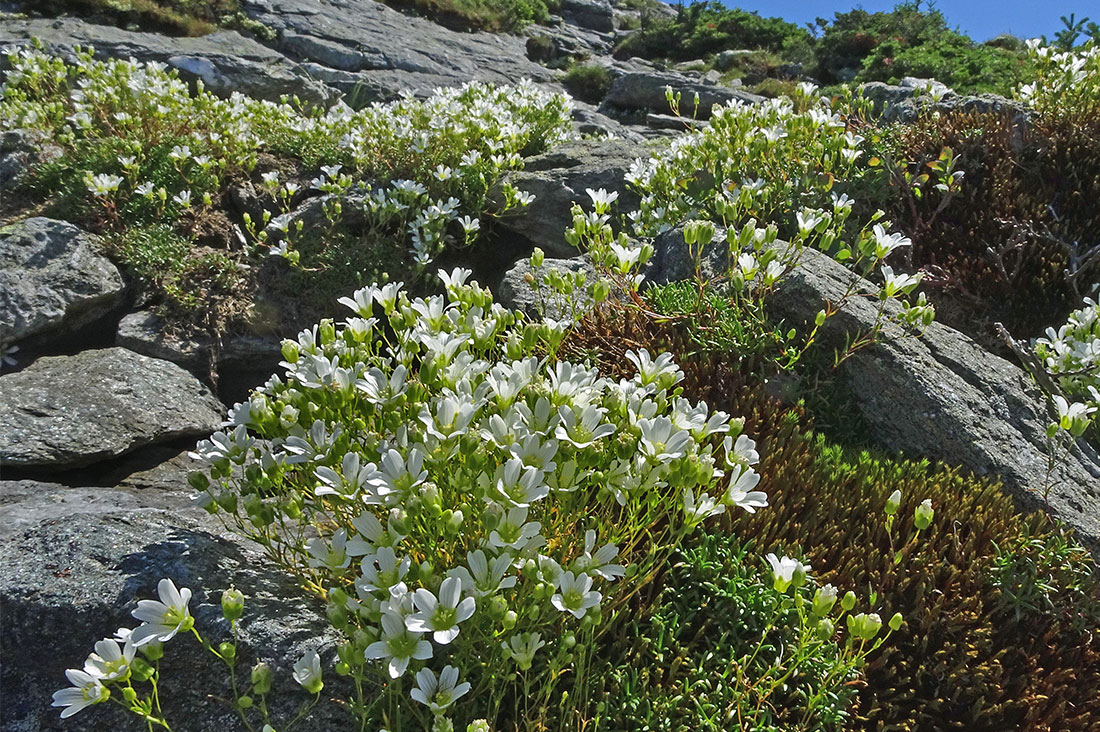
    White flowers of mountain sandwort, an alpine plant, on Mt. Mansfield
    White flowers of mountain sandwort, an alpine plant, on Mt. Mansfield. Photo by: Sheri Larsen

    Then I draw their attention downward to the alpine vegetation. These remarkable plants — diapensia, mountain sandwort, Bigelow’s sedge and others — survive on only a few of Vermont’s highest peaks, where harsh weather precludes trees. I remind them to step only on rocks above treeline to avoid trampling this fragile vegetation, a refrain I repeat countless times per day. Promising to do so, they continue their journey.

    9:15: A family of day hikers arrives. It’s a beautiful Saturday, so they are bound to be the first of many. I click my counter[2] four times as I say hello, and ask which trail they took. They hiked the Laura Cowles Trail, one of the more strenuous routes, and would like an easier way down. I recommend the Sunset Ridge Trail for stunning views as well as gentler terrain. I snap a family photo and remind them of the fragility of the alpine vegetation. They, too, promise to stay on rocks.

    [2]Caretakers count hikers so the club can chart trends from year to year, and devise trail management strategies accordingly.
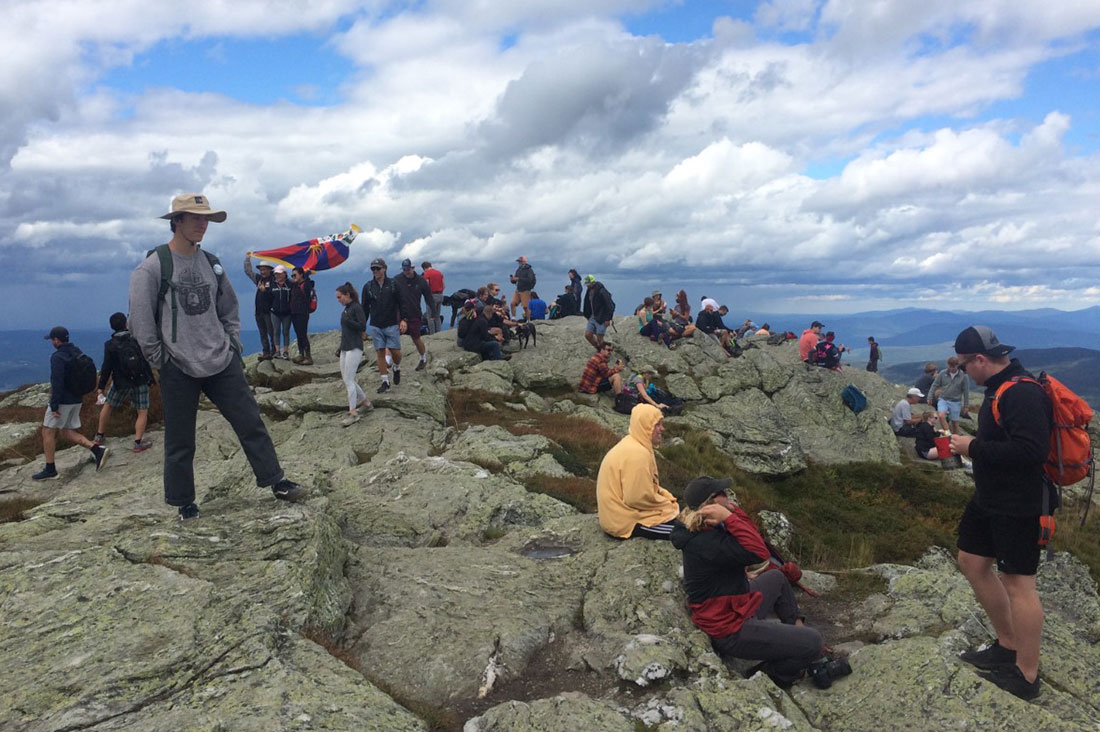
    Caretakers engage hikers, especially on busy days like this one on Mt Mansfield.
    Busy summit on Mt. Mansfield. Photo courtesy: Michael Dillon

    10:30: The summit is getting busy, so it’s time for a trash sweep. Caretakers lead by example, whether on duty or off, so we try to clean up while hikers are watching. As I crisscross the summit with my trash bag (staying on the rocks, of course), I talk with visitors about how we can all help keep the mountain clean. There are always many new hikers, and we strive to introduce them to the principles of trail stewardship in a welcoming and inclusive way. We hope to inspire all visitors, new or experienced, to pack out their trash, and maybe even some left by others!

    11:00: A man arrives and begins to set up a drone. I walk over, say a friendly hello, and ask him to refrain from flying the drone on the summit.

    “Why not?” he asks, a bit irritated. I explain that drones have a negative impact, not only on other hikers but also on birds. On cue, a peregrine falcon appears overhead and dives into Smuggler’s Notch. We’re both awestruck. As he puts the drone away, I thank him for respecting the wildlife that call Mansfield home. This was an example of soft stewardship: taking an opportunity to make hikers aware of the impacts of their actions and empower them to make good decisions.

    A Caretaker’s Afternoon

    12:30 p.m.: My summit shift is almost finished, and another caretaker arrives for the afternoon. Since it’s so busy we work together for a while to make sure everyone stays on the rocks while they eat lunch. When the rush subsides, I leave for some trail maintenance lower down the mountain.

    1:30: With more than 10 miles of trails in my range, there are always plenty of tasks. Today I decide to clip the corridor on the Hellbrook Trail. Corridor maintenance is a delicate balance: too narrow, and hikers are hit in the face with annoying branches. Too wide, and hikers tend to trample vegetation on the edges of the trail. I clip conservatively here to preserve delicate mosses and bunchberries along the path.
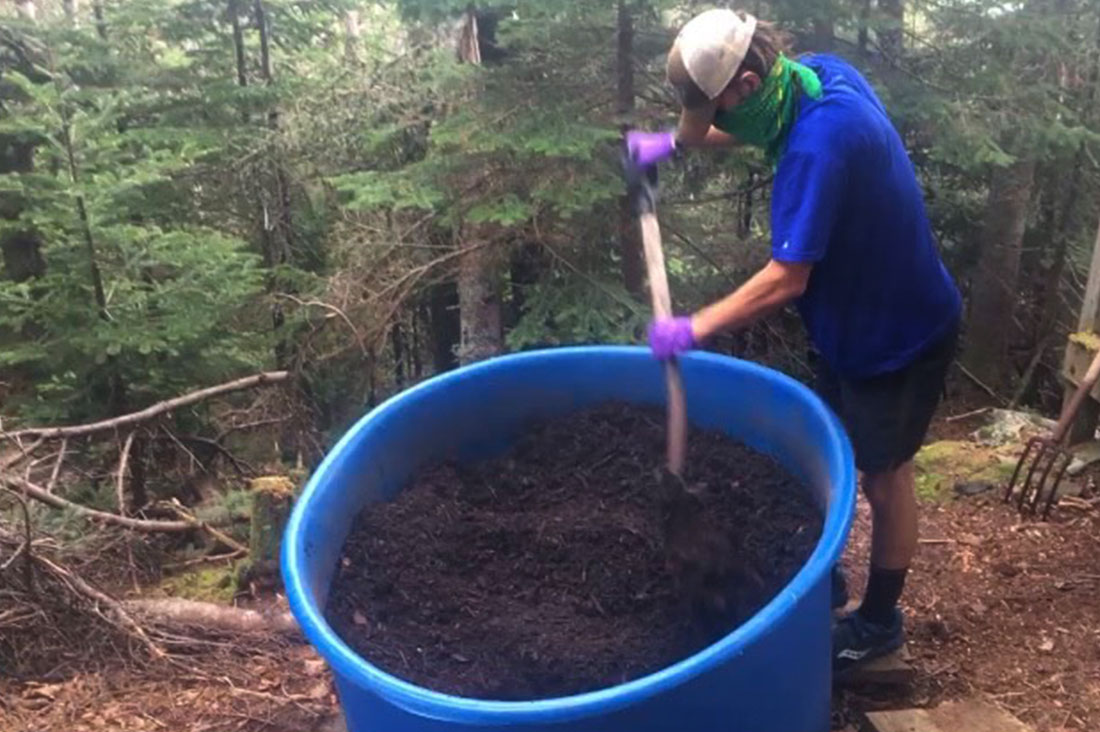
    Compost run on Glen Ellen
    Nigel stirs compost at Glen Ellen.

    3:30: I rush back to stir the composting run at the privy at Taft. Once a week I spend an hour digging into the pile with a spading fork to break up clumps and redistribute the mixture of waste and bark mulch for another cycle of heating. I explain to a curious group of teenagers that because Taft is such a popular site, it generates a lot of human waste, so we use high-temperature composting to speed the process. We all agree that the process is kind of gross, but also kind of cool.

    A Caretaker’s Evening

    5:00: After dousing myself in hand sanitizer, I hike out to the Adam’s Apple for a few minutes of solitude before overnight hikers start arriving. Caretaking is a full time job, and while I love interacting with people, it’s important to find time to recharge and remember why I’m out here in the first place. The dramatic views of Lake of the Clouds and Smuggler’s Notch never fail to blow me away.
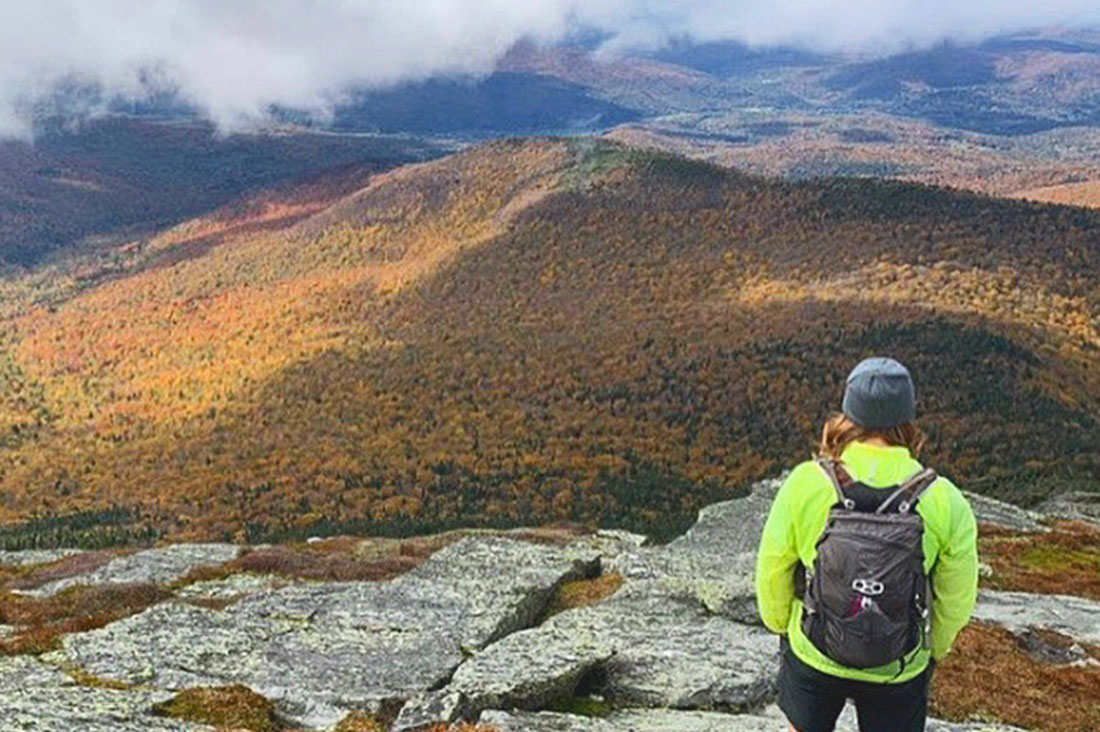
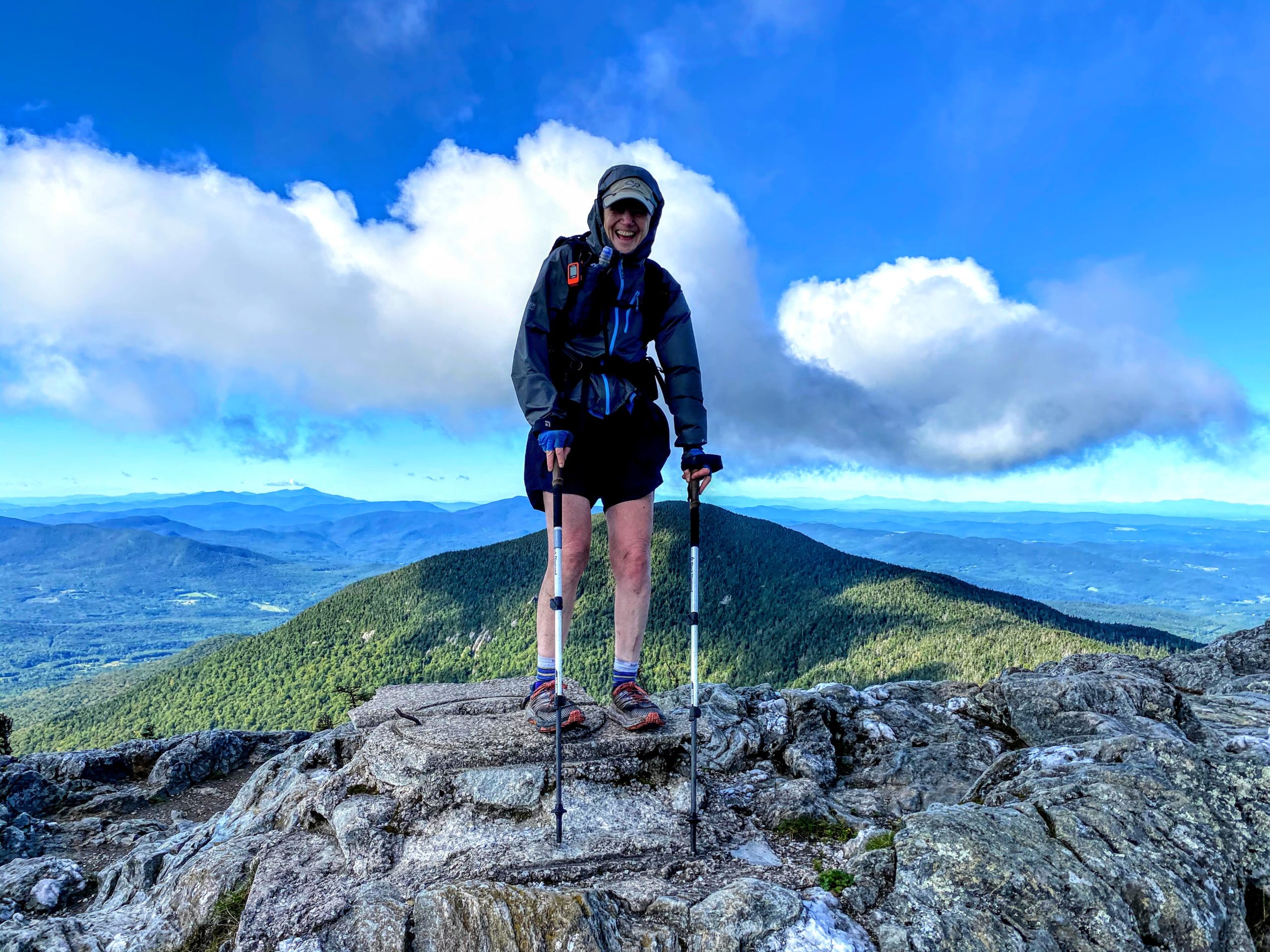
    Nigel takes a breather on Camel's Hump.
    Nigel takes a breather on Camel’s Hump.

    6:00: As it enters its second century, Taft Lodge welcomes a new generation of hikers. This evening while backpackers stream in I orient them to the privy, water source and washpit, gently reminding them of Leave No Trace principles as needed. As stewards of the backcountry, caretakers and hikers new and old should pass along our principles with kindness and respect.

    Soon enough the sun goes down, chatter subsides, and hikers retire to sleeping bags. I climb to my bunk and join them in slumber. I’m tired, but it’s a good fatigue, the kind you feel after a long day making a difference. Tomorrow I’ll wake and do it all again. But every day on Mansfield is a little different, and I look forward to seeing what tomorrow will bring.


    From May through October Green Mountain Club backcountry caretakers from Stratton Mountain to Sterling Pond spend their days protecting ponds, summits and trails while helping the hiking public get more from their time in the Green Mountains. This rewarding and vital program is possible only through your support through memberships and donations. You enable each caretaker to protect the backcountry, and to welcome and inform the hiking public.


    Nigel Bates started with the GMC as Mansfield Lead Caretaker in 2019 and is now entering his second season supervising the caretaker program.
  • Backpacking Advice from End-to-End Hikers, Part 2

    If you’re curious about the Long Trail or planning a thru-hike, learn from folks who have completed an end-to-end hike on the Long Trail. Panelists shared advice with the hiking community based on their recent experiences on the Long Trail. Check out attendees’ questions below — about technology, training, pacing, transportation needs, solo hiking, and weather and trail conditions — answered by panelists and GMC staff.
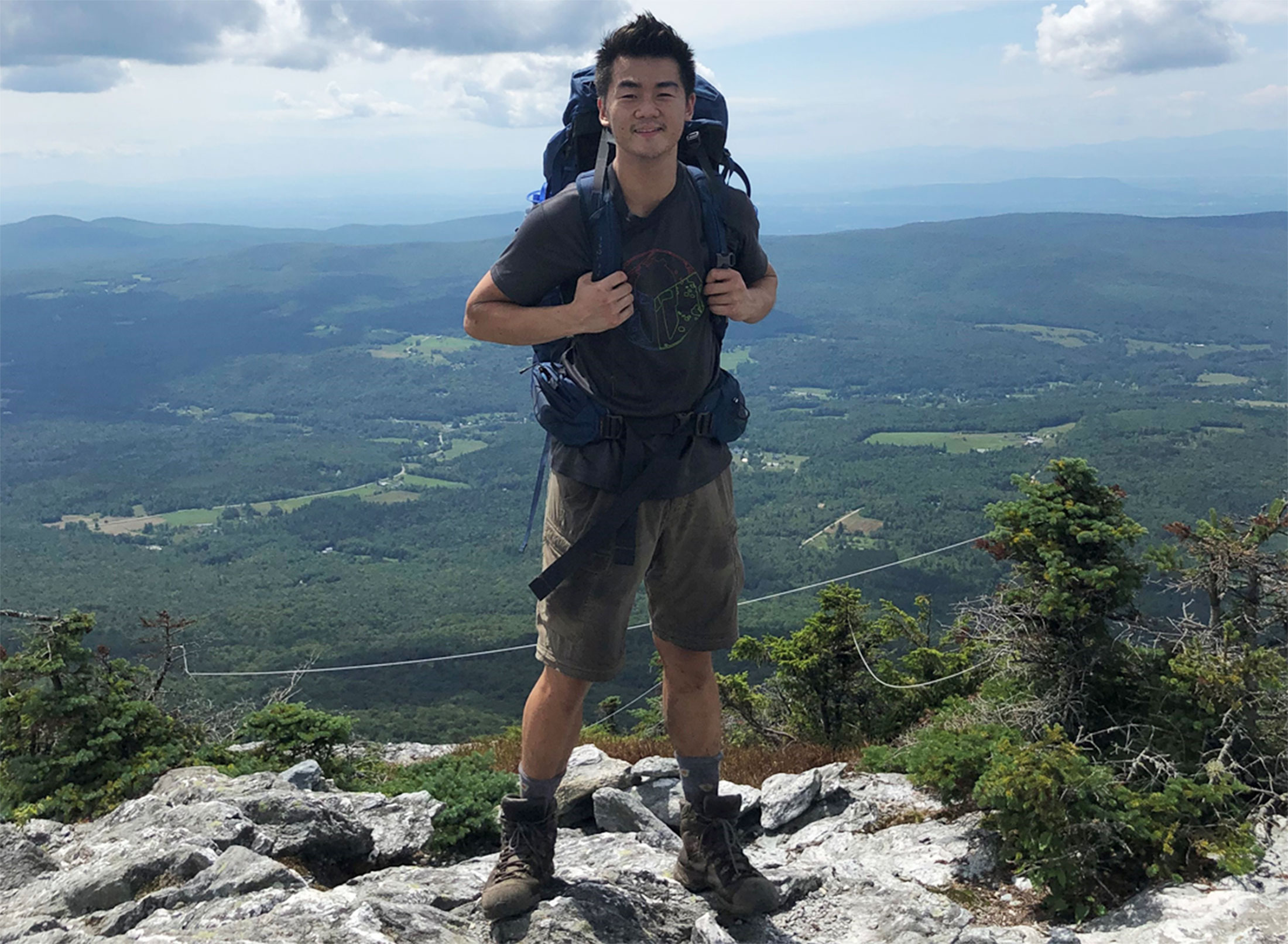
    End-to-Ender George Ma gives advice for hiking Long Trail
    Panelist: George Ma completed his first thru-hike last summer on the Long Trail, NOBO, at age 18.
    Be sure to also:

    Training

    What is the earliest the trail is open? It depends on snow conditions of the winter, the weather of spring, whether the trail faces north/south, and the elevation of the trail. Right now, southern Vermont, low elevation is near hiking season. Northern Vermont is still very snowy with over two feet of snow or full mud conditions. Green Mountain Club advises to wait until Memorial Day Weekend for any high-elevation training hikes. Hiking recommendations that are appropriate for mud season here. How much did each of you train or prepare fitness wise before the hike? Depends on how you want to tackle your hike. If you want to go into the hike and start with medium – small miles and then pick it up while you get your trail legs, then just a bit of running and a bit of hiking with a pack. No serious training. If you want to go hard immediately, then I would walk every or every other day for at least 2-3 hours with a pack for the weeks leading up to the trail. I did the former option.

    Pace & Timing

    Did you take 0 days? Is it realistic to hike the trail in ~3 weeks? It is possible, but definitely a bit on the faster side. I took two zero days. I have averaged about 14-15 a day on all the non-zero days, and I finished in just barely over 3 weeks (counting the zero days). So it’s possible! Bit tough. How many days did it take each of the panelists? I think it took most of us 20-23 ish days. I’m planning a September thru-hike – probably SOBO – and I wondered if I should have any concerns about hunting season. You shouldn’t be super concerned. I hiked during hunting season and didn’t see anything. Have blaze orange visible from front and back — big banana or blaze hat. Here are tips for hunting season.

    Transport

    Panelist and thru-hiker Emily Hunt
    Panelist: Emily Hunt (she/her) hiked in fall 2020, SOBO. She used public transit and shuttles to move to-and-from the trail.
    Can you avoid hitching into town to pick up mail drops? You can. There are shuttles and shuttle services who you can use. Green Mountain Club can help get you the list of shuttle services. How far do you have to hike off trail in general to get to resupply in towns? I didn’t do this, but from what I heard from other hikers it’s about maybe 5 miles max? Not entirely sure but around there. Sometimes 3 miles, sometimes 5 depending on the town. Is there somewhere we could park our car for 3 weeks near the southern terminus? Yes! The Greylock Community Center. Or you can find a place in Bennington and take the Green Mountain Express down to Williamstown.

    Technology & Other Resources

    People are referencing phones and apps. Did you carry solar chargers or…? Invest in a really great portable charger. The one I used had five full charges which can last me a bit more than a full week if my phone is on airplane mode and I use the apps a lot. Charge up when you go into town! What brand portable charger did you have? I have used multiple. 26800mAB is the amount I have in my chargers usually though. That’s totally enough. You can just search up 26800 on Amazon and you can find that. I’m interested in lightening my pack, so very interested in more feedback on heavy items that you thought you’d absolutely need, but didn’t (already nixed reading books). Honestly, I nixed my battery pack after the first section. I didn’t need it after 5 days and it seemed to weigh almost as much as my sleep set-up. Airplane mode and off kept my phone alive most of the time. What cell phone service tends to be the best? All depends, the trail is up and down the state. Do you think that Guthook (or similar app) is the best way to access water sources? Guthook Guides is great for finding water supplies. Highly recommend that app! What’s the best weather app? I used my default iPhone one. Worked pretty well!

    Terrain & Elements

    Panelists: Jennifer Royer and daughters Cassandra, and Jessica hiked last July. The three shared their mother-daughter experience as local Vermonters who were supported by friends and family along the way.
    Are there any major water crossings to be aware of? Nope! What was the worst weather you experienced during your hike? IT POURED HARD some days. I was hiking during a tropical storm. That’s the worst it will get though. Only hard rain. I hate the rain, so sometimes I woke up 3am to hike. I would just check the weather and try so hard to hike anytime it was not raining. Not too difficult. Are there are any sections you think would be better to avoid in the rain if possible (from a safety standpoint)? Certain sections of Mansfield and Camel’s Hump can get slippery. And above treeline navigating in rain and wind can be challenging, let alone unpleasant.

    Solo Hiking

    I’m very interested to hear tips for solo thru hiking! Conversations with yourself keep you going. Try and meet people on trail that go about the same pace as you, and meeting them at shelters and talking with them are always pick me ups! Also, when you get the chance to talk to day hikers, do it! Any tips for solo female hikers? Trust your gut! Most people are nice and friendly, and happy to chat. And make sure someone knows generally where you will be (let family back home know where you expect to be and check in when you get to town).

    Documentation

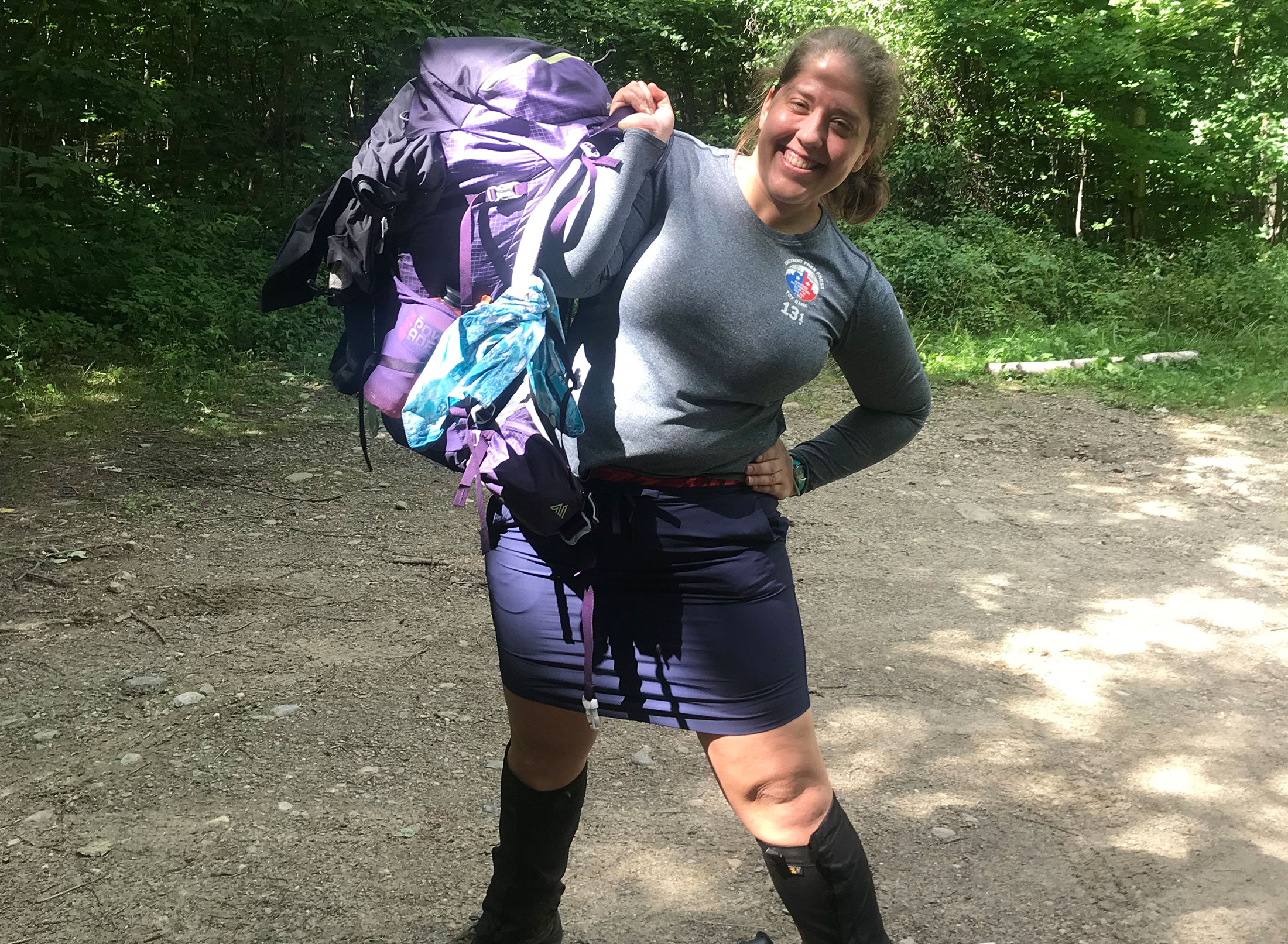
    End-to-End Hiker, Joan Butterton
    Panelist: Joan Butterton is an infectious disease doctor who took some time off from treating Covid to solo hike NOBO last August, her first solo backpacking trip.
    Do you need to register to do the LT? Or can you just go to a terminus and then start in? Just start! Although, as. a safety measure, always good to write your name in the trailhead registries as you go. What’s the best way to log my hike so my thru-hike gets certified? The certification process is pretty simple. I did not log too much. I actually only found out about the certification after I was on trail. Just keep a trail journal honestly and fill out the application when you finish the trail. Application is pretty basic stuff like start date end date and pictures.
  • Backpacking Advice from End-to-End Hikers, Part I

    Last week, seven end-to-enders took questions from the hiking community about their experiences hiking the Long Trail. Whether you’re simply curious about the Long Trail, or you’re actively planning an end-to-end hike over its 272 miles, browse the attendees’ questions and the answers from panelists and GMC staff. [Part One of this Q&A covers gear, footwear, food, shelter, wildlife safety, and hiking with dogs. Part two will cover aspects of planning, including technology, training, pacing, transportation needs, solo hiking, and conditions.]
    End-to-End Hiker, Joan Butterton
    End-to-Ender & 2021 panelist, Joan Butterton

    Meet the panelists:

    • Joan Butterton (she/her) is an infectious disease doctor who took some time off from treating Covid to solo hike NOBO last August, her first solo backpacking trip.
    • George Ma (he/him) completed the Long Trail NOBO last summer at age 18, before his freshman year of college. It was his first thru hike.
    • Emily Hunt (she/her) hiked in fall 2020, SOBO. Emily has lots of insight into using public transit and shuttles to plan your hike.
    • High schoolers Cassandra (she/her) and Jessica Royer (she/her) hiked last July with mom Jennifer Royer (she/her) and another friend. Cassandra, Jessica, and Jennifer shared their mother-daughter experience as local Vermonters who were supported by friends and family along the way.
    • Kat Ruegger (she/they) hiked the Long Trail last year prior to starting the Fall semester of college. The Indianapolis native finished the LT in just over two weeks alongside her partner and their dog, Lego. Learn how they prepared on local trails and shuttled themselves around the trail system.
    Of course, these panelists shared recommendations that worked for them, and should serve as a starting point. Training, testing gear, and doing your own research will help you find the best options for you. Happy hiking!

    Food & Water

    How much water do you recommend carrying at a time? Two liters. There are times where you should have more, which is where a collapsible water bottle can be helpful. What containers did you bring for water? Smartwater bottles and bladders! Favorite meals? Ramen Bomb. Make ramen, then drop a packet of mash potatoes in it. Oh my god my mouth is watering thinking about it. Best ways to keep food cold, if at all possible? Food in the middle of the pack can be kept reasonably cool. How do you cook the nettle? When I cooked it, I put my dinner (usually lentils, coconut milk powder, and some dehydrated veggies) in my cup and on my stove, then stirred the nettle in at the end. It’s similar to spinach, so it cooks very quickly. Are there a lot of towns to re supply on the way? There are towns every couple of days, depending on your speed. It is fairly easy to fully resupply in towns! How many days of food did you pack to play it safe between resupply? It’s a good rule to plan for an extra day. Even if it’s emergency food like bars or something else, always good to have a little extra. Your number of days will depend on how often you want to re-supply.

    Gear

    Plan your gear for an end-to-end hike. What type(s) of water purification do you recommend? I used to use gravity (like Platypus). It works well. In my opinion though, squeeze filters — like the Sawyer Squeeze — are the best. Not the mini Sawyer Squeeze though; get the one bigger then that. I highly recommend. What capacity backpack would you recommend? Mine was 75L, but some people do 60. Some do a bit more. That’s about the range that works though. Did you need a bug net on your hammock in September? Mine has a built in bug net so I always have it because the bugs love me! Most people would probably be ok with no net SOBO in September. Did anyone bring rain pants? (And what month did you hike?) I did not have rain pants. I hiked in August. There was a lot of rain, including a tropical storm. However, I do not think rain pants are necessary, especially if you may want to go ultralight. I used rain pants on the AT but didn’t bother this time. I have knee high gaiters to keep the rain out of my shoes. Otherwise, you get too hot with the pants, so you sweat more than you would get wet from the rain! Would anyone recommend hiking poles, or does it not really matter? They all recommend hiking poles! Hiking pole type/brand? Go to a store and try them out and see how they feel in your hand so you can find what you like! Bathroom questions: did anyone bring a shovel? A bidet? Privy only? Bringing a trowel is a good idea. You never know when the urge is going to strike. With a good, sharp trowel for Vermont’s rooty and rocky soil you can dig a proper cathole, which is 6-8 inches deep and 2-4 inches in diameter. A proper cathole is important for minimizing impacts to water quality, wildlife and other hikers. Imagine the size of a Nalgene. Curious what people used for stoves, and if anyone went without one? I used a Jetboil, which I used on the whole AT and LOVE it! How much did your pack weigh? Mine was about 34 pounds to start, including 2L water and food for six days.

    Feet & Footwear

    Did anyone hike in sandals? Doesn’t sound like it! I wouldn’t suggest. There are a lot of rocks on the Long Trail. Any issues with wet feet? Socks? Wet feet are always an issue. Socks can be a luxury item, and you’ll want shoes that drain well. Hang your socks on your bag during the day to dry. You mentioned a liner sock and I’d love to hear it again! They are called Injinji.

    Bears & Food Storage

    Bear safety in the Vermont backcountry What is the best method for bear proof food storage? The best is a hard-sided bear canister. They are very user-friendly with little opportunity for user error. They’re durable, can hold 5-7 days of food and can be easily cleaned. And you can use them to sit on, use as a footrest or whatever other clever use you can come up with. If you have a bear canister, where do you put it overnight? Sleep with it 100 yards from your tent, privy, shelter, or water source. Make sure it’s closed, and stick it nested within a tree, under a log or in some branches. You don’t want it near a cliff, water source, or anywhere the bear could roll it around. If you are using one of the provided bear boxes, does it need to be locked with a padlock? No, you don’t need to bring a padlock. The provided bear box design has a locking mechanism on it. (List of bear boxes on the Long Trail.) How hard is it to find a tree for a proper bear hang on the LT? It’s hard in my opinion! The high elevation tenting spots don’t have many solid branches. And after a long and tiring day of hiking searching for good trees is exhausting. That’s why we suggest a bear canister or an Ursack. Please talk about how effective you found the bear bag, specifically where did you put it at night? Did you have any problems with animals chewing through the Ursacks? Hanging a bear bag is hard on the Long Trail. Many trees are at high elevation and too weak for a good bear hang. That is why we suggest a bear canister or Ursack. Is it enough to secure an Ursack to a tree rather than doing a full bear hang? Yes.

    Wildlife & Safety

    Did you have any issues with ticks, and if so, what did you do in terms of tick prevention? Not too many honestly. Just check every night and spray bug spray if you really want to be cautious. I don’t think I had to deal with a single tick though. More tick safety tips here. Did folks spray their clothing with permethrin before heading on the trail to avoid ticks? Did not have too many problems at all with it. But if you used permethrin, you will totally be fine!

    Shelters

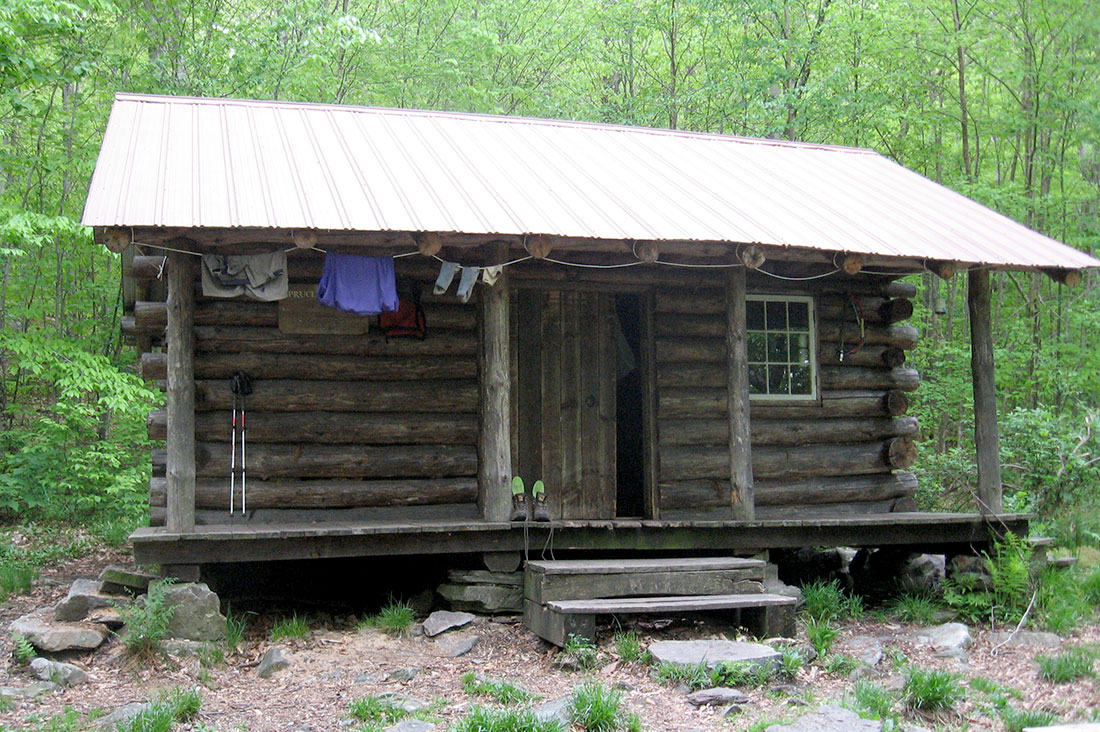
    End-to-End hikers recommend Spruce Shelter for its view.
    Spruce Peak Shelter.
    Be honest, how are the spiders in the shelters? There are not many spiders in the shelters! How much are the fees at shelters? Fees are $5 at the shelters which have caretakers. You can email to find out which shelters have caretakers. Which shelter would you highly recommend, and why? I’m looking for the best views! Puffer is awesome. Spruce and Butler too! Also at the top of Abraham are some sweet campsites that are not on Guthook Guides.

    Dogs

    Are dogs allowed on the trail? Yes, dogs are allowed on the trail. There are sections of the trail which are very rugged, so your dog should be in good shape. Also, you should be prepared for your dog to be around wildlife and other people. And there are places where you should leash your dog. More info about hiking the LT with dogs here. How did Lego, Kat’s dog, get down “Ladder Ravine?” A mixture of her scrambling and us passing her down using the handle on her backpack — imagine holding a suitcase with legs.
  • Spring is here! Can you find it?

    Spring Peeper calls are a telltale of spring because they're looking for mates. Spring officially started March 20, but warming weather ushers in the real telltale signs of spring. Flowers are blooming and trees are budding. Birds are migrating back to Vermont to breed, or they’re stopping in for food and rest on their way further north. You don’t have to be an expert naturalist to observe these seasonal changes. You just have to know where to look.

    Where to Look for Signs of Spring

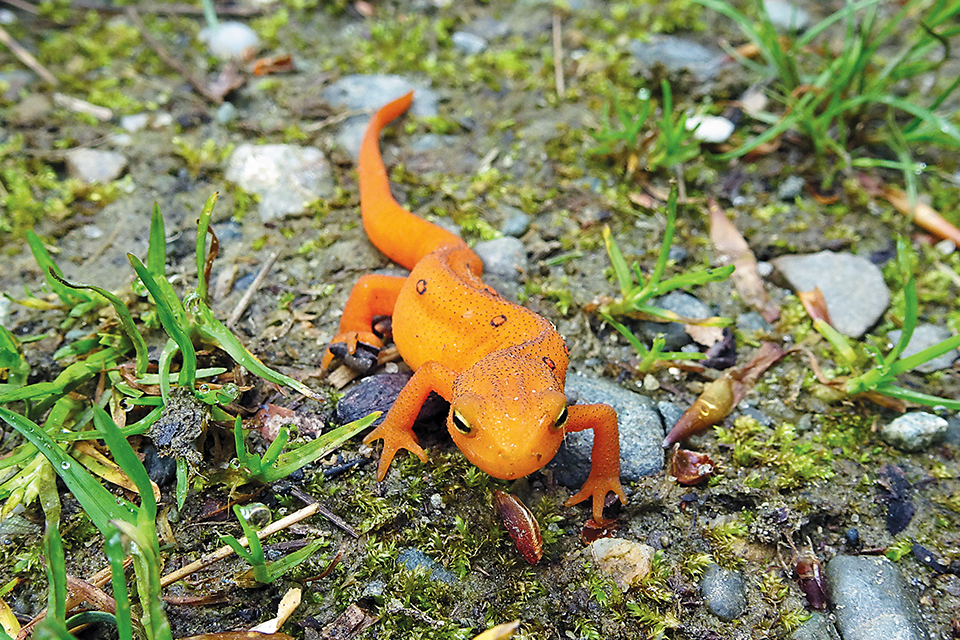
    Newts are amphibians that you might see in wet places come spring.
    Newt on the Frost Trail. Photo courtesy: Sheri Larsen

    In the water:

    Amphibians — such as spring peepers, wood frogs, blue-spotted salamanders, eastern newts, and red-backed salamanders — are all telltales of spring. That’s because as temperatures warm, they gather to mate. Near any wet and marshy areas in spring, and you are sure to hear choruses of short, ascending whistles. These calls are male spring peepers, a type of frog that is looking to mate between mid-March and July. They spend the winters dormant and nearly frozen through, surviving due to a natural anti-freeze. Learn more about Vermont’s frogs here and see if you can spot any amphibians on your next outing. Woodland lakes and ponds are a good starting point for spotting Vermont’s amphibians, but a better bet (if you can find one) are the state’s vernal pools. Vernal pools are seasonal bodies of water; they form from rain and snowmelt, but dry up in the summer. They’re a favorite among frogs and salamanders for laying eggs because there are no fish or other predators to eat the eggs. Visit a nearby vernal pool and see if you can find eggs (gooey sacks with black dots) and tadpoles. Take pictures, but remember that we’re visitors to these natural spaces. Don’t chase, poke at, or otherwise harass the wildlife and leave their home as you found it.

    In the air:

    Eastern phoebe is one of the earliest arrivals in spring.
    Eastern Phoebe. Photo courtesy: Katja Schulz, Wikimedia
    Many birds migrate south ahead of winter weather looking for abundant food sources and return in the spring to breed. New faces in the neighborhood are a telltale that spring is arriving. Check out this list of Vermont’s common wildlife by season, or start with these five, easy-to-identify spring birds:
    1. Eastern Phoebes
      • These plump birds have large heads, grayish brown bodies, and a whitish belly.
      • Find them in open woodlands near water, although nests commonly building eaves, overhanging decks, and around bridges.
      • Their song is fee-bee. It’s easily confused with the chickadee’s swee-tie, but the phoebe’s song is raspier and has two parts.
    2. Killdeer
      • These shorebirds are identifiable by their short plover bills and slender and lanky legs; they have brownish-tan coloring, white bellies, and two black bans across their chests.
      • Find them in near sandbars, mudflats, and grazed fields.
      • Their call is kill-deer.
    3. Ruby-Throated Hummingbirds
      • These glistening hummingbirds are easily distinguished by emerald green coloring on the back and head. Males have an iridescent red throat.
      • Find them in deciduous woodlands (which means most of the trees lose their leaves in winter), forest edges, orchards .
      • Their call is chee-dit. More likely, you’ll hear the humming of their fast-flapping wings; it’ll sound like bees buzzing.
    4. Hermit Thrushes
      • These round-headed birds are Vermont’s state bird, and have brownish feathers, a reddish-tale, and white chest with smudged spots.
      • Find them in open forest, near trails, pond edges, and areas opened by fallen trees.
      • Their song is ah, purity purity.
    5. Barn Swallows
      • Barn swallows have a cobalt blue coloring above, and tawny coloring beneath. Their deeply forked tails stream out, and you might recognize them as something from a cartoon.
      • Find them in open areas such as parks, ball fields, hay fields, and beaches.
      • Their call is whirrs.
    Another telltale that you might see in the air (or all over the car) is pollen. Pollen, a common source of allergies, is actually a plant’s way of reproducing. Pollen is produced by male plants, and is carried off by wind and pollinators (such as bees) to a female plant. When the two meet, seeds are produced to start the next generation. Look around your neighborhood: can you find pollen in the air, on a pollinator, or on a plant?

    On the Ground:

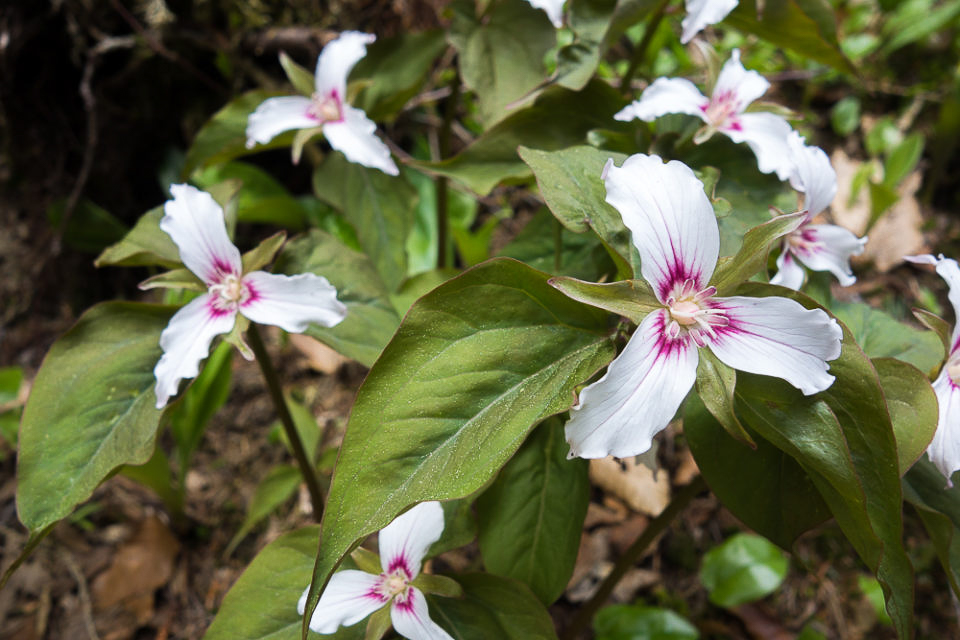
    Painted trillium.
    Painted trillium.
    A favorite telltale of spring are its wildflowers. Before the forest canopy fills with leaves, the sunlight is able to reach the forest floor. This spurs many wildflowers to bloom as they turn that sunlight into energy, flower, and reproduce. Some of the earliest bloomers include trillium, trout lilies, and spring beauties. How many wildflowers can you pinpoint on your next nature walk?
    • Trillium has three petals and three leaves. You can find them in red, white, and white with pink coloring.
    • Spring beauties are small, with white to light pink flowers.
    • Trout lilies have yellow flowers and mottled leaves, resembling its namesake fish.
    • Dutchman’s breeches are small white flowers resembling the namesake pant.
    You should also check out this list of common Vermont wildflowers for more info on when they each bloom. Like birds, another telltale of spring is the animals we haven’t seen since fall. Some emerging creatures — like bears and skunks — have spent most of winter slumbering. You’ll start to see them out and about in spring (don’t forget to maintain a safe distance). You might also notice more nests and dens. Rabbits, which have left their prints all over the snow through wintertime activities, are now raising their young. You may see their dens in the lawn; be sure to keep a respectful distance. Which animals have you noticed this season? Are there creatures you haven’t seen, but maybe heard their calls or noticed their tracks? Share photos of your scouting adventures. Good luck adventuring and finding signs of spring, and remember to keep a safe and respectful distance. Learn more about Leave No Trace principles to do your part in protecting and stewarding natural areas. 
  • Winter Camping Do’s & Don’ts for a Successful Trip

    This article was written by John Plummer, VHCB AmeriCorps member & GMC group outreach & field coordinator.
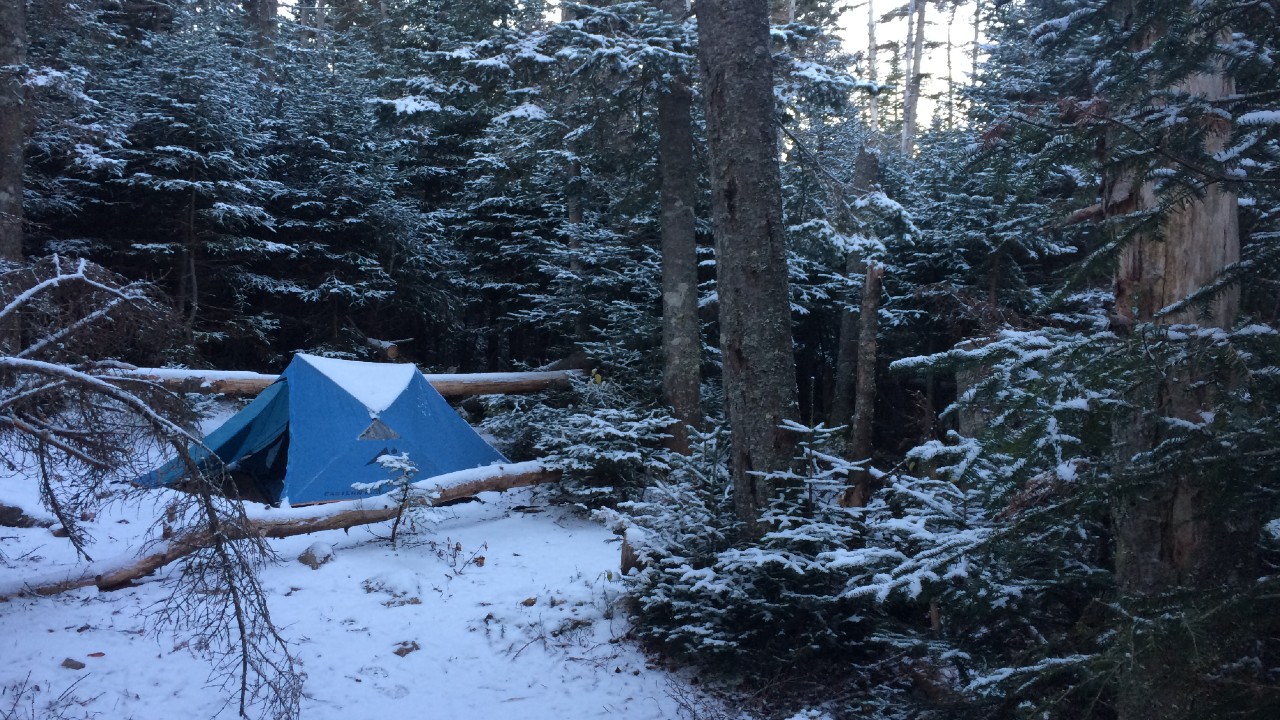
    Tent set up in the snow, guarded by evergreens at dusk, for winter camping
    Tenting in the snow. Photos courtesy: John Plummer
    Winter camping can be very rewarding. There are no bugs, there are fewer crowds, you can see further through the forest. However, travelling in winter is challenging and poses risks that don’t exist at other times of the year. To set yourself up for success, get comfortable carrying and using your gear and spending nights outside in warmer months before adding the complexities of cold weather. Try a handful of winter day hikes in varying conditions as well. Winter camping is all about being prepared for anything and having plenty of gear to ensure you can be safe, no matter what you encounter.

    Packing Up and Getting There

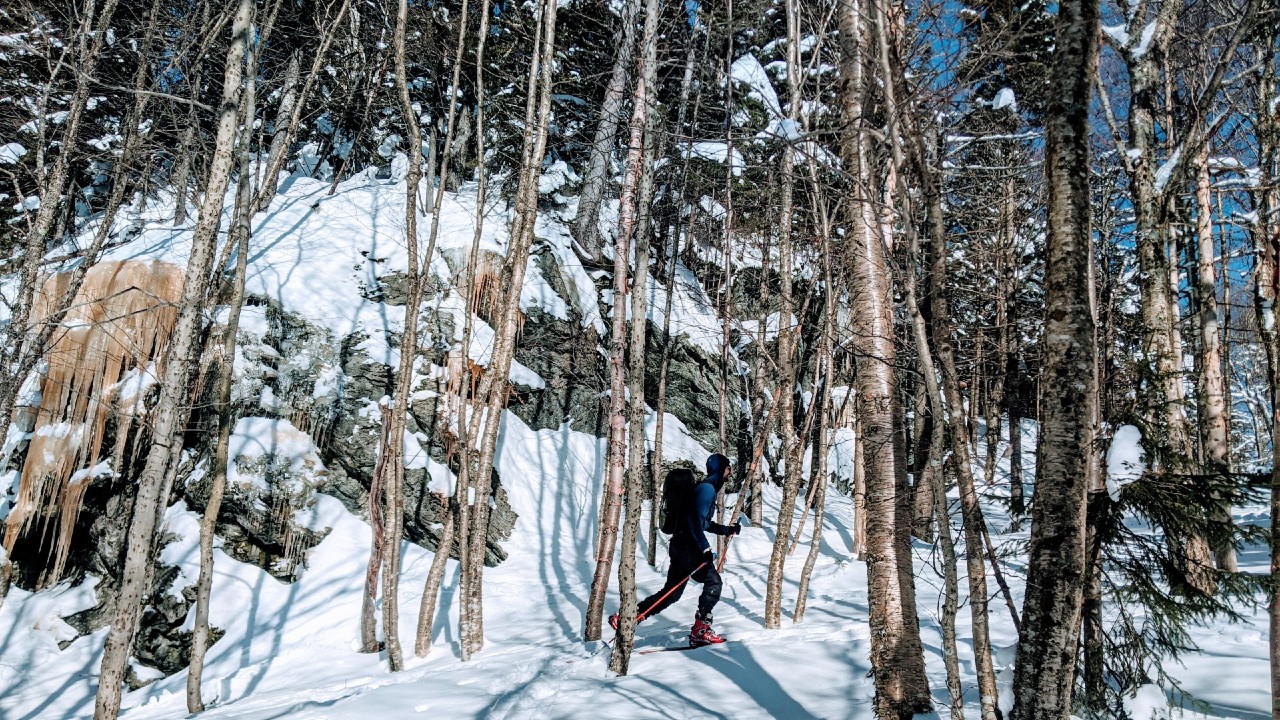
    Hiker travels through snow between trees on trail for winter camping.
    Hiker moves through the trees on a winter hike.
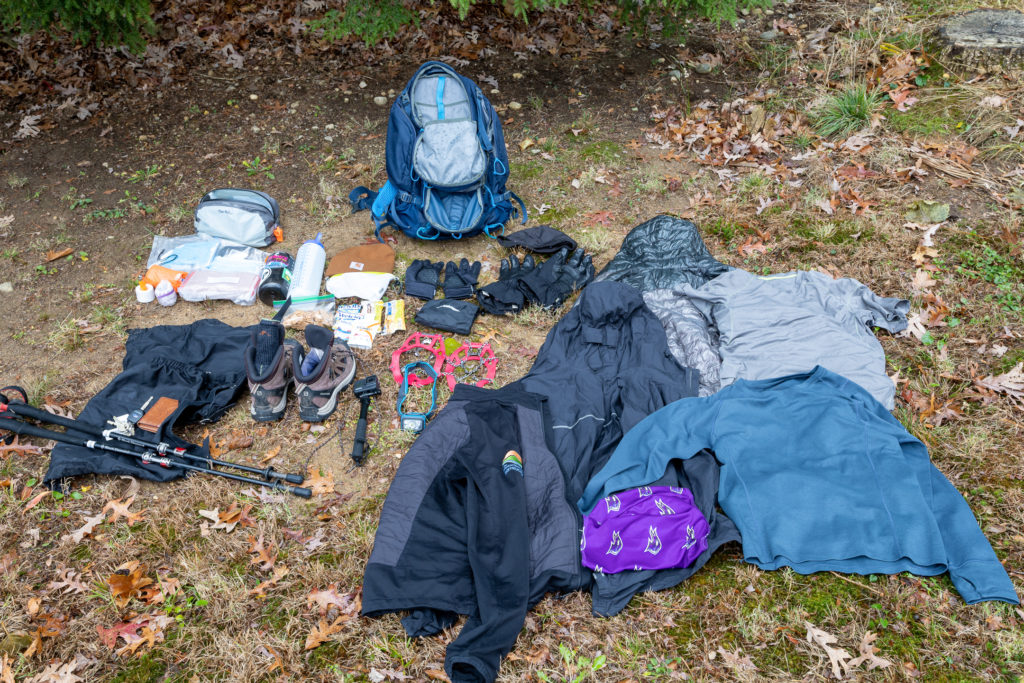
    Before heading out on an overnight, read up on what to wear and how to layer for a winter day hike first. In winter, you need to carry more and larger gear than in warmer seasons, so you need more space to store it. For cold weather overnights, a 65-liter pack is usually sufficient, though longer trips may require a larger pack. You should be able to carry tools such as hiking poles, shovel, or snowshoes on your pack for easy access – practice using your pack’s lash points before you get out into the woods. Some people pull a sled to hold more gear for longer trips or when travelling in a group. When travelling overnight in winter, snowshoes or skis are essential, as traveling off trail will be necessary for getting water, cooking, and setting up camp. Always carry the ten essentials. Keep in mind that winter hiking is more difficult and slower going than other seasons, so be sure the trek to your destination is well within your group’s ability. Plan to arrive at your overnight destination before sunset.

    Making Camp: Tent or Shelter?

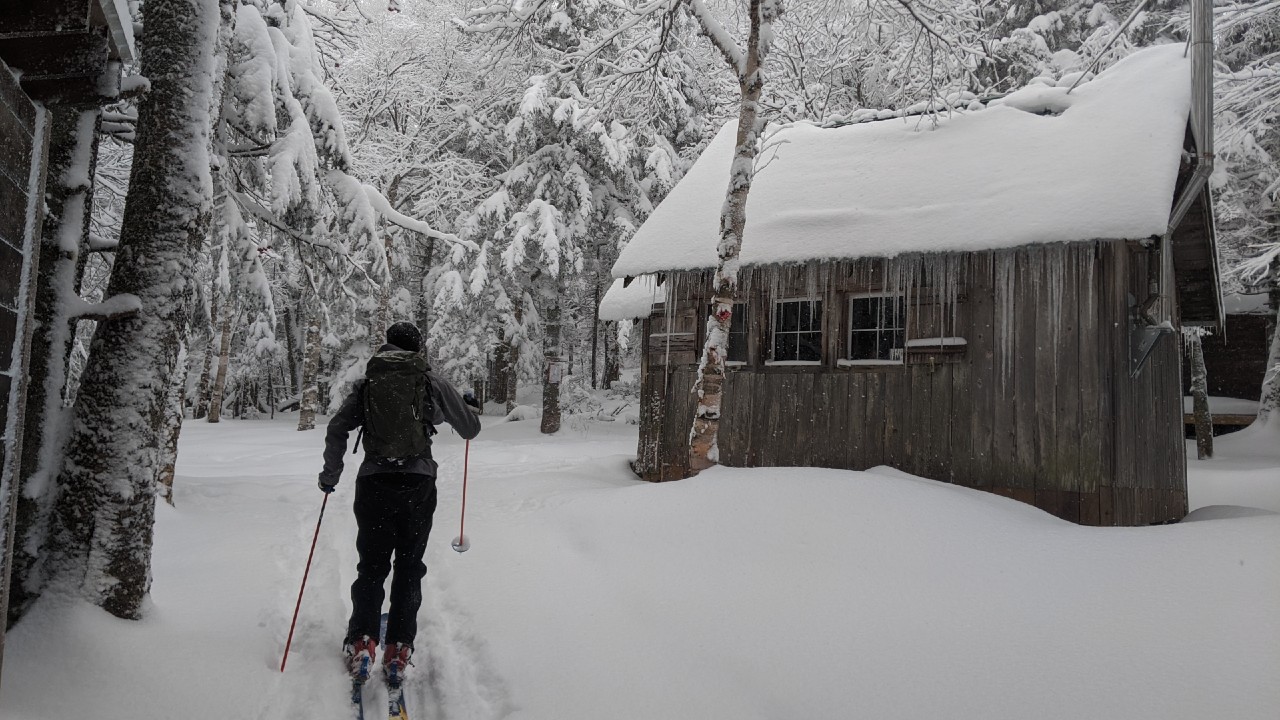
    Skier moves through snow toward shelter for winter camping
    Skier moves toward shelter to camp.
    The Long Trail System is not maintained for winter use, but that does not keep us from getting out there to enjoy it! This means that the trail may be hard to follow and that facilities like shelters, privies, and wash pits which are available the rest of the year, will not necessarily be available in the winter. You may still be able to stay in a shelter, but you may have to dig it out of the snow. Spruce Peak Shelter near Manchester and Beaver Meadow Lodge in Morristown are great winter camping destinations. They are the only two shelters within the Long Trail system with wood stoves. Even if you plan to stay in a shelter, you should always bring a tent. A four-season tent is necessary for high winds and heavy snowfall; however, a three-season tent is usually sufficient if you are camping below tree line and you are not expecting any precipitation. In cold weather, use a larger tent than in warmer weather to accommodate additional gear storage. When setting up a campsite, follow these guidelines:
    • If not in a shelter, camp on deep snow at least 200 feet from the trail and water sources
    • Look for an open area with no hazard trees (dead limbs) above.
    • Be sure camp away from avalanche zones. While uncommon, avalanches can happen in locations like Smuggler’s Notch.
    • Use your snowshoes or skis to stomp out a tent platform. If conditions allow, you can wait 30 minutes before setting up your tent to let the pad freeze.
    • Use the Velcro tabs on your tent’s rainfly to secure it to your tent. Also, using tent stakes intended for snow will ensure a tight rainfly.
    • Use a shovel or your snowshoes to dig out the snow under the tent vestibule to give yourself more space.
    • Keep sharps, such as skis, crampons and ices axes, away from your tent so as not to tear it.
    • Beware precipitation: Always know if there is snow or freezing rain in the forecast. If there is snow in the forecast, plan to wake up periodically throughout the night to clear snow away from the tent. Failure to do so will prevent the flow of clean air into your tent and could lead to fatal consequences.

    When Nature Calls

    In snowy conditions, when you need to pee, you can pretty much pee anywhere you feel comfortable doing so, provided you are away from the trail and water sources. When it comes to Number 2, however, thing get a little more complicated. If you happen to be near a privy on the Long Trail, then you might be all set. However, since they are not maintained for winter use, you may be disappointed when you find a privy full to the brim! So, what to do? The ground is frozen, so you can’t dig a cat hole. Mountaineers have had a tool to address this problem for many years: the WAG Bag. It is a plastic bag that is designed to make it as easy as it could be to do what you need to do, then seal it up, and pack it out securely. The bold will DIY a WAG Bag, the rest of us will use the verified thing. More on this and other important topics in our Leave no Trace in Winter workshop.

    Time to Eat

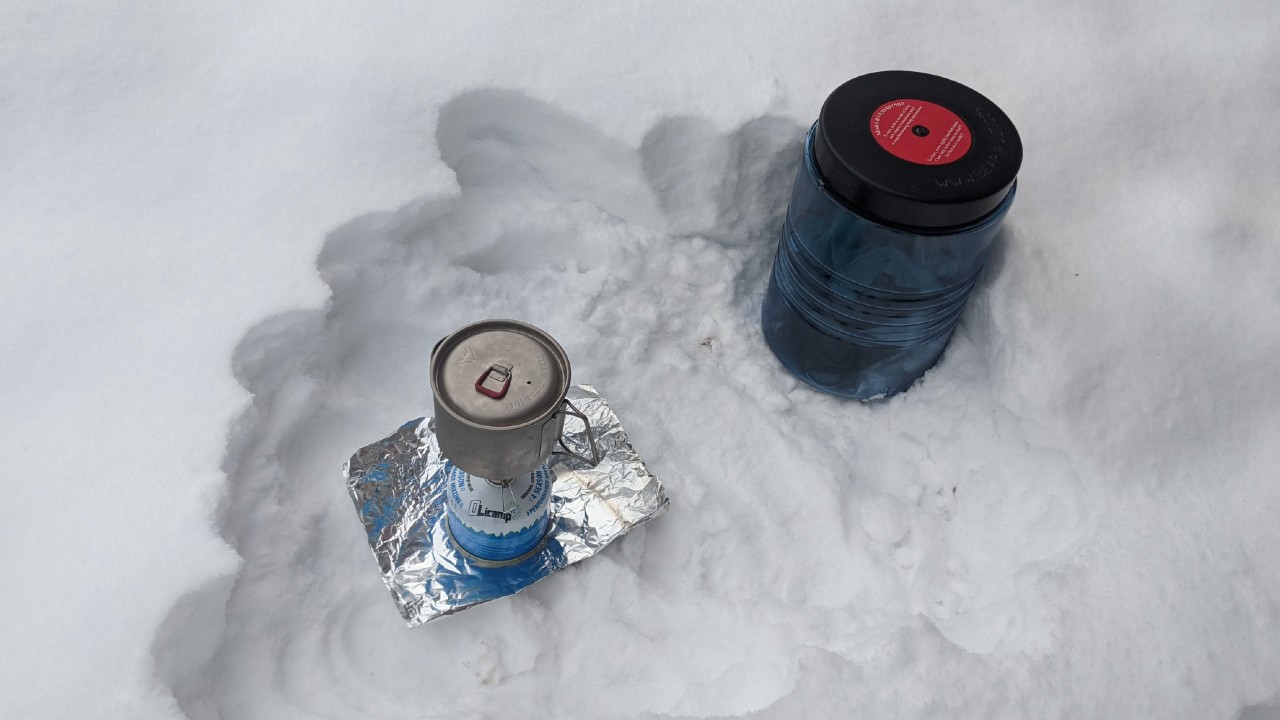
    Cooking system and bear canister in the snow for winter camping.
    Cooking system and bear vault are needed to safely refuel and stay warm.
    Eat calorie-dense snacks throughout the day and take the time to cook warm food in the morning and in the evening. Consider what it will be like to eat something when it is frozen. Eating warm food will keep you warm and keep your spirits up when it is cold out. Here are a few steps for cooking:
    • Use a stove that functions in cold weather. This includes most liquid-fuel stoves and some canister stoves. Be sure to test out your stove in winter conditions close to home before heading out on an overnight.
    • Make cleanup simple. Do not cook foods that create grey water (eg. pasta)
    • Do not cook in your tent! Make a wooden base for your stove to rest on the snow when in use.
    • Pack out any food scraps.
    • Carry extra fuel (even an extra stove) to ensure that you can eat warm food in cold weather.
    • Store all food securely so critters can’t snack while you sleep.

    …And Drink!

    Snow covered peaks and forests.
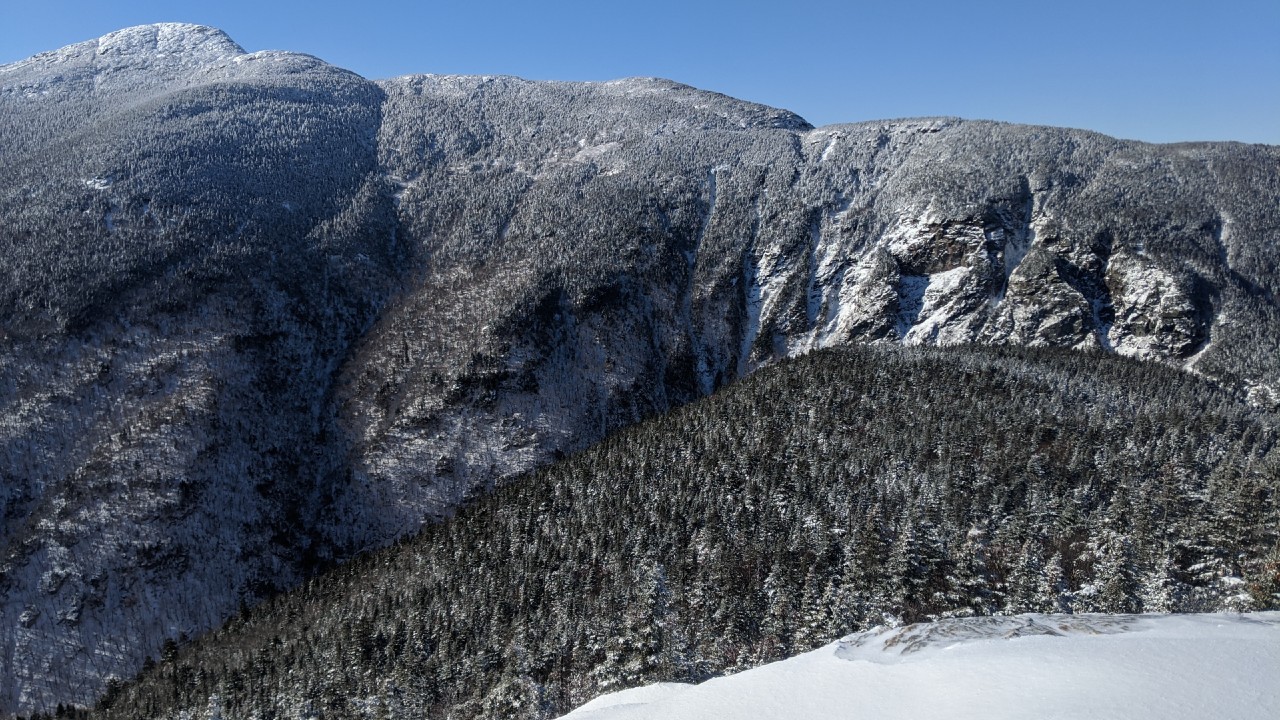
    Mount Mansfield’s Chin (upper left) and Smuggler’s Notch (foreground) covered in snow.
    You may not feel thirsty, but you need to hydrate! When out for the day, you can usually carry enough water to keep yourself hydrated. However, when out for longer periods of time, you need to be able to replenish your water. In winter, that usually means melting snow.
    • Wide-mouth bottles are best for water storage in winter, rather than uninsulated reservoirs which more easily freeze.
    • Add a little water to your stove before adding snow to avoid scorching, which can give the water an off taste.
    • If you do not want to spend the time and fuel to boil water, you can treat it with chemicals like Aquamira. Water filters are not intended for cold weather use.
    • Make sure to insulate your water for storage so that it does not freeze.
    • Water freezes from the top down, so you should store water bottles upside down.

    Time For Bed

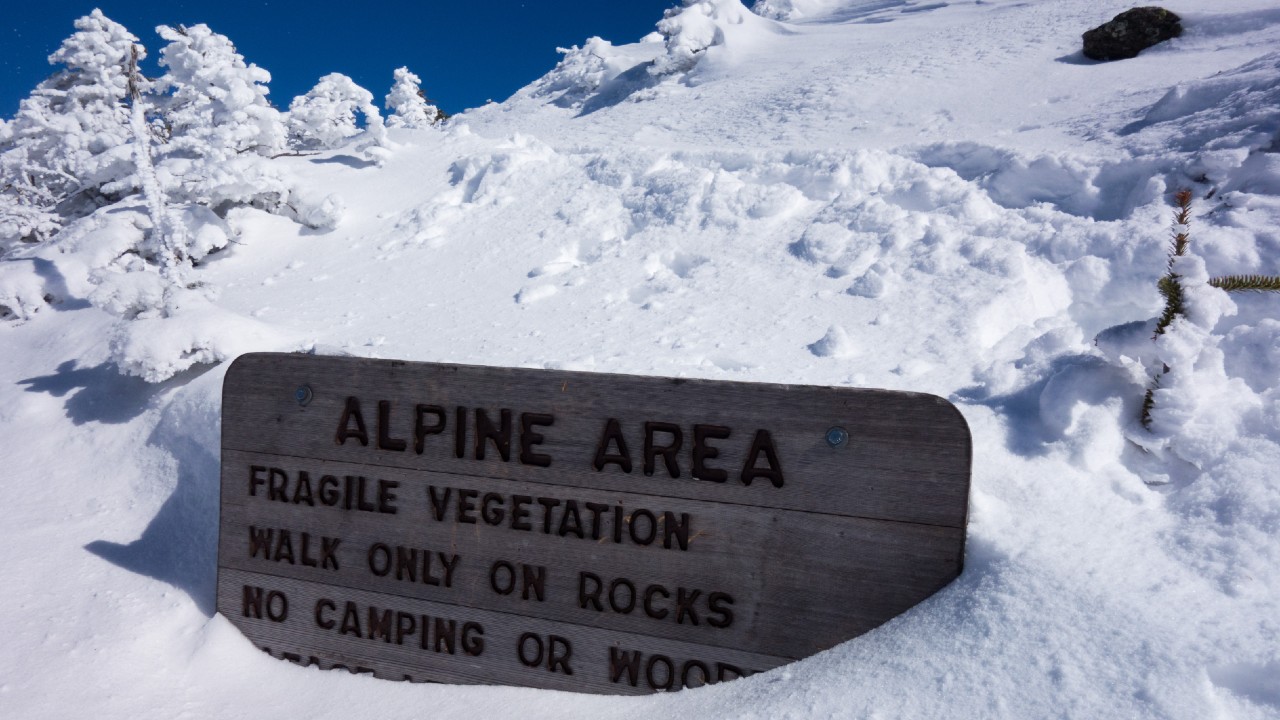
    Alpine Zone signage covered in snow.
    Never set camp in an alpine zone. It’s not only unprotected from the elements, but you’ll also hurt fragile ecosystems.
    When out for multiple days during the winter, it doesn’t take long to notice how the day flies by. Not just because you are having fun, but the day is, indeed, shorter. When nightfall comes and you’ve eaten your fill, there is not much else to do but get in your tent and bundle up. Here are some tips for doing so:
    • Use a sleeping pad (or two) to insulate your body from cold surfaces. Consider the R-value, or measurement of insulation, in your pad. Look for an R-value of 4.0 or higher for cold weather.
    • Sleeping bags designed for cold weather use are typically rated from 0˚F to -40˚F. To ensure comfort, use a bag that is rated for at least 15˚F lower than the coldest temperature you expect to encounter.
    • Many people enjoy wearing down booties, pants, and mitts when in camp. All of these will add to the level of comfort.
    • Check your batteries. You will want to store your phone in your sleeping bag to keep it warm.
    • Get warm before going to bed: do jumping jacks or make a hot water bottle to bring into your sleeping bag.
    • Sleep with any clothes you want to wear the next day in your sleeping bag. The heat of your body can dry out damp socks or mittens while you sleep.
    • You can keep your boots inside your tent to keep them a few degrees warmer
    • Bring a book or something to entertain yourself while you are curled up in your tent in the dark and it’s only 6 p.m.
    • Bring separate clothes to sleep in. This could be thermal base layers with wool socks, gloves and hat or just shorts and a t-shirt, depending on conditions and the warmth of your sleeping bag.
    Above all, remember that winter weather can be fickle and quickly turn a normal situation into peril. Don’t be afraid to change plans and turn back if weather shifts unexpectedly or a trail becomes impassable. Tell people where you are going and when you can be expected back. Make a night under the stars and amidst the snow drifts one to remember by planning ahead and preparing with these tips.
  • Winter Hiking Safety Tips From a VT Search and Rescue Coordinator

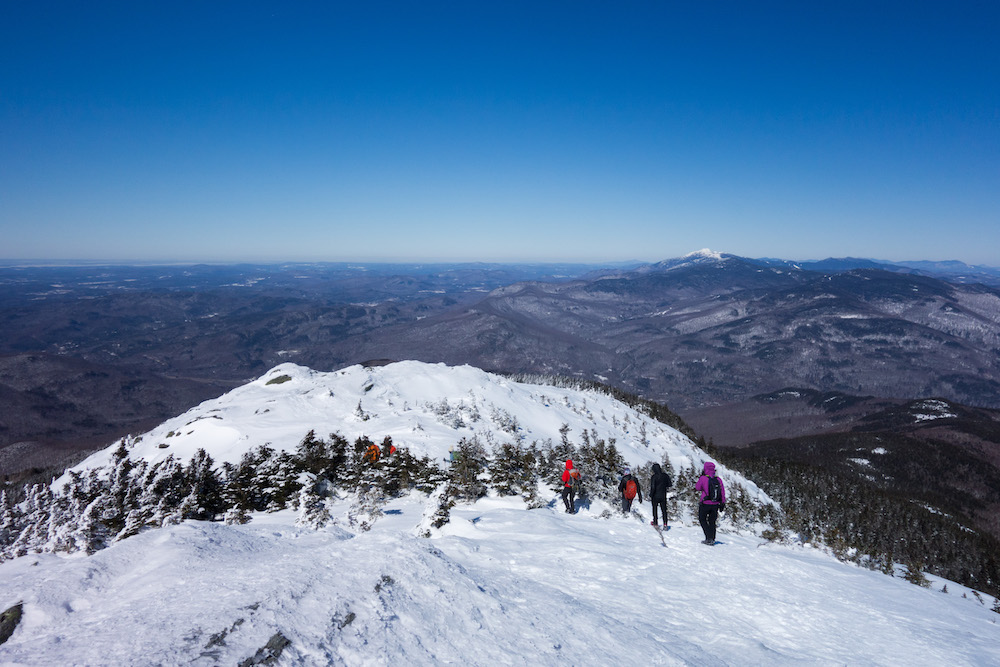
    This article was written by Neil van Dyke and previously appeared in the Winter 2020 Long Trail News under the headline “Winter Hiking Safety.” hikers traverse snowy summit with blue sky in backgroundThere are few times more beautiful for hiking than a crisp, clear Green Mountain winter day. The deep blue of the sky is experienced at no other time of year, and when coupled with trees blanketed in fresh snow it presents a truly unique landscape. The lack of crowds adds allure and a sense of solitude. But backcountry winter hiking also has risks and challenges for which you must prepare. You should always take the ten essentials, but below are more things to be aware of:

    Clothing and Gear

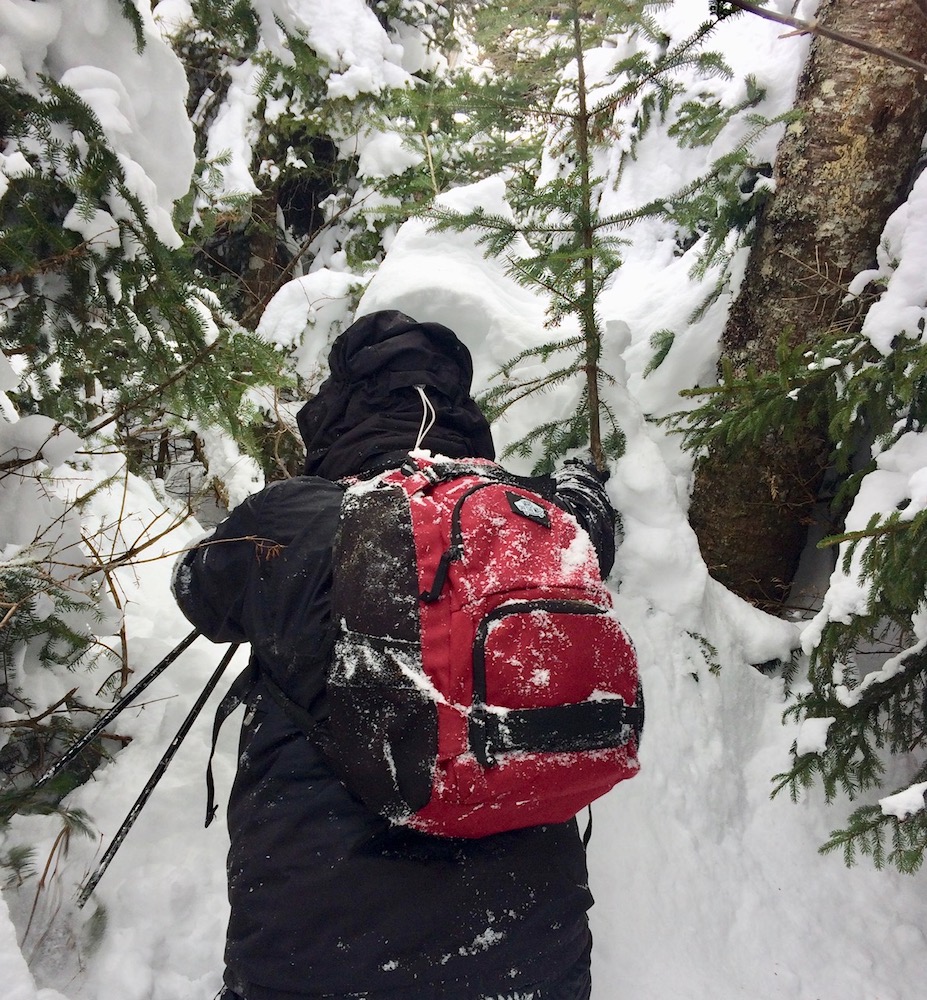
    skier with red backpack faces away from camera traversing thick trees and snow

    The right clothing and equipment is essential. Moisture is your enemy, so dress in layers that can be adjusted as exertion and weather vary. Start with a good wool or synthetic base layer against your skin, followed by insulating layers. Finish with a waterproof, windproof and breathable outer shell layer to protect you from wind, snow or rain. Always take one more insulating layer than you think you will need, and leave cotton clothing at home! Insulated winter boots are a must. You will likely need several kinds of traction devices for your boots. Snowshoes are best to assist with deep snow, while Microspikes or crampons are necessary to prevent falling on ice. Bare ground at the trailhead doesn’t mean you won’t find snow or ice farther on. Most people find ski poles a big help, since trekking poles without baskets sink through the snow. Consider taking some type of lightweight emergency shelter (tarp, bivy sack, sleeping bag) for the group.

    Weather

    snow-covered burrows trail
    Burrows Trail. Photo by Vanessa Lake
    Always check the weather forecast before you go, and be flexible. If intense cold or high winds are predicted, scale back your plans. Rain can be the most dangerous weather, because a rapid drop in temperature and a brisk wind often follow — a recipe for hypothermia. As mentioned in the clothing tips, your goal is to stay dry at all costs. If you get wet, turn around! Remember days are much shorter than in summer, so start early, and plan to be out of the woods well before dark. Hiking in winter is slower and often much more arduous than in other seasons, so allow plenty of time. Take a flashlight or headlamp with fresh batteries. Better yet, take two.

    Route finding

    The Long Trail is not maintained for winter use. White blazes are hard to see on snowy tree trunks, and blazes and signs may be buried in snow. Also, the trail corridor is not cleared for walking four to five feet above the ground, so the path may be obscured or blocked by branches. Thus, many sections of the trail are essentially impossible to follow in midwinter. Unless you are experienced at bushwhacking and backcountry navigation, stick to popular and well-used trails. Take a paper map and compass and know how to use them.

    Safety and Emergency Planning

    If you lose the trail or get hurt in summer it’s certainly a bummer, but typically not life threatening. But in winter even a minor mishap can become a truly life-or-death situation. The leading cause of death for hikers in Vermont is hypothermia. Hypothermia can set in as you wait for help, so you must be prepared to keep warm.

    More Safety Precautions

    • Don’t hike alone! If something goes wrong, you may need to send for assistance. Most experts recommend a party size of four (three minimum), so one person can stay with an injured party and others can go for help.
    • Tell somebody where you are going and when you plan to return. Give them a worst-case estimate so they’ll know when to call the authorities (911) if they haven’t heard from you. Be sure to notify them promptly once you have finished your hike!
    • Do not rely on cell phones for anything other than communication. Cold weather severely reduces battery life, so if you need to call for help you’ll be glad you conserved your phone’s battery instead of using it as a flashlight or map. Make sure to fully charge your phone in advance. While you hike, leave it on airplane mode, and carry it in a pocket next to your body to keep it warm. Remember though, much of the backcountry in Vermont has little to no cell coverage, so a charged cell phone is no substitute for good equipment!
    • Have enough extra supplies to survive until help can arrive – which may be many hours. Even if you can call 911 immediately, rescue groups will take time to assemble, hike in, and help you.
    If you’re new to winter hiking, it’s a good idea to attend a workshop or go with more experienced folks so you can gradually learn skills and build confidence for more challenging hikes. Check out GMC’s recent Intro to Winter Hiking webinar and check here for upcoming outings and workshops. By taking the above precautions you will be well on your way to enjoying hiking in Vermont in all four seasons! Neil Van Dyke is the Search and Rescue Coordinator for the Vermont Department of Public Safety, and he has participated in and coordinated countless backcountry searches and hiker rescues. An avid hiker and long time GMC member, he provides search and rescue training each spring to the club’s field staff. Read more on winter hiking from GMC:  
  • Problem Bears? Or Problem People?

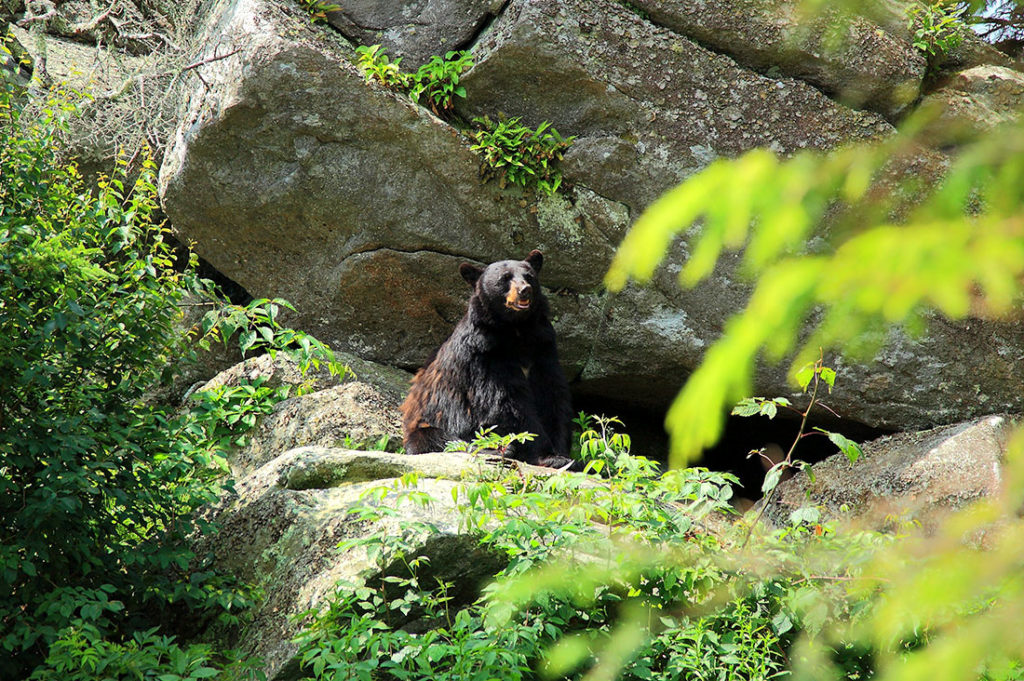
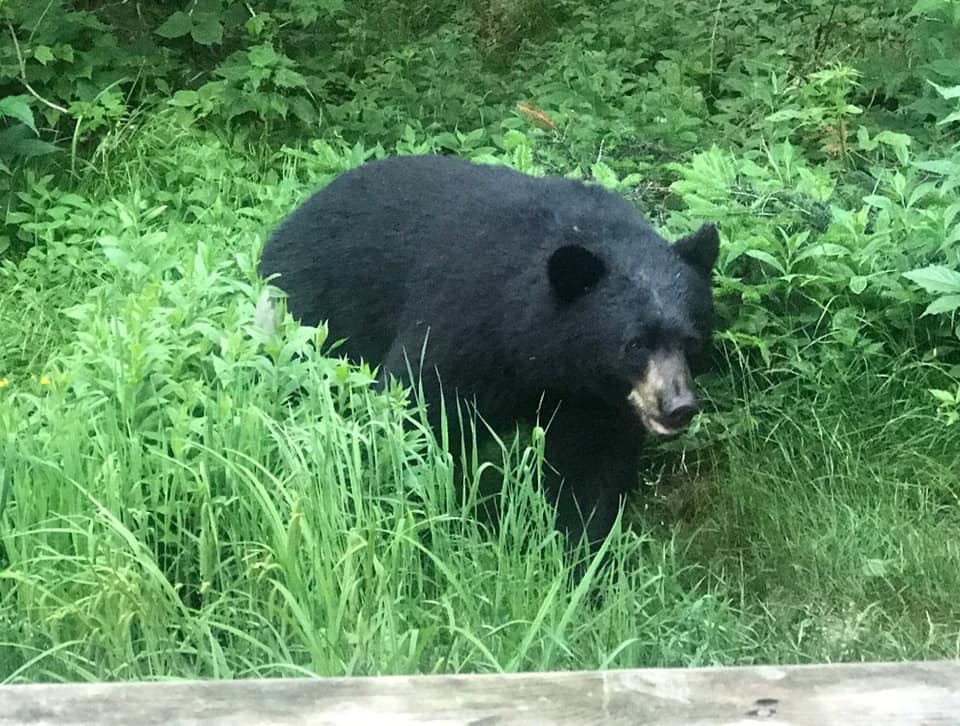
    black bear walks through tall grasses
    Black Bear at Goddard Shelter, photo by hiker Ruth “Chocoholic” Morley
    Vermont hiking trails have long been perceived as places where you don’t need to worry about bears. People hiked, camped, and cooked and stored food without concern. Times have changed, and with the increase in the black bear population, hiker behavior needs to change too. In recent years we have experienced bear problems at several areas on the Long Trail, including Stony Brook Shelter, Montclair Glen Lodge, Hump Brook Tenting Area, Bamforth Ridge Shelter, and Journey’s End Shelter, to name a few.
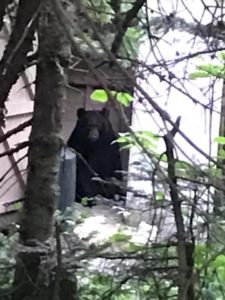
    bears in privy
    Bear in Goddard Privy, photo by hiker Ruth “Chocoholic” Morley
    In 2019, we had bear problems at Kid Gore, Goddard, and Stratton Pond Shelters. The bears at these locations did not react or show fear when yelled at or when stones were thrown in an attempt to scare them off. They got into several hikers’ food supplies, ripped apart a privy that had a moldy loaf of bread thrown in it, and sniffed into a shelter one night—leaving only after a startled hiker smacked the bear in the head with a trekking pole. Most black bears are wary of humans and shy away, but food-conditioned bears are potentially threatening to humans, and, if determined to be a nuisance, may be shot. This is the last thing we want, so before you head into the backcountry, take time to educate yourself about bear behavior and avoid putting them, yourself, or future hikers at risk. GMC staff work with the Vermont Fish and Wildlife Department and wildlife officials on the Green Mountain National Forest to address current bear issues and plan for improvements at the shelters and other overnight sites. We ask that you help by being prepared and taking some simple precautions.

    How to Store Food in Bear Country

    When you step into a shelter, you might see an inverted tin can tied to a string that hangs from the ceiling. These “mouse hangers” are affixed by hikers, not GMC staff. They are intended to suspend food bags and backpacks to keep them safe from mice and other pesky critters looking for goodies and salt. But guess who is also interested in your food, and can reach those hangers? Bears. With the change in bear activity and incidents on the trail, we ask that you remove the strings and cans from the shelters (and don’t add new ones). This will be a good first step to detracting bear visits to the shelters. How, then, do you secure your food?  As of summer 2019, one of these options is required in the Green Mountain National Forest. Here are some options, from most secure to least secure:
    • If a bear box is available at a designated overnight site, use it. Food and other scented items (toothpaste, deodorant, chapstick, sunscreen, etc) should be stored away. Make sure the box is closed and latched. See the list of all overnight sights with bear boxes on the Long Trail and Appalachian Trail.
    • GMC strongly recommends that hikers carry a bear-resistant food storage container. There are a variety of them available; some are more effective than others. Know how to use yours correctly, leave it closed and locked, and stash it at least 100 yards from your—or anyone else’s—shelter. Don’t put it near a cliff or water source or a bear might bat it over the ledge or into the water. Check the Interagency Grizzly Bear Committee website for approved personal food storage options.
    • Hang a bear bag from a tree limb. This is very often done incorrectly and finding a suitable branch is difficult in our dense forests. However, if it is your only option, make sure food bags are hung 100 yards away from the shelter and all tents in the area.
    *A Food Storage Closure Order for the entire Green Mountain National Forest (GMNF) aims to minimize black bear and human encounters and interactions. The order specifies proper food storage and prohibits leaving food or refuse on National Forest system lands in Vermont. The Order was issued to provide for visitor safety and the conservation of bears. Find more information in the press release; this order is still in effect (summer, 2021). If a bear is successful at getting into your food, please report it to GMC and Vermont Fish and Wildlife. If you see a bear in the vicinity of a designated campsite on the Long Trail, please notify GMC.
    food wrappers left in composting bin would attract bears
    Trash in a composting bin at Bamforth Ridge Shelter

    How Humans Should Behave in Bear Country

    • As the bear at Goddard Shelter who tore apart the privy demonstrated, bears are not particular about where discarded food is. Do not throw food or trash into the privy or composting bins. (Also, our caretakers have the unpleasant task of removing these items from the waste bin later.)
    • Pack out all garbage and food scraps and do not leave any trash in the bear boxes. There are no trash cans on the trail, and there is no one to collect your trash. If you see trash in the bear boxes already, please consider packing some out with your own garbage.
    • While Trail Magic can be a wonderful and welcome gesture, do not leave extra food in the shelters or unattended alongside the trail. The bear at Montclair Glen Lodge busted the door open and went inside searching for some magic.
    • Cook meals away from your tent or shelter, and do not eat in your tent or shelter.  Keep tasty smells away from where you sleep.  Secure food as listed above.
    • Do not feed or approach bears. Intentionally feeding bears is illegal.
    • If you encounter a bear in the trail, follow these recommendations from the Vermont Fish and Wildlife Department:
      • When the bear is unaware of your presence you should:
        • Quietly back away from the bear and leave the area.
        • DO NOT approach the bear.
      • When the bear is aware of your presence and is uninterested you should:
        • Quietly back away from the bear and leave the area.
        • DO NOT approach the bear.
      • When the bear is curious and continues to look in your direction, smells the air, or slowly approaches you should:
        • Talk in a calm voice while slowly backing away from the bear.
        • DO NOT approach the bear. If the bear is defensive it may:
          • Make vocalizations which can include huffing and jaw popping.
          • Retreat up a tree.
          • Swat at the ground or tree.
          • Lower its head with ears flattened, and sways back and forth.
      • When the bear is defensive you should:
        • Begin repeating “Hey bear” in a calm voice.
        • Back away and leave the area.
      • If the bear continues to be defensive or becomes aggressive it may:
        • Approach you.
        • Begin to follow you.
        • Charge you.
      • When the bear is aggressive you should:
        • Make yourself look bigger by putting your arms above your head. Continue to repeat “Hey bear” in a calm voice. Back away and leave the area.
        • If it continues to follow you, stand your ground, make yourself look bigger, shout at the bear, threaten the bear with whatever is at hand (bang a stick on the ground, clap your hands), and prepare to use bear pepper spray if it is available.  Back away and leave the area.
        • If charged, stand your ground, talk to the bear in a calm voice and use bear pepper spray when available.  If the bear makes contact with you, fight back using anything you have (e.g. stick, binoculars, etc.).
    For even more information about bear behavior and what to do in certain situations, check out this FAQ.

    GMC’s Bear Plans

    In 2019,  the bear that tore apart the privy at Goddard Shelter was a concerning incident.  In response to this, GMC immediately installed a bear box for secure food storage for hikers, reinforced the privy door to make it harder for a bear to enter into the privy, picked up all trash within 150 feet of the shelter, and placed informational signs at the shelter, privy, and bear box on the importance of properly storing food, keeping a clean camp, and how to handle an interested bear.  Since then, this particular bear has taken two backpacks from hikers and destroyed two tents looking for food. Goddard Shelter was closed while game wardens from Vermont Fish and Wildlife tracked down and shot the bear. It is now reopened, but please continue to practice safe food storage as outlined so we can avoid this outcome in the future. GMC evaluates food storage options on a site-by-site basis and intends to create secure, efficient, and easy-to-operate food storage systems for most overnight sites. In the meantime, human behavior will determine whether Vermont’s black bears become “problem bears” or remain the shy and elusive creatures they started as.  Please do your best to be part of the solution and to educate others on bear safety.  This will create a safer trail for hikers and a safer environment for bears.

    GMNF Food Storage Closure Order

    The following acts are prohibited on the Green Mountain National Forest:
    1. Except while being consumed, all food, food containers and refuse shall be stored in a closed motor vehicle or suspended at least twelve (12) feet above the ground and not less than six (6) feet horizontally from any object. Bear boxes and bear canisters designed specifically for food and/or refuse storage are acceptable.
    2. All refuse containing food materials or containers shall be deposited in receptacles provided for that purpose, removed from the Green Mountain National Forest to be disposed of properly, or stored in the manner prescribed for food in #1 above (36 CFR 261.58(cc)).
    We have had many questions about whether Ursacks are allowed with the GMNF order. Ursacks are currently acceptable under the Food Storage Closure Order, but as with any newer device or technology, they could be unacceptable in the future if GMNF sees issues with them. We recommend that they be used in conjunction with the odor-proof OPSaks recommended by Ursack.   This article was contributed to by Jocelyn Hebert, Keegan Tierney, Kristin McLane, and Lorne Currier.