Page Type: Explore

  • Our Cabins

    Our Cabins

    GMCโ€™s cabins are basic with no running water, electricity, or kitchen facilities.  A wood stove, cured firewood, and detached privies are available at each site. Guests are expected to bring their own bedding and sleeping pads.

    These cabins are in addition to the more than 70 designated overnight sites along the Long Trail, all of which are free, communal, and operate on a first-come, first-served basis.

    Please be aware: the cabins are not insulated and will never get as warm as your home. When spending a night at a GMC cabin, come prepared with the gear and sleeping bags to keep you warm as if you were camping.

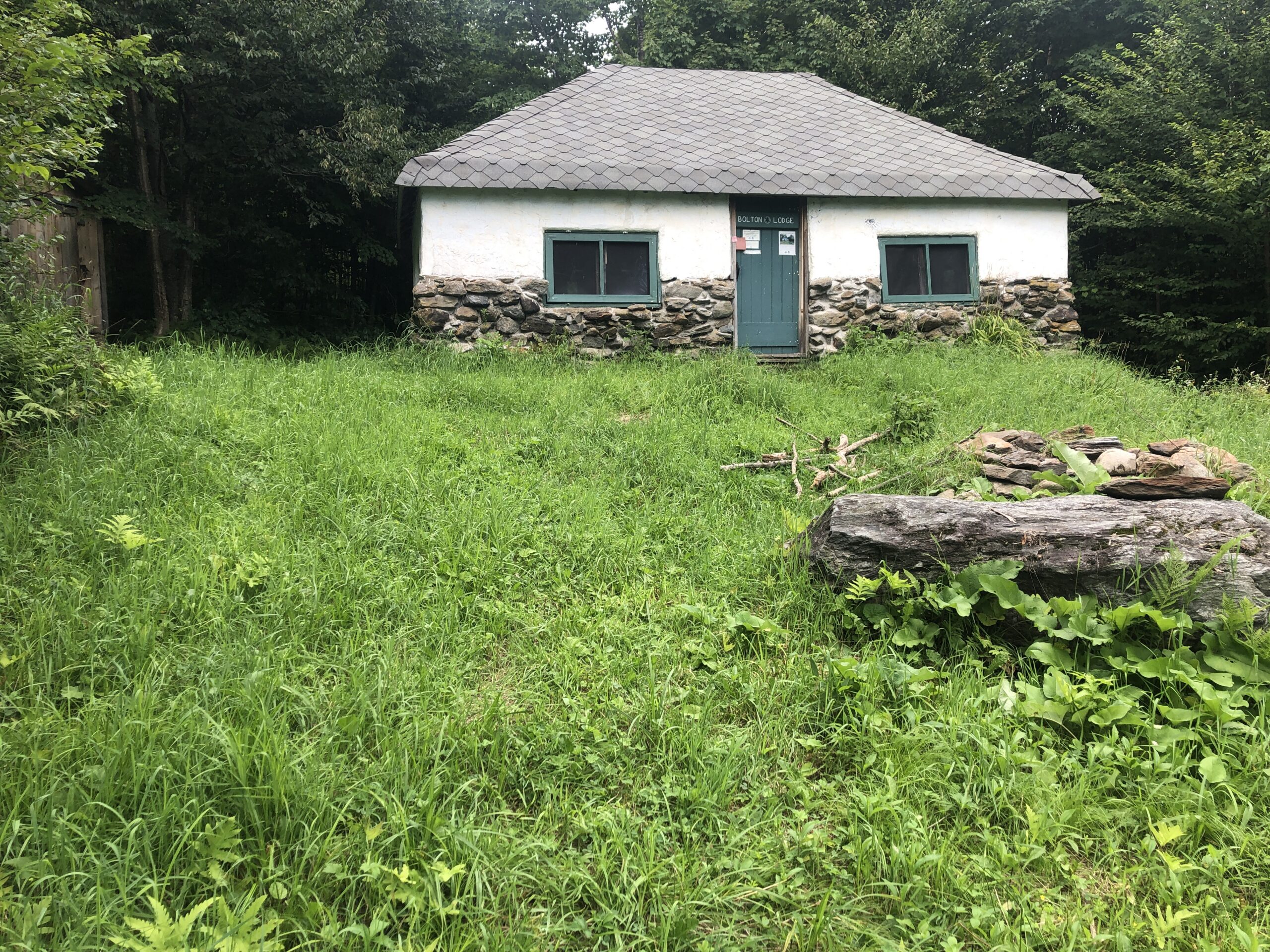
    Bolton Lodge (Bolton)

    Built in 1928 and restored in 2017, Bolton Lodge offers renters rustic accommodations in the backwoods of Bolton Valley, Vermont. Located in Mount Mansfield State Forest, the camp is within Bolton Valley Resortโ€™s network of cross country ski and snowshoe trails. Renters can access the cabin by either following the Broadway Trail from Boltonโ€™s Nordic and Sports Center, a 1.5 mile hike or ski, or via the Catamount Trail from where it heads north from the Bolton Valley Access Road, a 2/3 of a mile hike or ski. Accommodations include unfurnished bunk beds for up to eight guests, woodstove, firewood, and composting privy. There is no electricity or running water.

    Rates: $97 per night Friday through Sunday. $82 per night Monday through Thursday.
    Current Green Mountain Club Members: During checkout, please use the discount code member20 for 20% off. If you are interested in becoming a member or renewing your membership, click here

    Rental Period: Bolton Lodge is rented July 1 through March 31 each year (it is closed for mud season). Reservations for the upcoming rental year open in mid-March. To be notified of reservation opening, please ensure you are subscribed to GMC emails.

    Reservations:

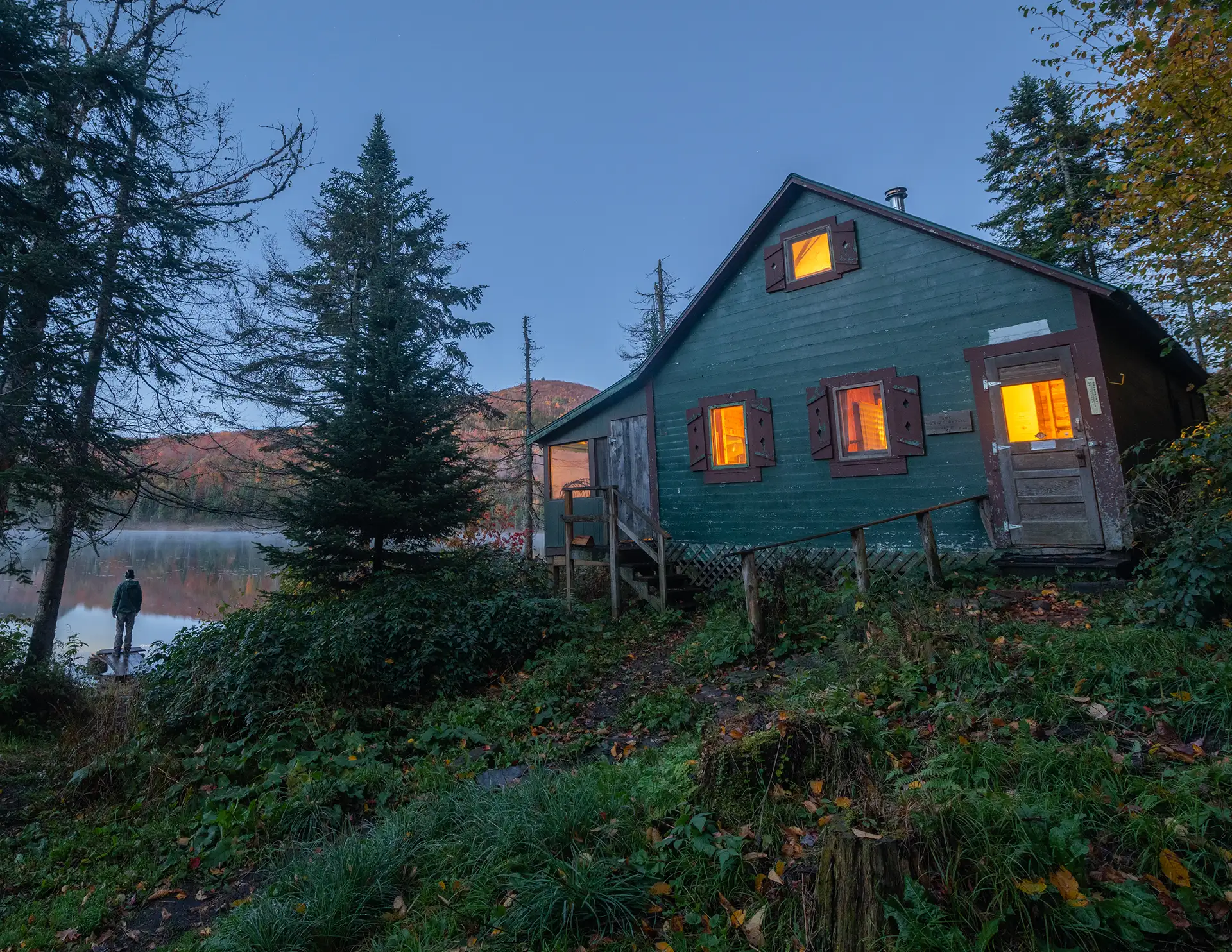
    Bryant Camp (Bolton, VT)

    Built around 1930 and restored in 2016, Bryant Camp offers renters rustic accommodations in the backwoods of Bolton Valley, Vermont. Located in Mount Mansfield State Forest, the camp is within Bolton Valley Resortโ€™s network of cross country ski and snowshoe trails. Starting at Boltonโ€™s Nordic and Sports Center, renters can enjoy a mile hike (snowshoes only in winter) or ski via the Bryant Trail (part of the Catamount Trail) in order to reach the camp. Accommodations include an unfurnished sleeping loft for up to eight guests, woodstove, firewood, and composting privy.  There is no electricity or running water.

    Please be aware, the cabin is not insulated and will never get as warm as your home.  When spending a night at Bryant Camp, come prepared with the gear and sleeping bags to keep you warm as if you were camping.

    Rates: $97 per night Friday through Sunday. $82 per night Monday through Thursday.
    Current Green Mountain Club Members: During checkout, please use the discount code member20 for 20% off. If you are interested in becoming a member or renewing your membership, click here

    Rental Period: Bryant Camp is rented August 1 through March 31 each year. The cabin is closed from April 1 through July 31 each year to protect the excessively wet site. Reservations for the upcoming rental year open in mid-March. To be notified of reservation opening, please ensure you are subscribed to GMC emails.

    Reservations:

    Hadsel-Mares Cabin (Wheeler Pond, Barton, VT)

    Hadsel-Mares Cabin is one of two rental cabins at the Wheeler Pond Camps site in Barton, Vermont. Alongside Jean Haigh Cabin, these two cabins offer a home base for exploring the Northeast Kingdom and the year-round recreation opportunities of the area. They are rented to separate parties simultaneously. Both cabins are accessed by a short (300 feet), accessible trail from a small parking lot. Hadsel-Mares is not wheelchair accessible.

    Hadsel-Mares was built circa 1970 and donated to GMC in 2004. Accommodations include bunks downstairs for six, with an upstairs sleeping loft for two; a separate dry kitchen with gray water bucket, woodstove, seasoned firewood, separate composting privy, and north-facing screened porch.

    Please be aware, the cabin is not insulated and will never get as warm as your home. When spending a night at Hadsel-Mares, come prepared with the gear and sleeping bags to keep you warm as if you were camping.

    Rates: $82 per night
    Current Green Mountain Club Members: During checkout, please use the discount code member20 for 20% off. If you are interested in becoming a member or renewing your membership, click here

    Rental Period: The cabin is available for rent year-round. Bookings open in March for the next rental year, which runs May 1st through April 30th of each year. Reservations for the upcoming rental year open in mid-March. To be notified of reservation opening, please ensure you are subscribed to GMC emails.

    Reservations:

    Jean Haigh Cabin (Wheeler Pond, Barton, VT)

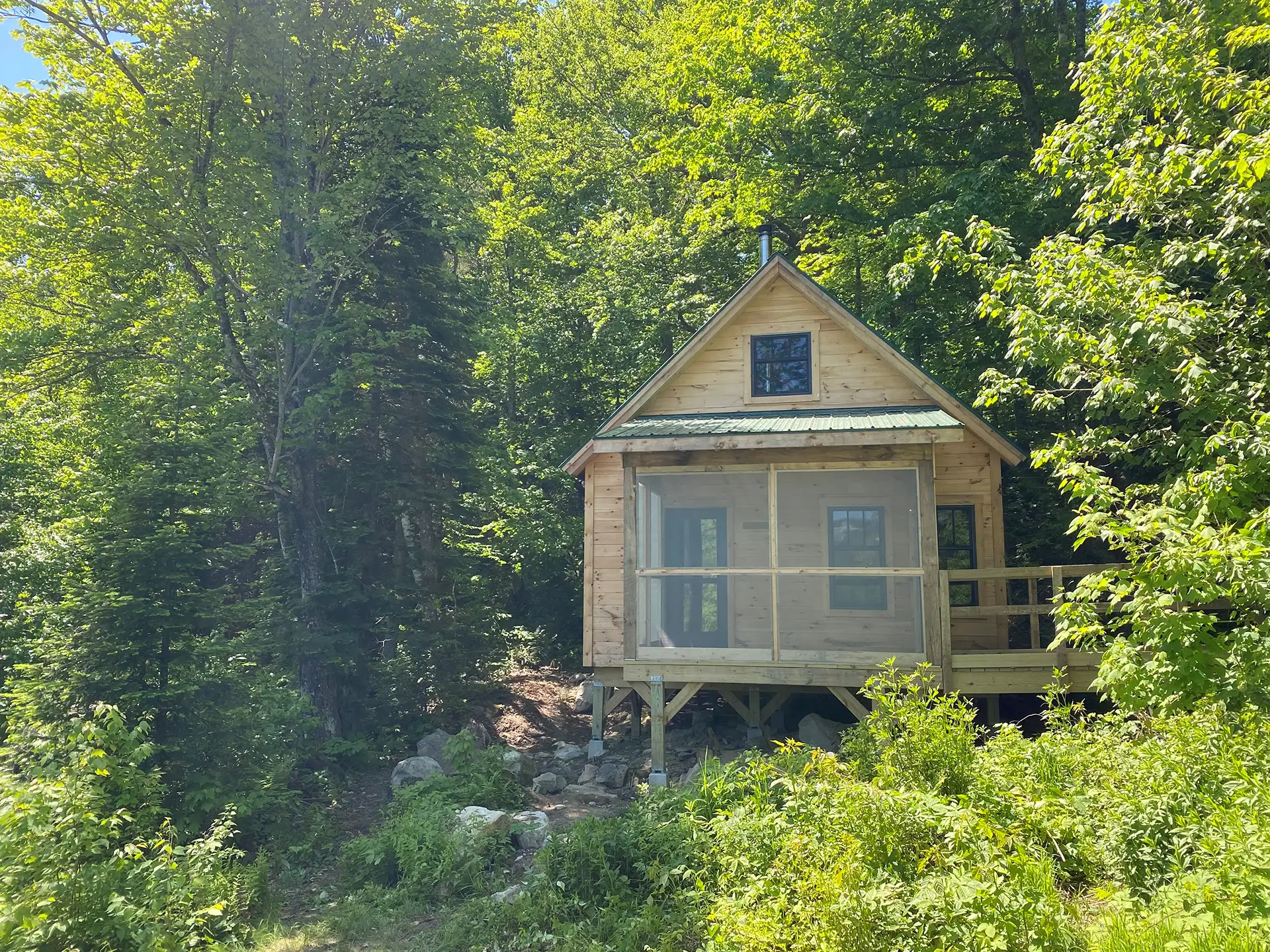
    Jean Haigh Cabin is one of two rental cabins at the Wheeler Pond Camps site in Barton, Vermont. Alongside Hadsel-Mares Cabin, these two cabins offer a home base for exploring the Northeast Kingdom and the year-round recreation opportunities of the area.

    Jean Haigh Cabin is GMC’s newest rental cabin offering and was built by GMC crews in 2022-2023. The crews added accessible upgrades in 2025. It is named in honor of Jean Haigh, former GMC club president and founding member of the Northeast Kingdom Section. The 400-square-foot cabin has bunkbeds for six to eight overnight guests. The porch faces the pond, with views of the mountains beyond. Its main living area comes with a wood stove and seasoned firewood provided. It shares an accessible composting privy with Hadsel-Mares Cabin.

    Please be aware, the cabin will never get as warm as your home. When spending a night, come prepared with the gear and sleeping bags to keep you warm as if you were camping.

    Please note, for reservations beginning December 2023, renters may encounter some remaining construction materials on site.

    Rates: $97 per night
    Current Green Mountain Club Members: During checkout, please use the discount code member20 for 20% off. If you are interested in becoming a member or renewing your membership, click here

    Rental Period: The cabin is available for rent year-round. Bookings open in March for the next rental year, which runs May 1st through April 30th of each year. Reservations for the upcoming rental year open in mid-March. To be notified of reservation opening, please ensure you are subscribed to GMC emails.

    Reservations:

  • Rental Info

    Rental Info

    Cabin Details

    Bryant CabinBolton LodgeHadsel-Mares CabinJean Haigh Cabin 
    LocationBolton ValleyBolton ValleyWheeler Pond, BartonWheeler Pond, Barton
    Rate$82 – $97/night $82 – $97/night$82/night $97/night
    Guest Capacity8886-8
    Rental SeasonAug. 1 – March 31July 1 – March 31May 1 – April 30May 1 – April 30
    Access1 mile ski, hike, or snowshoe2/3-mile ski, hike, snowshoe350-ft accessible trail350-ft accessible trail
    Petsseason dependent (not in winter)season dependent (not in winter)yesyes
    Cell Coveragespottyspottyspottyspotty

    Cabin Locations

    • Bryant Camp & Bolton Lodge are in Bolton Ski Resortโ€™s network of backcountry trails. They are about 30 minutesโ€™ drive from Burlington and Montpelier, and require a hike, snowshoe or ski to access.
    • Jean Haigh Cabin & Hadsel Mares Cabin share a property on the shores of Wheeler Pond in Barton, VT. They are about a 2-hour drive from Burlington, 1h30 minutes from Montpelier, or 4 hours from Boston.
    wood grain texture

    More Resources

    • Wheeler Pond_Handsel-Mares_Nathanael Asaro

      Explore

      Our Cabins

    • Jean Haigh Cabin_guests_Mollie Flanigan

      Explore

      Rental FAQs

    • Cabins_Bolton Lodge_2018_Mollie Flanigan

      Explore

      Rental Policies

  • Rental FAQs

    Rental FAQs

    GMC owns and operates four rental cabins (two in Bolton Valley, and two on the shores of Wheeler Pond in the Northeast Kingdom). These cabins differ from the first-come, first-served shelters directly on the Long Trail System. These cabins are by reservation only, made online, and the reservations open up each March for the upcoming rental year, which runs May 1 – April 30.

    Two are in the network of backcountry skiing trails in Bolton Valley, about 30 minutes from both Burlington and Montpelier near I-89. These cabins require a short walk, hike, snowshoe, or ski to access. Two are nestled next door to one another on the shores of Wheeler Pond, in Barton, VT, in the Northeast Kingdom.

    GMC Cabin Locations Map

    Recreation opportunities abound. Each cabin is situated close by to many world-class hiking, skiing, and snowshoeing trails. Two of the cabins sit on the shores of Wheeler Pond, so canoeing, kayaking, and swimming are possible. Two of the cabins are situated within Bolton Valley Resort’s network of nordic and backcountry ski trails, including the Catamount Trail. Bolton Lodge and Bryant Camp are nearby lift-serviced downhill skiing/snowboarding, and mountain biking in the summer months. The Wheeler Pond Camps are nearby Burke Mountain (lift-serviced downhill skiing/snowboarding; mountain biking).

    The cabins are rustic and uninsulated, and will never get as warm as your home. It is important to bring all supplies to keep you warm and fed as if you were camping. This includes sleeping pads, sleeping bags, and pillows if desired; cooking equipment including a stove, fuel, pots and pans, and dishwashing equipment; matches, newspaper, and kindling to operate a woodstove (seasoned firewood is provided at each cabin); headlamps, lanterns, and/or flashlights; Optional but recommended items include recreation equipment, games, a first-aid kit, and a satellite communication device, as cell phone service is limited at all cabins.

    GMC’s cabins are popular and booking fills up quickly each year when reservations open in March. We highly recommend joining GMC as a member to take advantage of the 24-hour early reservation period. Even so, weekends especially will book up quickly. Reservations do get canceled or transferred, so keep an eye on the availability calendars and check back in periodically to see if something has opened up.

    Unlike the 72 free, first-come, first serve shelters on the Long Trail, GMCโ€™s 4 rental cabins are available by reservation only. Reservations open in March each year for the upcoming rental year, beginning May 1. GMC members get a 24-hour early access booking period. Certain cabins and weekends are very popular and will book up as soon as the reservation window opens. Be sure you are signed up for GMC emails and your membership is up to date so you get alerts about upcoming bookings. 

    More Questions?
    We Have Answers.

    Call, email, or stop into the Visitor Center during open hours for all your cabin and GMC hiking experienceย questions.

  • Winter Hiking

    Winter Hiking

    Trip Planning in Winter

    Winter hiking is more challenging for several reasons, from slower paces due to snow and ice; carrying more clothing and gear, using traction footwear, and burning more energy to stay warm. Itโ€™s important to pick shorter and easier trails than youโ€™re comfortable with in other seasons. Winter can also be extremely variable, with deeper snow and more extreme temperatures at higher elevations. Daylight is also a concern. And, if you do have an accident or problem and need to call for help, it will take rescuers more time and resources to get to you.

    Winter Hiking What to Wear Lily LaRegina

    What to Wear

    Proper layering can make or break your trip. Start with a synthetic wicking base layer on both top and bottom; add at least two insulating middle layers, and be sure to top it off with a water- and wind-proof outer shell later.

    You may want rain or snow pants, and accessorize with wool socks, a winter hat, and lightweight gloves. Heavier options and spare socks in your pack are also critical.

    What to Pack

    Just like in summer, youโ€™ll need to carry the Ten Essentials, but they require some different details in the winter.

    Nutrition: Bring plenty of food! Winter hiking burns a lot of calories. Pack extra bars or trail mix in case youโ€™re out longer than expected. Pro tip: Some energy bars may be prone to freezing, so think about bite-size snacks like trail mix. Carrying bars close to your body will help, too.

    Hydration: Two liters of water is probably adequate for most day hikes. Pro tip: Insulate with an old sock, and carry the bottle upside down to keep the cap from freezing (the highest water freezes first).

    Insulation: In addition to synthetic base layers, warm middle layers, and a waterproof outer layer, be sure to pack spare clothing layers. Pro tip: You havenโ€™t packed enough unless thereโ€™s a layer left that you never needed to use!

    Illumination: Bring a head lamp (to keep your hands free) with spare batteries, even if youโ€™re only planning a day hike. If you canโ€™t easily change batteries in the dark with cold fingers (try it at home), an extra light will be better than spare batteries. Pro tip: Lithium batteries last much longer than alkaline batteries in the cold.

    Navigation aids: Cell phone batteries can die quickly in the cold, so a paper map, compass, and GPS are far more reliable. Pro tip: Practice using them until itโ€™s easy! You can find videos online or participate in a workshop.

    First Aid Supplies: Everyone in your group should carry a complete first aid kit in case you get separated. Pro tip: Sign up for a Wilderness First Aid class to gain confidence in backcountry emergencies!

    Fire: Waterproof matches, lighter or flint. Donโ€™t assume you can start a fire with ice-coated and snowy wood until youโ€™ve done it a few times. Pro tip: Pack some Vaseline-covered cotton in a prescription bottle for a fire starter.

    Repair kit: Multi-tool, or knife and duct tape. Pro tip: Use your hiking pole as the core to make a small roll of duct tape so itโ€™s always handy.

    Emergency Shelter: Pack a tarp, tent, or bivy sack, even for day hikes. A sleeping bag or ground pad will also go al ong way in keeping you or others warm if you are unexpectedly detained or injured.

    Sun Protection: Sunglasses and sunscreen are all the more important in cold temps. Winter sun reflecting from snow can cause sunburn and snow blindness, and youโ€™re unlikely to notice an incoming sunburn.

    Microspikes winter traction

    Traction and Footwear

    Having the right footwear with proper traction is critical to tackle deep snow and ice. We recommend wool socks (and extras) and insulated, waterproof winter hiking boots. Cold or wet feet are a recipe for a miserable or dangerous hike.

    Microspikes and crampons are common boot attachments to help give you grip. For deeper snow, snowshoes are essential. Not only is hiking through deep snow exhausting and near impossible, it also ruins the trail for others as you leave behind deep postholes.

    On many winter hikes, you will use both Microspikes and snowshoes as the trail conditions change. Itโ€™s always a good idea to pack both, or you can follow recent trail reports and weather forecasts to determine what youโ€™ll use.

  • Rental Policies

    Rental Policies

    Members Early Booking Policy

    Current GMC Members can enjoy a benefit of a 24-hour advance booking period when cabin rentals open each March. Members also get 20% off their stay with code member20 at checkout.

    Reservations for the rental year beginning May 1, 2026 through April 30, 2027 will open March 12, 2026 at 12 p.m. for GMC members and March 13, 2026 at 12 p.m. for the general public. For information and reminders on reservation schedules, please sign up for GMC emails.

    To join GMC or renew your membership, visit our membership page. Questions? Email

    Cabins_Bryant Camp_Volunteers_2019

    Cancellation Policy:

    Reservations canceled 15 days or more in advance will receive a 50% refund. Reservations canceled 14 days or less in advance are non-refundable. GMC is not able to give refunds based on weather or trail conditions.

    Transfer Policy:

    Comparable reservations may be transferred within the booking year (May 1 to April 30), no less than 14 days in advance and subject to cabin availability. Contact  to request a reservation transfer.

    Clean-Up Policy:

    At GMC’s discretion, a facility cleanup/repair fee of up to $200 may be charged to the reservation’s credit card if the facility requires cleaning or repairs after rental.

    Check-In Policy:

    Check-in is after 1:00 p.m. on the arrival date, and check-out is by 12:00 p.m. on the departure date. You will receive an email with a code to unlock the door and more information for your stay, including an on-call number for any issues with access.

    Group Use Donation Policy:

    GMC offers a limited number of free cabin rentals for group use every season at each of our four cabins. These free rental nights are available to non-profit or other public groups with charitable missions for whom the rental fee or process presents a barrier to access. Group size is limited to up to eight people, due to the cabinsโ€™ sleeping capacity. Please read our full Rental Cabin Group Use Donation Policy (PDF).

    Rental Cabin Group Use Application

    Application for free cabin group use for non-profits and organizations for whom the rental fee presents a barrier to access.

    "*" indicates required fields

    Request a stay of up to 2 nights.
    Choose alternative dates if preferred dates are not available.
    Please enter a number less than or equal to 8.
    Maximum group size is 8.

    Trail Use Policies (Bryant Cabin and Bolton Lodge):

    Bolton Lodge and Bryant Cabin are both located within the network of Bolton Valley Resort’s backcountry/nordic ski trails. Guests recreating from the cabin on Bolton Valley Nordic or backcountry trails are required to purchase Bolton Nordic Day Tickets or have a season pass. Bolton Nordic Day Tickets and Passes are available for purchase online or at the Bolton Nordic Center.

    Please note that Bolton Resortโ€™s trail notifications do not inhibit your ability to access the cabin. Please use your best judgment on whether your backcountry skills match the conditions on the day of your reservation. GMC is not able to give refunds based on weather or snow conditions

    Pets are not allowed on these trails, so therefore if your reservation is for a winter month when the trails are open, pets are not permitted.

    Questions on cabin rentals can be directed to

  • The Long Trail

    The Long Trail

    Hike the Long Trail

    Anyone can find inspiration and challenge on the Long Trail. Day hikers, beginner and seasoned expert alike, can explore Vermontโ€™s most beloved natural landmarks and summits. Backpackers can sleep in one of 72 free, rustic communal backcountry shelters or tent campsites throughout. And thru-hikers, also called End-to-Enders, can traverse the entire 272 miles over the course of a few weeks โ€“ or years.

    Hiker + trail sign_Mad River_09-03-2023_Houze

    Long Trail Overview

    The Green Mountain Club is the steward of the Long Trail, which runs north-south 272 miles from Vermontโ€™s southern border with Massachusetts to the Canadian border to the north. It is marked by white blazes painted on trees or rocks, and is intersected by 88 blue-blazed side trails. Overnight use is permitted at more than 70 free, communal shelters and campsites that include a composting outhouse and water source.   

    The Long Trail travels up and over all 5 of Vermontโ€™s peaks over 4,000 feet, including Mount Mansfield, the highest point in Vermont. The southern 100 miles of the trail overlap with the Appalachian Trail, which then forks east to New Hampshire. The Long Trail also includes 23 miles of the North Country Trail, including its eastern terminus at Maine Junction.

    Hikers_Long Trail north from Lincoln Gap_Mount Abraham_06-12-2024_Lily LaRegina

    James P. Taylor, founder of the Green Mountain Club, had the original vision for a footpath that traced the spine of the Green Mountains. The first of its kind, the Long Trail is the oldest long-distance hiking trail in the United States, later serving as inspiration for the Appalachian Trail. In 1910, volunteers began the tedious work of cutting and building the first section of the Long Trail, from Camelโ€™s Hump to Sterling Pond. They used hand tools and generally took the shortest, steepest route from valleys to summits, giving the Long Trail its steep reputation today. By 1927 the trail extended from the Massachusetts border to Jay Peak. In September 1930, the final link to Canada was completed, and the entire โ€œfootpath in the wildernessโ€ was born. 

    The Long Trail Patrol, GMCโ€™s professional trail crew, was formed in 1930 and continues to do large-scale improvement projects on the trail each year. In its early years, the route of the trail was determined by handshake agreements and crossed private and state land. Recognizing the risk to the trailโ€™s future, GMC has been working tirelessly since the 1980s to conserve the land the Long Trail crosses and ensure it remains open for public access forever.  

    Over the decades, thousands of backpackers have traversed the trail. In the 1910s and 20s they wore leather boots, wool pants, and carried heavy tins of food and equipment in wooden pack baskets. Today, roughly 300 hikers complete the entire trail each year, many carrying ultralight, technical gear.

    3 musks
    wood grain texture

    Explore More

    • E2E_2024_Leo He_hiker at sunset

      Explore

      Section Hiking the Longย Trail

    • E2E 2024_smiling hikers_Elyse Killian

      Explore

      Thru-Hiking

    • Hikers_Mount Mansfield Chin_06-02-2018_Marcus-Keely

      Be Prepared

      Hiking 101 Series

    • 20230605_AshleyBoden_E2E

      Explore

      Long Trail End-to-Ender Certification

    • Explore

      Long Trail Sideย Trails

    Get Connected to the Long Trail

    Learn about current conditions, upcoming events, and inspiration resources for your next hike.

  • Appalachian Trailย inย VT

    Appalachian Trailย inย VT

    GMC-statemaptrails-Appalachian Trail

    Appalachian Trailย inย VT


    History of the AT in Vermont

    Vermont and the Long Trail hold a special place in the history of the Appalachian Trail. It was on or near the summit of Stratton Mountain during the construction of the Long Trail where Benton MacKaye had the idea to extend the scenic footpath across the ridges of the Appalachian Mountains along the East Coast. 

    The AT was completed in 1937, 13 years after MacKayeโ€™s first proposal. The trail spans overย 2,000 milesย through 14 states, connecting Springer Mountain in Georgia with Mount Katahdin in Maine. The Appalachian Trail Conservancy, founded in 1925, works with its member clubs and federal state agencies to preserve andย maintainย the trail, the worldโ€™s longest linear national park.

    Stratton Mountain firetower view_2018_Diana Michalczuk
    Trail sign_Stratton trailhead_08-03-2022_Karen-McNall

    A Shared Footpath

    In Vermont, the AT coincides with the Long Trail beginning at the Massachusetts border, just north of Mount Greylock. The two trails are “co-located,” meaning they share a footpath for 105 miles through southern Vermont, crossing notable peaks such as Stratton and Bromley.

    This portion of trail may be busy with both LT and AT thru- and section hikers, and professional backcountry caretakers are positioned at popular and ecologically fragile sites to help manage hiker impact on the land.

    AT from Maine Junction to New Hampshire

    The two trails split at โ€œMaine Junctionโ€ just north of U.S. Rte. 4, with the AT swinging east as the LT continues north. The remaining 45 miles on the Vermont AT to its crossing of the Connecticut River are more moderate, providing a break between the Green Mountains and the Whites. 

    Appalachian Trail east of Maine Junction_08-17-2024_Stephanie Nicheporuck
    Governor Clement Shelter_07-09-2021_Elise Hedglen

    Overnight Sites on the AT in Vermont

    Free, first-come, first-served shelters are positioned every 5-10 miles along the entire AT in Vermont.ย Each has a composting privy (outhouse) and a natural, untreated water source. Many, though not all, shelters have room to set up a tent nearby (tenting is prohibited above 2,500 ft.). Some sites have a communal firepit, while fires are strictly prohibited at other sites.โ€ฏย 

    Ecologically fragile sitesย on the AT/LTย are staffed by a professional backcountry caretaker who manages the composting process at the privy, conducts generalย trailย and site maintenance, and can offer advice and information to hikers.โ€ฏย 

    The AT in Vermont runs along a narrow corridor of National Park Service (federal) land, often with private land immediately surrounding the trail corridor.

    We recommend theย Long Trail Guideย (paperback orย ebook), which includes detailed descriptions and maps of the entire AT in Vermont, forย detailed usage guidelines for every overnight site on the Long Trail System.โ€ฏ

    Thru Hiking or Section Hiking the AT

    Hiking the entire 2,200-mile Appalachian Trail, all at once or in sections, is a bucket list experience for many long-distance hikers. Each year, thousands begin the journey, and only about one in fourย completesย a thru-hike. Visit the Appalachian Trail Conservancy for detailed information to help you plan and prepare for a long Appalachian Trail hike.ย ย ย 

    To hike the Vermont section of the AT typically takes about two weeks. It is 150 miles with roughly 33,000 feet of elevation gain and 34,500 feet of elevation loss. More on the AT in Vermont and multi-day hiking on the AT

    Appalachian Trail marker_Bromley_10-01-2022_Brett Klopp
    dirt and rocks
  • Long Trail Sideย Trails

    Long Trail Sideย Trails

    wood grain texture

    Gateway to the Long Trail

    “Side trails” refer the collection of 88 hiking trails that intersect with or access the Long Trail. Many side trails are some of the most popular day hikes in the state, such as the Burrows Trail on Camelโ€™s Hump, Sunset Ridge on Mount Mansfield, or the Deer Leap Trail near Killington. Others are relatively low-trafficked and provide a wonderful way to explore off the beaten path.

    Side trails are blazed in blue, and GMC offers certification for โ€œSide-to-Siders,โ€ who complete each of the 88 trails, totaling 166 miles.

    Sterling Pond Trail_10-11-2025_Lily LaRegina
    Nebraska Notch Clara Bow Taylor Lodge_Mansfield Area_Kristin McLane 2

    Find a Side Trail

    Looking for a great day hike, loop, or to access a section of the Long Trail? Side trails provide access to all five of Vermontโ€™s 4,000-foot peaks; several ponds; and countless other worthy hiking destinations. Browse the entire list of side trails here, or find a hike for you using our search tool here. Side Trails are also included on the Long Trail Map and area hiking maps; detailed descriptions are included in the Long Trail Guide.ย ย 

    View Description

    This gentle side trail pays off with wonderful views of beautiful Stratton Pond. Park at the Stratton Pond Trailhead on Kelley Stand Road, then walk 3.5 miles on the gently rolling blue-blazed trail. Youโ€™ll pass an intersection with the Lye Brook Falls Trail on the left. Continue straight/right to stay on the Stratton Pond Trail to Stratton Pond Shelter spur. (3.7 mi). To reach the pond, turn left, then take the Pond Spur 0.1 miles to the pondโ€™s shore at the Willis Ross Clearing (3.8 mi). Return the way you came, detouring to Stratton Pond Shelter for lunch if desired (7.6 mi.). 

    Stratton Pond_06-13-2020_Sam Yang

    Emily Proctor Shelter Repair
    View Description

    Explore the dense green of the Bread Loaf Wilderness with this convenient loop hike. Park at the shared trailhead for the Emily Proctor and Cooley Glen Trails, then hike 3.5 miles on the Emily Proctor Trail to the Long Trail. Enjoy a break at Emily Proctor Shelter, then turn left (north) on the Long Trail North. Hike 5.7 mi., passing over Mts. Wilson and Roosevelt, with occasional views. Reach Cooley Glen Shelter (9.2 mi) and camp here if desired, then return to your car via the 3.2-mile Cooley Glen Trail (12.4 mi.). Expect less maintenance and a more primitive, wild feel in Wilderness Areas. 


    Featured Side Trail
    Belvidere Mtn Summit via Frank Post and Forester’s Trails

    View Description
    Belvidere summit_09-16-2025_Lily LaRegina
    Camel's Hump summit_July2022_MeghanCooper

    The Side-to-Side Challenge

    Want to hike all 88 side trails? Track your progress here. When youโ€™re done, apply for certification to receive a certificate, patch, and your name in the summer edition of the Long Trail News. While side trail mileage totals 166, you will likely hike many more miles than that as you piece together loops and access side trails that do not have trailheads.

    Read more:

    Sunset view of Mount Mansfield_Puffer Shelter_July-2019_Andrew McNealus
  • Thru-Hiking

    Thru-Hiking

    GMC-statemaptrails-Full Long Trail
    E2E 2024_Journeys End northern terminus_Alexa Spoon Ringer
    E2E 2024_southern terminus_Kate Cliffhanger Grace
    Shelter_Starks Nest sunrise_Sept2021_Erica Fuller
    E2E 2024_cloudy summit_Chloe Cho

    Planning Your Thru Hike

    Get started with Long Trail basics on this page. As you get more serious about planning a hike, GMC offers several helpful resources. The Long Trail Map (updated 2025) and the Long Trail Guide book (2025) provide detailed descriptions of the entire trail system. The End-to-Enderโ€™s Guide offers information about hiker resources like stores, hostels, post offices, and laundromats.

    The GMC Visitor Center is a free hiker resource; we keep an annually updated list of volunteer trail angels and shuttle drivers and can provide customized advice on logistics or itinerary planning.

    Many hikers find the FarOut app useful as it provides real-time user-sourced comments on current conditions (FarOut is not affiliated with or officially endorsed by GMC).

    Join the Long Trail Hiking Facebook Groups for more community resources.

    We recommend starting your hike in July, August, or September for the best chances of good weather. June is also popular, though there may be remaining snow in the mountains and the black flies can be at their worst. October through March is considered winter conditions in the mountains, and thru-hiking is not recommended. April and May are Vermontโ€™s mud season, when high elevation hiking is discouraged to protect the trails during the spring thaw.ย ย 

    The average thru-hike takes 20-30 days, or roughly 3-4 weeks. Most thru-hikers take a few โ€œzeroโ€ or โ€œneroโ€ days in town to break up the hiking. Daily mileage might vary from 5 to 20+ mile days, depending on the stretch of trail, desired trail experience, and personal experience + conditioning. Backpacking is typically much slower than day hiking due to pack weight. The Long Trail is steep and rocky, which can mean a seasoned backpacker may hike fewer daily miles than they would on other long distance trails. 

    Estimate how many miles you might comfortably go in a day. Consider your own hiking experience and speed, as well as the elevation profile of a given dayโ€™s miles. Many hikers start with an age-old formula of half an hour for every mile of trail, plus half an hour for every 1,000 feet of elevation gained โ€” but your pace may differ from this significantly. Use the Long Trail Guide or Long Trail Map to identify overnight sites. They are roughly every 5-10 miles. Some flexibility will be required; we highly recommend traveling with a map and having alternative overnight options in case of unforeseen circumstances.ย 

    Hikers should use designated overnight sites whenever possible. The Long Trail hosts 70 free, first-come, first-served overnight sites, ranging from tenting areas to three-sided lean-tos to enclosed lodges with bunks. They are spaced roughly a dayโ€™s hike apart, with more shelters in popular areas. Each has a composting privy (outhouse) and a natural, untreated water source. Many, though not all, shelters have room to set up a tent nearby (tenting is prohibited above 2,500 ft.). Some sites have a single communal firepit while fires are strictly prohibited at other sites. 

    Ecologically fragile sites are staffed by a professional backcountry caretaker who manages the composting process at the privy, conducts general trail and site maintenance, and can offer advice and information to hikers.ย 

    The Long Trail crosses federal (Green Mountain National Forest), state, and private land, and camping and fire regulations can vary. We recommend the Long Trail Guide for detailed usage guidelines for every overnight site on the Long Trail System.ย 

    Long-term parking is possible at the southern and northern terminus, but many hikers opt to arrange a shuttle ride to begin their hike. Contact GMCโ€™s visitor center for more information on shuttles. The Long Trail crosses many major roads, and most have parking areas at the trailheads. When parking vehicles at trailheads, take care to park efficiently and avoid obstructing traffic or blocking access to driveways, roads, homes, or farms. If a parking lot is full, please seek an alternative place to park and hike. Parking is at your own risk, and every year, a few instances of vandalism or break-ins do occur. Do not leave anything of value in your vehicle.ย ย ย 

    Much of what you will carry is determined by personal preference. Consider a field test or โ€œshakedownโ€ to test out your gear before you embark. 

    In general, you will need: 

    • A backpacking backpack (with an internal or external frame) 
    • A sleeping system (sleeping bag, sleeping pad) 
    • Shelter system (tent or hammock), even if you plan on staying in shelters on the trail 
    • Sturdy footwear (both hiking boots and trail runners are common) 
    • Water bottles and water treatment system 
    • Food and a bear-safe food storage system 
    • Backpacking stove and fuel, if desired 
    • Clothing, including insulating and waterproof layers for chilly or rainy weather 
    • The Ten Essentials, including a headlamp, first-aid kit, sun protectionย 
    • Trekking poles are optional but very common 

    Many hikers carry roughly 3-5 days worth of food, and โ€œresupplyโ€ a few times over the course of their trip. You can resupply at local stores, or send boxes to yourself ahead of time โ€” post offices and trail-friendly businesses will hold them for you. Common resupply locations include Bennington, Manchester, Killington/Rutland, Waitsfield, Waterbury, Stowe, and Johnson.  

    Hitchhiking in and out of town is common but up to the discretion of the hiker. Many folks who live or work near the Long Trail are used to giving hikers rides. Consider pairing up with another hiker for safety and comfort, or pre-arrange a ride โ€” GMC keeps a list of volunteer shuttle drivers, available by email. 

    We also recommend the End-to-Ender’s Guide, a free, digital resource that lists in-town amenities and has valuable information about the logistics of a thru-hike.

    Black bears are common in Vermont. In general, they will avoid people, but some black bears do associate humans with food and will become habituated or persistent. 

    Proper food storage is required in the Green Mountain National Forest and strongly encouraged everywhere else. All food, trash, toiletries, hygiene products, and dishes should be properly stored in an approved container a safe distance from camp. Remember you are sharing shelters with other hikers, so your food storage decisions impact those around you.  

    We recommend bear canisters, due to their ease of use and convenience, and offer a free lending program (first-come, first-served). Ursack bags and classic bear hangs are permitted, but trees suitable for a bear hang can be hard to find on the trail.  Sleeping with your food bag, or hanging it inside a shelter, are not suitable storage methods. More on food storage methods.

    Never underestimate the variability of Vermont weather. Conditions along the crest of the Green Mountains are not the same as in the lowlands; temperatures often vary dramatically, sometimes as much as 5 degrees Fahrenheit per 1,000 feet. June through September can see some very hot and humid days though rain, fog, wind, and sudden drops in temperature can occur at any time, even in the summer. We strongly recommend carrying warm layers and waterproof/windproof gear on your thru-hike.

    Climate change is resulting in more intense and frequent rainstorms; a warmer atmosphere can retain more moisture. Summer nights can be cool, so hikers should always carry layers and be prepared for rain. 

    Plan ahead: Check weather forecasts for Vermont summits. Have a way to receive weather forecasts and emergency alerts while hiking; consider the VT-ALERT system

    There are designated water sources at every overnight site along the trail, and the trail crosses many more bodies of water, though some are more reliable than others. These may be rushing streams, small outflows, ponds, natural springs, or a few installed pumps. In dry weather, water sources can fail. For detailed information on water sources, we recommend the Long Trail Guide.

    We strongly recommend treating all water collected on trail. Water may look and taste clean but still be unsafe to drink. Giardiasis, caused by the intestinal parasite Giardia lamblia, is just one of many illnesses caused by drinking contaminated water. Other bacteria and viruses may also be present in water sources. If giardiasis symptoms such as severe cramping and diarrhea occur, consult your physician.

    The best way to prevent illness is to treat or filter all drinking water. Carefully follow instructions provided with the water purification system of your choice, and consider carrying a backup as pumps and filters can fail.

    When thru-hiking the Long Trail, you can start at the Massachusetts border and hike north (NOBO) or start at the Canadian border and hike south (SOBO). NOBO is more common, and means you will be starting with gentler terrain. The southern portion of the Long Trail is often busier, since it is co-located with the Appalachian Trail.  

    Southbound (SOBO) hikers will initially experience fewer people on the trail and more immediate steep and rugged terrain. This may be a great fit for those who desire a more remote experience and have experience with rugged Vermont trails. Weather can also be a factor. For example, if you are hiking in late fall, you may wish to go southbound to maximize your chances of warmer weather or to โ€œchase the foliage.โ€ 

    You can also start anywhere in the middle of the trail! Access the Long Trail from one of many road crossings, or a side trail.  

    Individual hikers do not need a permit to hike the Long Trail. The entire system is free and open to the public. Some groups may need a special-use permit from the Green Mountain National Forest or Vermont Department of Forests, Parks, and Recreation. More on group use and permitting can be found here. Overnight sites that are staffed by caretakers operate on a donation-based model; if you would like to make a donation in support of your hike you may do so here.

    GMC does offer End-to-End certification, and this is one way we can track usage on the trail. Certification is free and takes a few minutes; applications are processed twice per year and each yearโ€™s class of End-to-Enders is listed in the summer Long Trail News. 

    Certify your End-to-End Hike

    Apply for End to Ender Certification! GMC has been tracking End-to-Enders since 1944.ย  End-to-Enders receive a certificate, patch, and a complimentary one-year Green Mountain Club membership. It also gives us valuable information about your on-trail experience and is one way we can track usage on the trail. Applications are processed twice a year, in October and March.

    E2E 2024_southern terminus_Kate Cliffhanger Grace
    wood grain texture

    More on Planning a Thru-Hike

    • Maps+guides_E2E resources_04-08-2025_Lily LaRegina

      Be Prepared

      Guidebooks, Maps & More

    • 20230605_AshleyBoden_E2E

      Explore

      Long Trail End-to-Ender Certification

    • E2E_2024_Leo He_hiker at sunset

      Explore

      Section Hiking the Longย Trail

    Looking for more information?

    Contact the Visitor Center for trip planning advice.

  • Long Trail End-to-Ender Certification

    Long Trail End-to-Ender Certification

    Apply Online for End-to-Ender Certification

    Complete and submit the below form to certify your hike. Each applicant must submit their own application, and we do not recognize end-to-ender certification for pets. End-to-End and Side-to-Side applications are processed twice each year.

    Please exercise patience after the submission deadline as it takes about a month to process all applications and mail out certificates. If your address changes after you submit your application, please let us know via email

    Submit your application online by October 1 to receive your certificate and patch by November.

    Submit your application online by March 1 to receive your certificate and patch by April.

    Timely submissions will be listed with End-to-Enders and Side-to-Siders in the summer edition of the Long Trail News. Submissions made after the March deadline will appear in the following yearโ€™s LTN summer edition.

    E2E 2024_Journeys End northern terminus_Alexa Spoon Ringer
    wood grain texture

    Apply By Mail*

    If you prefer, you can apply by mail as well. Print and fill out the paper Long Trail End-to-End Certification Application. Each applicant MUST submit their own application.

    Mail applications to:
    Green Mountain Club, End-to-End Certification
    4711 Waterbury-Stowe Road
    Waterbury Center, Vermont 05677

    *The same processing schedule applies to paper applications.

    Why Certify Your Hike?

    You receive:

    • Complimentary one-year GMC membership (for first-time members only)
    • End-to-End Certificate
    • End-to-End rocker patch
    • GMC logo patch
    • Your name listed in the following summerโ€™s Long Trail News!

    Certifying your hike also gives GMC useful data and content to help inform our work, from statistics on trail usage, information about most- and least-enjoyed areas of trail, group use information, and photos and stories that we can use to share the Long Trail with others!

    E2E 2024_southern terminus_Kate Cliffhanger Grace
    Camel's Hump summit_July2022_MeghanCooper

    Side-to-Side Certification

    GMC recognizes hikers who have hiked all 88 side trails with a Side-to-Side Certificate. Track your hiking progress here. When youโ€™re done, apply for certification to receive a certificate, patch, and your name in the summer edition of the Long Trail News.

      Apply for your End-to-Ender Certification

      Got Questions? Contact Us!

      GMCโ€™s Visitor Center Staff can answer questions about planning or certifying your hike.