September 1st marks the start of Early Black Bear Season in Vermont, followed by many other hunting seasons throughout the fall. Hunting is allowed on all GMC owned and managed lands, including along the Long Trail and Appalachian Trail corridors in Vermont. Please be safe when you are hiking and be respectful of all trail users. The Green Mountain Club strongly encourages hikers to:
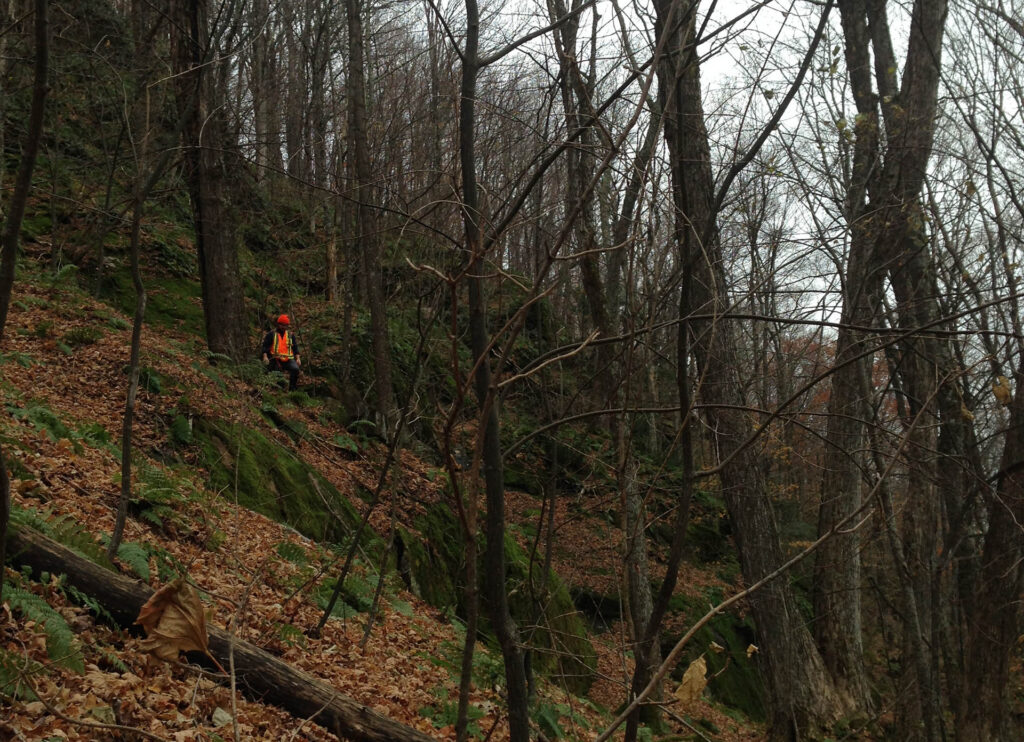
- Wear blaze orange clothing, visible from both the front and back.
- Avoid wearing brown or white, the colors of a deer.
- Be especially careful while hiking in valleys and near roads and trailheads.
- Avoid hiking during dawn and dusk due to low visibility.
- Please leave dogs at home. If you do bring a furry friend, dress your dog with bright bandanas or a blaze orange vest.
- Wave and talk to make your presence known to hunters.
- Stick to well-populated trails where hunters are likely to avoid.
This is a wonderful time of year to go hiking in Vermont. It’s also a good time to refresh your safety awareness with regard to hunting season and general preparedness. A prepared hiker is a happy hiker! Have fun out there!
Check out Vermont Fish and Wildlife for more information about where, when, and how hunting is permitted in Vermont.
Where should I hike during hunting season?
Stick to the guidelines above. For some general recommendations, try:
Prospect Rock via the Long Trail, Johnson – MODERATE
Wiessner Woods, Stowe – EASY (hunting is prohibited)
Camel’s Hump Summit via Burrows Trail Loop, Huntington – DIFFICULT
Thundering Falls, Killington — ACCESSIBLE
Bromley Mountain, Winhall — MODERATE
Please note that with the exception of Wiessner Woods, hunting is permitted on these lands.
General Fall Hiking Safety Reminders
Fall weather can change quickly and stick season and winter are both around the corner. The changing weather can often catch hikers off-guard as weather changes quickly as you ascend the mountains. Follow these reminders and safety tips:
- Days are getting shorter, and darkness can fall even earlier in the woods. Carry a charged headlamp on every single hike, even if you plan to be finished long before dark.
- Temperatures are colder, especially at higher elevations. Carry proper layers for a range of temperatures, keeping in mind not to overheat as you exert. Carry an insulating mid-layer and a water/windproof outer layer. Hats and gloves are also essential for keeping your extremities warm.
- Temperatures may be sunny and warm in town and in the valleys but drastically different on summits. Check the National Weather Service’s Mountain Point Forecasts for a sense of the weather on your planned hike, and change your plans if needed.
- As the leaves hit the ground, trails can become extra slick. Walk carefully and consider trekking poles for extra support. Nanospikes and Microspikes will soon be a hiking must-have, too, as ice and snow are more likely on trail. Leaves on the ground can also obscure the trail – be sure you’re checking for white or blue blazes to indicate you’re still on track.
Share the trail and be safe out there, hikers!